

North Sound · 45 min north of Lake Stevens HQ

Pest control in
Mount Vernon, WA.

Out in Skagit Valley farm country, the pest pressure reads a little differently than the rest of our route, with field rodents leading the way every fall.

Call now (425) 332-6566

Get a free Mount Vernon quote

Step 1 of 3

What's the pest problem?

Pick all that apply.

Pest control in Mount Vernon, WA

Mount Vernon sits right on the Skagit River, with farmland pressed against town on the west and north. When the fields are harvested each fall and the valley floor turns to mud, field mice and rats lose their cover all at once and head for the nearest dry building. Sedro-Woolley's pressure comes out of the forest. Here it comes out of the fields and the river bottom, and that shapes pest control in Mount Vernon more than anything else.

East of downtown the land climbs toward Little Mountain and the hills around Eaglemont, and that mix of forest edge and newer housing brings its own ant and spider problems. Downtown and the older grid on the hill above the river have homes old enough to have settled, cracked and been patched many times over.

Rodent Control in Mount Vernon

Field mice and rats after the Skagit Valley harvest

The Skagit Valley grows potatoes, berries, seed crops and tulip and daffodil bulbs, and all of it feeds a big population of mice and rats through the summer. When fields are cut and tilled in late summer and fall, and winter rain floods the low ground, those animals move. Homes on the edge of town, in West Mount Vernon and along the river bottom sit directly in their path.

Rodent control in Mount Vernon works best in late summer, before the push starts. We seal gaps a quarter inch and larger at the foundation, vents, garage door corners and utility lines using hardware cloth, sheet metal, mortar or copper mesh. Then we place tamper-resistant bait stations outside and snap traps inside. Watch for droppings in the garage, gnawed pet food bags and torn vapor barrier.
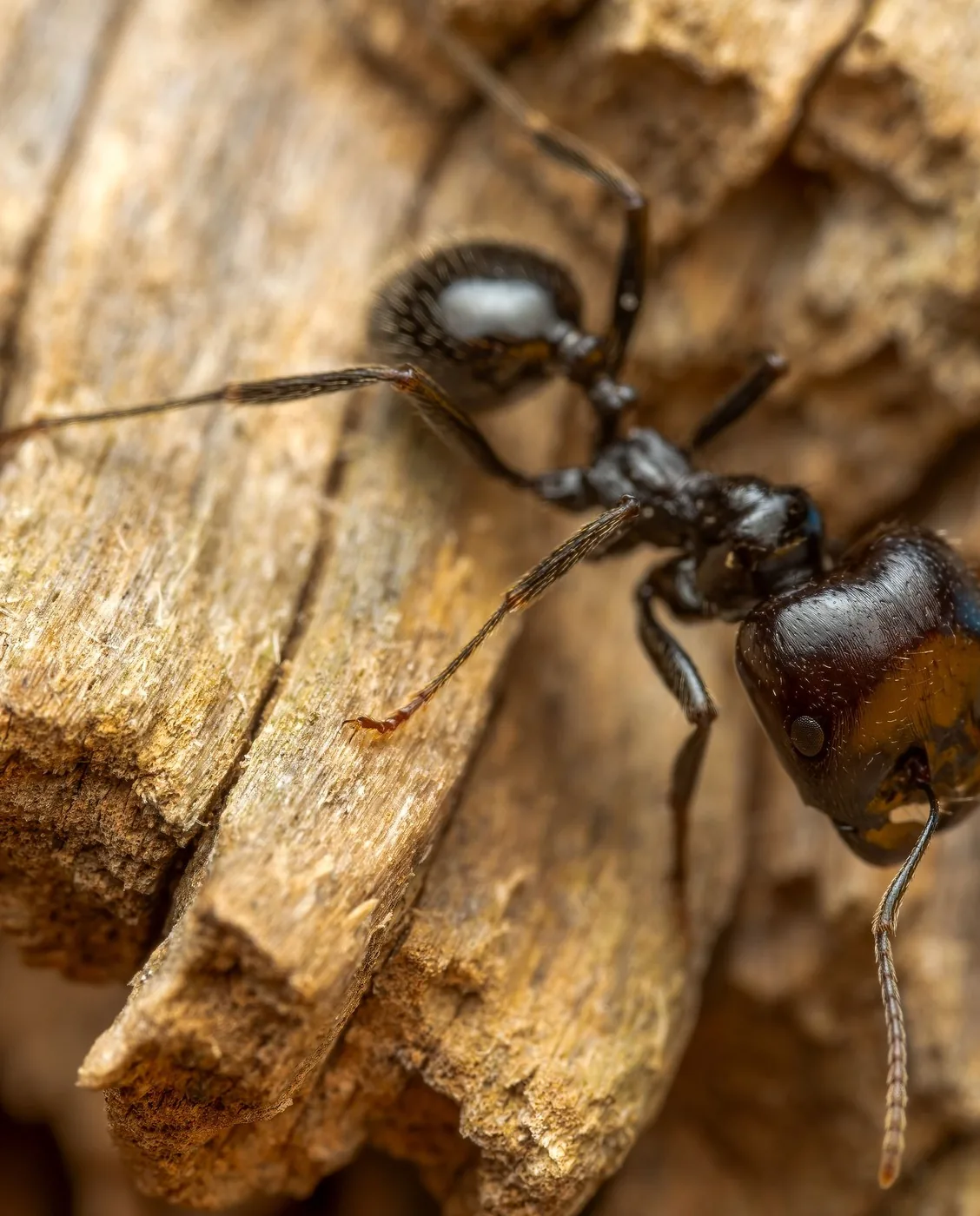
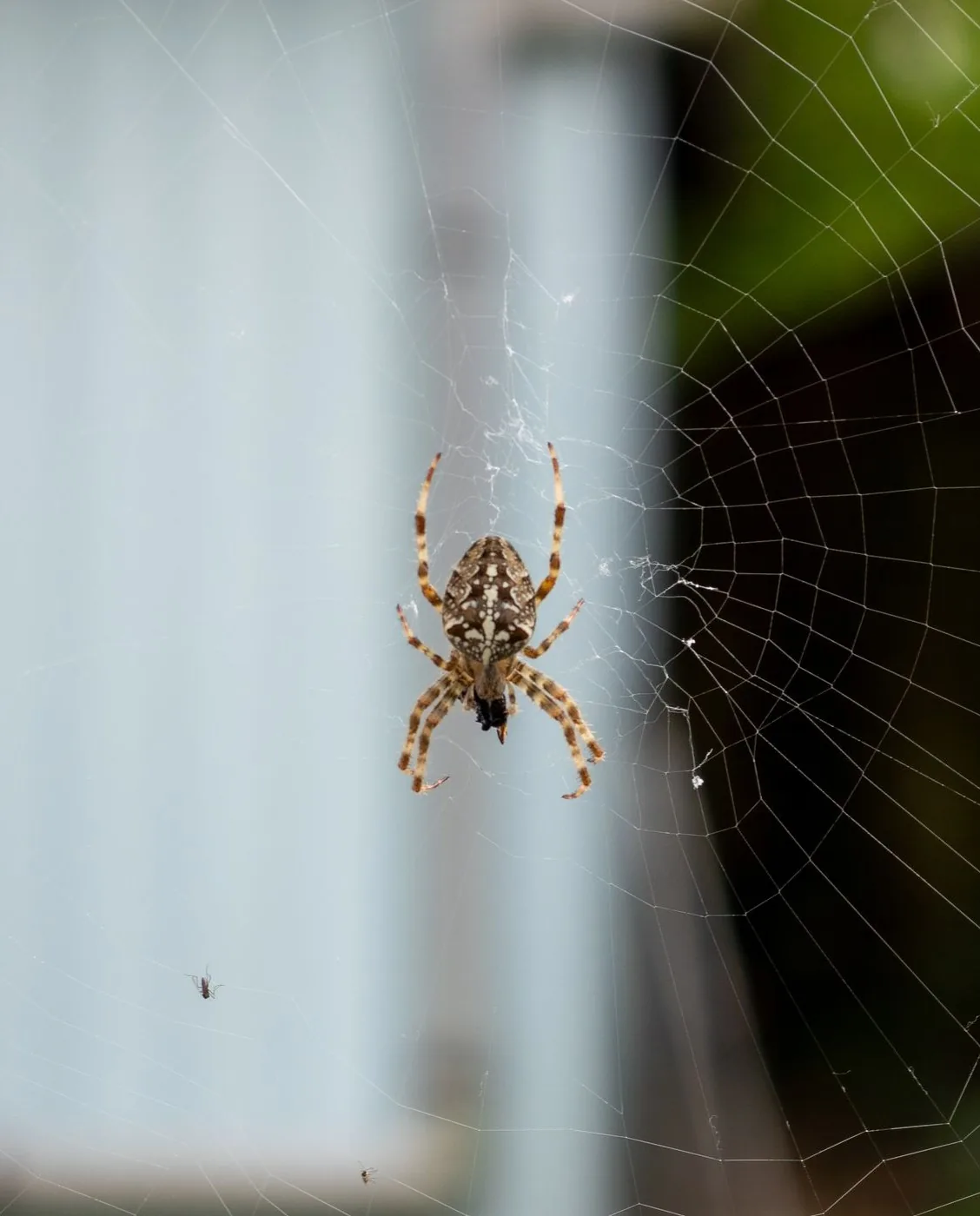
Ant Control in Mount Vernon

Carpenter ants in Mount Vernon's older homes above the river

The neighborhoods on the hill above downtown have a lot of early and mid-century houses, and decades of Skagit rain find every weak spot: a leaky gutter, a sill plate too close to soil, siding that holds water. Carpenter ants look for exactly that soft wood. On the east side, homes backing onto the woods around Little Mountain get colonies moving in from stumps and fallen logs.

The first step is confirming the species. Odorous house ants and other sugar ants trailing to the kitchen get baited, since spraying breaks them into more colonies. Carpenter ants get the parent nest and satellites located and treated. If you see winged ants inside in spring or small piles of sawdust near windows, call before the colony gets another season to grow.

Spider Control in Mount Vernon

Spiders coming in off Skagit fence lines and outbuildings

Farm country gives spiders a lot of structure: fence posts, equipment sheds, hay barns and blackberry rows along the ditches. By late summer orb weavers and giant house spiders are everywhere outside, and in September the house spiders start wandering indoors looking for mates. Homes with detached shops, barns or firewood stacked near the house see the most.

We treat the foundation, eaves, windows and door frames, plus garages and outbuildings when they are part of the problem, and clear webs from the eaves. Keeping porch lights off, or switching to yellow bulbs, cuts the insects that draw spiders to your doors. Funnel webs in window wells mark an entry point. Clearing blackberry back from the house and storing firewood off the wall helps too.

From the call to the follow-up

Hiring a Mount Vernon exterminator

Calling a Mount Vernon exterminator in the fall usually means you already heard something in the wall. Someone from Pure Guard is out within 48 hours, texts about 30 minutes ahead, and starts underneath the house, since the crawl space is where field rodents usually set up first. You see what we found, what we sealed and where the stations and traps went. Then we come back to check and pull traps until the activity stops.

Licensed
WSDA Commercial Applicator #112338
Response
Someone out within 48 hours
Warranty
Re-treatments at no charge

What changes the job here

Farmhouses, older blocks and hillside subdivisions

Housing here runs from old farmhouses and early-1900s homes near downtown to 1970s-90s ramblers and split-levels, plus newer subdivisions on the hills to the east. Most sit over crawl spaces, and in the lower parts of town those crawl spaces run damp in winter. A wet crawl space with an old, torn vapor barrier suits rodents and wood-damaging insects, so it is one of the first places we look.

Rural properties just outside town bring barns, shops and pump houses, and those need to be part of the rodent plan or the pressure never really drops. On newer hillside homes the gaps are usually around utility penetrations, garage door seals and bark beds piled against the siding.

Across Mount Vernon

Mount Vernon neighborhoods and what they deal with

Downtown and the hill above it
Older homes on settled foundations, patched many times, where mice and carpenter ants find gaps at the sill.
West Mount Vernon
Across the river and outside the downtown floodwall, homes sit close to farmland and the river bottom, so fall rodent pressure runs high.
College Way corridor
Restaurants, commercial strips and older apartment complexes give rats food and shelter that spills over into nearby homes.
Little Mountain area
Homes against 500-plus acres of park forest, where carpenter ants, spiders and yellow jackets come straight out of the woods.
Eaglemont
Newer homes around the golf course on the east hills, where forest edges and landscaped beds bring ants, yellow jackets and the occasional rodent.
Big Lake area
Lakeside and wooded rural lots southeast of town, where moisture and tree cover keep carpenter ants and rodents active.

Through the year

The Mount Vernon pest year, season by season

Spring
Carpenter ant swarmers appear indoors as the valley warms in April and May, usually a sign of a colony in damp wood.
Summer
Yellow jackets build in the ground along field edges and ditches, and nests near play areas are best treated before they peak in August.
Fall
Harvest and the first heavy rains push field mice toward houses from late September on.
Winter
A saturated or flooded valley floor keeps driving rodents toward dry ground, and crawl spaces are the closest shelter.

Questions, answered

Pest control in Mount Vernon, the common questions.

When should I get my Mount Vernon home sealed against mice?

Late August or early September, before harvest and the fall rain. Once the fields are cut, mice are already moving, and sealing after they are inside means trapping them out first. Exclusion done ahead of time closes the gaps while the house is still clear, which is faster and less messy.

I have a barn and a shop. Do those need treating too?

If they hold feed, grain, equipment or trash, usually yes. Outbuildings keep a rodent population fed and close to the house, so treating only the home just knocks back the overflow. We place tamper-resistant bait stations around the outbuildings and focus exclusion on the house itself, since that is the structure that has to stay sealed.

My crawl space took on water last winter. What should I do now?

Get it looked at once it dries out. Standing water ruins insulation and vapor barrier and invites rodents and wood-damaging insects. Our crawl space service hauls out the old barrier and contaminated insulation, rodent-proofs the vents and gaps, and lays a new 6-mil vapor barrier. Fixing whatever let the water in is a separate job, but a clean, sealed crawl space is the starting point.

How quickly can you get to Mount Vernon?

Someone will be at your door within 48 hours. Mount Vernon is 45 min north of Lake Stevens HQ, and you get a text about 30 minutes before the truck arrives. Stinging-insect calls get priority on the schedule.

Is the treatment safe around kids and pets?

Yes. We use products rated for occupied homes and apply them where pests travel, not across your living space. The technician walks you through what goes down and where before anything is treated. If you keep bees, chickens or a vegetable garden, tell us and we work around them.

Mount Vernon, WA

Tell us what you're seeing.

Family-owned and based in Lake Stevens, WA. Call or send the form and someone will be out within 48 hours.