Pure Guard Pest Control PURE GUARD PEST CONTROL
Pure Guard technician servicing a tamper-resistant rodent bait station outside a Snohomish County, WA home

Rodent control & rat exclusion

Rat exterminator and rodent control across Snohomish County.

Looking for a rat exterminator near you in Lake Stevens, Everett, Lynnwood, Edmonds, Bothell, or Kirkland? We run rodent control as two jobs at once. First the rodent exclusion: we seal every gap a quarter-inch or larger at the roofline, the foundation penetrations, the crawl-space vents, and the utility chase, because a house left open keeps restocking itself. Then the rodent removal: tamper-resistant bait stations outside that get refilled every visit, and trapping inside for whatever is already living in the walls. Rat, mouse, or both, the sealing comes first.

Call now (425) 332-6566

Get a free quote

Step 1 of 2

Rodents at a glance

What you need to know about rodent control and rodent exclusion.

A rat exterminator worth calling does two things, not one. Bait and traps clear what is already inside, and rodent exclusion means the next rat cannot get in when it comes looking. Do one without the other and you are either killing rats forever or sealing a house that already has rats in it. Roof rats enter high at the roofline, Norway rats come in low at the foundation, and a house mouse needs only a quarter-inch gap. We inspect inside and out, seal everything that size or larger, bait the exterior, and trap indoors until two checks come up empty.

(425) 332-6566
Most common here
Roof rats in attics, Norway rats at ground level, and house mice
Peak season
Heaviest from late September into October, but a year-round problem in the PNW
What rodent exclusion covers
Roofline and vent gaps, foundation penetrations, crawl-space vents, and the utility chase
How we handle it
Inspect, seal every gap a quarter-inch or larger, bait the exterior, and trap what is inside
How fast we respond
Someone out within 48 hours, and the same window on warranty re-treatments
Where we treat
Snohomish County, north and east King County, and the Skagit and Island valleys

What we treat

What you're
actually dealing with.

Identification matters more than treatment. The same product on the wrong species can scatter a colony and double the problem. Here is what we typically find on calls in the Lake Stevens, Lynnwood, and Edmonds area.

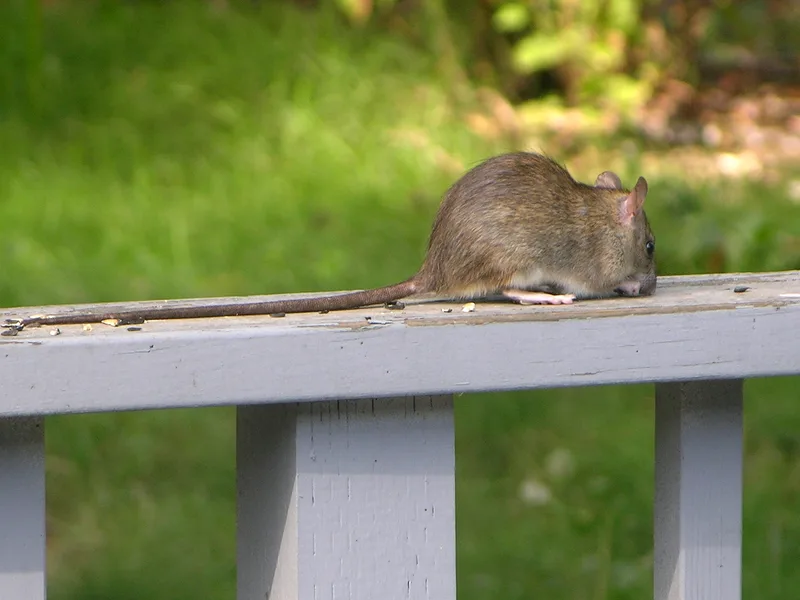
A roof rat walking along a deck railing, the sleek climbing rat that gets into attics and upper-story crawl spaces in Lake Stevens, WA
Alex O'Neal / CC BY-SA 2.0
01

Roof rats

The smaller, sleeker climbers, and the most common rat call we get in Lake Stevens, Lynnwood, and Edmonds. They enter high and nest high, so the fix starts at the gutter line and the gable vents rather than the foundation.

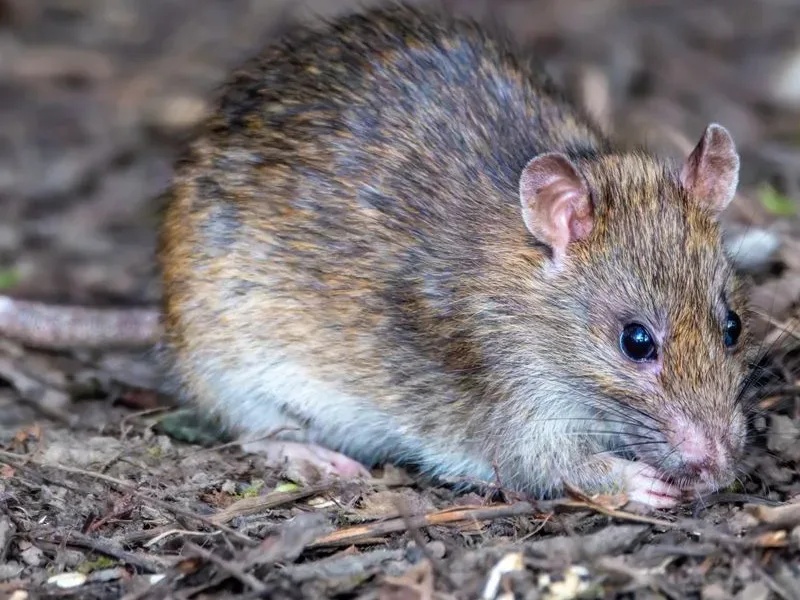
A heavy-set Norway rat at ground level on bare soil, the burrowing rat Pure Guard finds under sheds and along foundations in Snohomish County, WA
02

Norway rats

Bigger, heavier, blunt-nosed, and committed to the ground plane. They burrow under sheds, slabs, and drainage runs and come in through foundation gaps and torn crawl-space vents. More common in older neighborhoods with established trees and outbuildings.

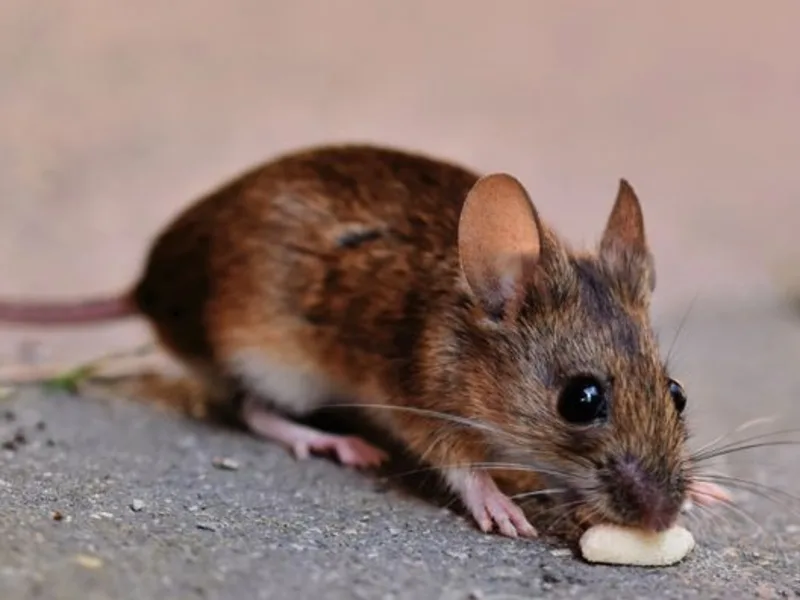
A small gray house mouse beside a wall, the mouse that needs only a quarter-inch gap to get into a Lake Stevens, WA home
03

House mice

Small, gray, and through a quarter-inch gap before you have finished looking at it. Once one is inside, more are coming, and the garage is usually involved. We trap aggressively and find the entry point on the same visit.

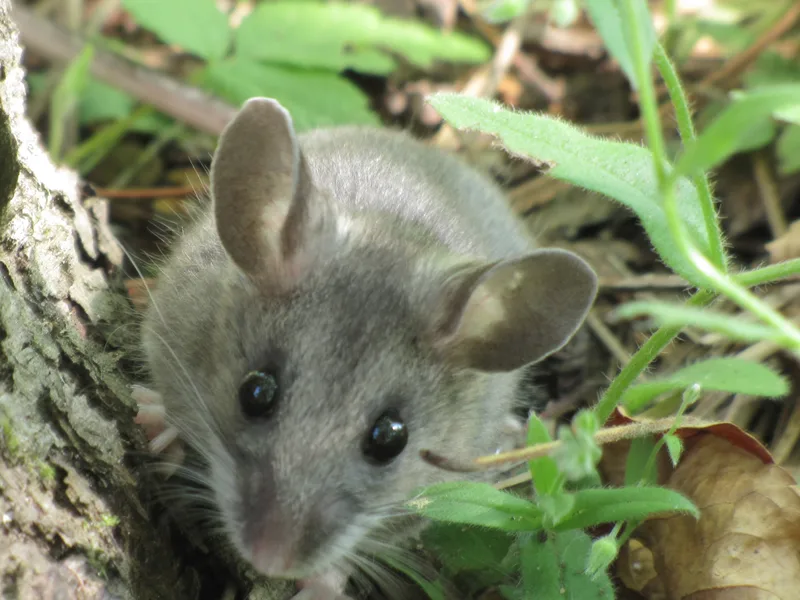
A deer mouse with its white underside and large ears, the hantavirus-carrying mouse Pure Guard finds in Snohomish County, WA garages and outbuildings
Seney Natural History Association / CC BY-SA 2.0
04

Deer mice

Less common indoors but regular in detached garages and outbuildings. They are the hantavirus carrier in Washington, which is why the cleanup is part of the job and not something we leave on the floor for you.

What to watch for

Signs you have
a real problem.

One sighting isn't always a problem, but a few of these together usually means it's time. We're happy to take a look and tell you what's going on.

  • 01

    Scratching, scurrying, or squeaking in walls or ceilings, especially at night

  • 02

    Small dark droppings near baseboards, behind appliances, or in cabinets

  • 03

    Gnawed wires, chewed insulation, or bite marks on plastic and wood

  • 04

    Greasy rub marks along baseboards on rodent travel routes

  • 05

    Pets fixated on an empty wall or corner

How we work

Our process
for rodents.

Every visit runs the same way: a real walk-through, a written report after every service, and warranty re-treatment at no charge, within 48 hours, if the pests come back between visits.

01

Inspect inside and out

We walk the attic, crawl space, garage, and full exterior. Identify rodent type, locate active nesting, and photograph every entry point by elevation before anything gets sealed.

02

Seal them out

Close every gap a quarter-inch or larger with hardware cloth, sheet metal, mortar, and copper mesh where a gap has to stay ventilated. You get the openings as a list, not a count. No more reinforcements coming in while we work.

03

Bait, trap, and verify

Tamper-resistant bait stations go around the exterior and snap traps go in the active runways inside. We come back to check both, remove what we catch, and confirm the activity is gone. On recurring service we refill the bait every visit so the pressure never builds back up.

Rodent exclusion in detail

Most rodent control jobs in Snohomish County fail in the same place. Somebody baited, somebody trapped, and nobody closed the way in. Here is the whole job in order, the way we run it: the fall rush, the exclusion scope, the trapping, and what happens to the mess they leave behind.

(425) 332-6566

Why fall is when rats come inside in the Puget Sound lowlands

Rats do not hibernate. Through a Puget Sound summer they live perfectly well outside on blackberry, fallen fruit, bird seed, pet food, and whatever the compost bin gives up. Then the first long cold rain arrives, usually in the last week of September, and most of those food sources go quiet at once. A heated house with a kitchen in it becomes the best address on the block.

That is why rat exterminator calls stack up across Everett, Marysville, and Lake Stevens from late September through October. Nothing changed about your house. The weather changed, and your house was already open.

The practical consequence is about timing. Exclusion work done in August is a walk-around on a dry roof. The same work in November happens in the rain, after the rats are already in the wall, and it has a trapping job attached to it. We broke the seasonal pattern down further in why rats get into Snohomish County homes every fall.

Rodent exclusion is the part that ends it

Rodent exclusion is the physical sealing of every opening a rodent can use, done with materials a rodent cannot chew back through. It is the difference between a rodent control account that quietly runs forever and one that finishes. Bait and traps are population management. Exclusion is the repair.

Four places account for nearly every entry we find on a Pacific Northwest house:

  • 01

    The roofline: gaps where the gutter meets the fascia, open rafter tails, lifted shingles at a valley, and gable or ridge vents with rusted screen. This is roof rat territory

  • 02

    Foundation penetrations: the sleeves around water, gas, electrical, and irrigation lines, plus the sill gap on older post-and-beam stock

  • 03

    Crawl-space vents: the screen is the first thing to go, and a torn vent is a doorway straight into the space under your floor

  • 04

    The utility chase: the vertical run carrying plumbing and wiring from the crawl space up to the attic. A rat that gets under the house uses it as a staircase and comes out in an upstairs wall

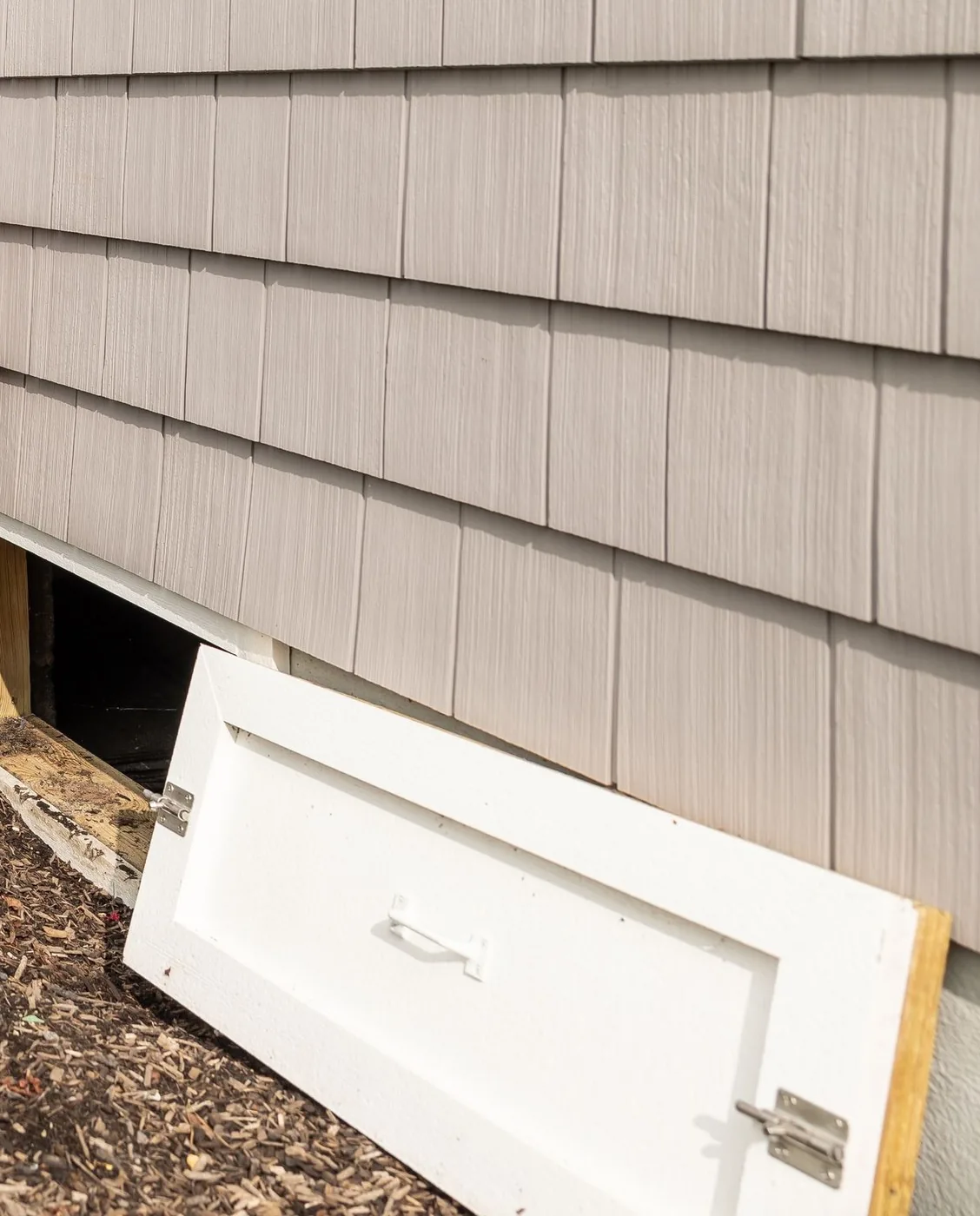
We seal with hardware cloth, sheet metal, mortar, and copper mesh where an opening has to stay ventilated. Expanding foam on its own is not exclusion, it is an afternoon's work for a rat. If the crawl space is the entry point and the barrier under there is already torn up, the sealing usually rides along with crawl space cleanout and vapor barrier replacement so the space gets closed and cleared in one trip instead of two.

What a quarter-inch gap survey covers, elevation by elevation

A quarter inch is the number because that is what a house mouse fits through, and Washington's Department of Health uses the same figure in its rodent-proofing guidance. A rat needs closer to a half inch, but we survey to the smaller measure, because sealing to rat size on a house that also has mice just means you will be calling a mouse exterminator in the spring.

The survey runs the building elevation by elevation, north wall through west wall, then the roof plane, then the crawl space from the inside. Every opening gets photographed and located before anything gets sealed, so what you approve is a list rather than a promise.

Before anyone starts work, the scope you are handed should name:

  • 01

    Each opening by elevation and height, not just a count

  • 02

    What material closes it, and why that material for that gap

  • 03

    Which openings have to stay ventilated and get screened rather than filled

  • 04

    What is out of scope, including roofing, siding, and framing repair we are not the trade for

  • 05

    Whether the crawl space needs clean-out before sealing, because sealing contamination in is worse than leaving it open

If a scope does not list openings, nobody has surveyed the house yet. Every job here is quoted after that inspection, and you can ask us for a rodent inspection before you commit to anything.

Rats in the walls and overhead: what you are hearing

What you hear at two in the morning tells us more than you would think. Scratching that travels horizontally across the ceiling and then stops is almost always a roof rat running a joist bay in the attic. A heavier thump with a drag to it is a rat in a wall cavity between studs. Fast, light, ticking activity that stays low near the floor in short bursts is a mouse.

Rats do not wander a wall at random. They run cavities the way you use a hallway, and the route is fixed: the utility chase up from the crawl space, along the stud bay behind the plumbing wall, out at the top plate into the attic. So when people ask how exterminators get rid of rats in walls, that is the answer. We do not open the wall. We find both ends of the run, seal the top plate and the chase, and set traps in the runway the rat is already using.

Cutting drywall is a last resort and it is almost never the faster route. The rat already has a way out. Take away the way in, put the trap on the road it uses every night, and it comes to you.

Roof rats vs Norway rats vs house mice: different entry, different fix

Three animals, three working heights, three fixes. Getting the identification right before anyone seals anything is what keeps you from closing up the foundation while the problem is coming in over the gutter. Here is what separates them:

  • 01

    Roof rats are the climbers: slim body, long tail, big ears. They enter high, nest high, and around Edmonds, Lynnwood, and Lake Stevens they are the most common rat call we get. Fix the roofline first

  • 02

    Norway rats are the burrowers: heavy body, blunt nose, short tail. They come in low through foundation gaps and crawl-space vents, and burrow under sheds and slabs. Fix the ground plane and the vents

  • 03

    House mice need a quarter-inch gap and a garage door that does not quite seal. A mouse exterminator job is rarely one mouse, and it almost always includes the garage

  • 04

    Deer mice turn up in detached garages and outbuildings more than in houses, and they are the hantavirus carrier in Washington, which changes how the cleanup gets handled

This is also why rat removal and mouse control get handled off one inspection rather than two. Most houses that have one have the conditions for the other, and the gap survey is the same walk either way.

Trapping and rat removal come after the house is sealed

Order matters more than product. Seal first, then trap. A house that is still open is a house that refills, and trapping into an open house is how rodent removal turns into a subscription nobody meant to buy.

Once the building is closed, trapping is fast and it is finite. Snap traps go in confirmed runways, on the greasy rub marks and along the joist bays where the droppings already are, never scattered on a guess. We check them, remove what we catch, and reset. Most homes go quiet inside a couple of weeks.

We do not close a job on one empty check. Two consecutive checks with nothing in the traps and no fresh droppings is the bar, and if activity comes back inside your warranty window we are out within 48 hours at no charge. What a rodent exterminator is really selling is the verification, not the trap.

Droppings, insulation, and why you should never sweep or dry-vacuum

Rodents leave far more behind than they weigh. A season under the floor means droppings through the vapor barrier, urine staining, insulation pulled down and shredded for nesting, and sometimes a carcass in a wall you smell before you find. If you have not been under there yet, the signs of rats in a crawl space are worth knowing before you open the hatch.

Do not sweep it and do not run a shop vac over it. Washington's Department of Health is direct about this, and so are we: dry sweeping and vacuuming stir contaminated dust into the air you are standing in. The state's guidance is to open the space up and air it out for at least 30 minutes, wet the material down with a 10 percent bleach solution instead of dry-brushing it, then bag it. Deer mice are the hantavirus carrier in Washington, and hantavirus is rare but it is not worth gambling a Saturday on.

In a crawl space that has been lived in, the barrier itself is usually the thing that has to go. That is a haul-out rather than a wipe-down, and it is the point where rodent work and crawl space vapor barrier replacement become one job.

Exterior bait stations and the rodent control service interval

Sealing a house does not take the pressure off it. The greenbelt behind the fence, the neighbor's bird feeder, and the blackberry along the alley are all still there, and rodent pressure in the PNW never really drops to zero because the winters are mild. That is what recurring rodent pest control is for.

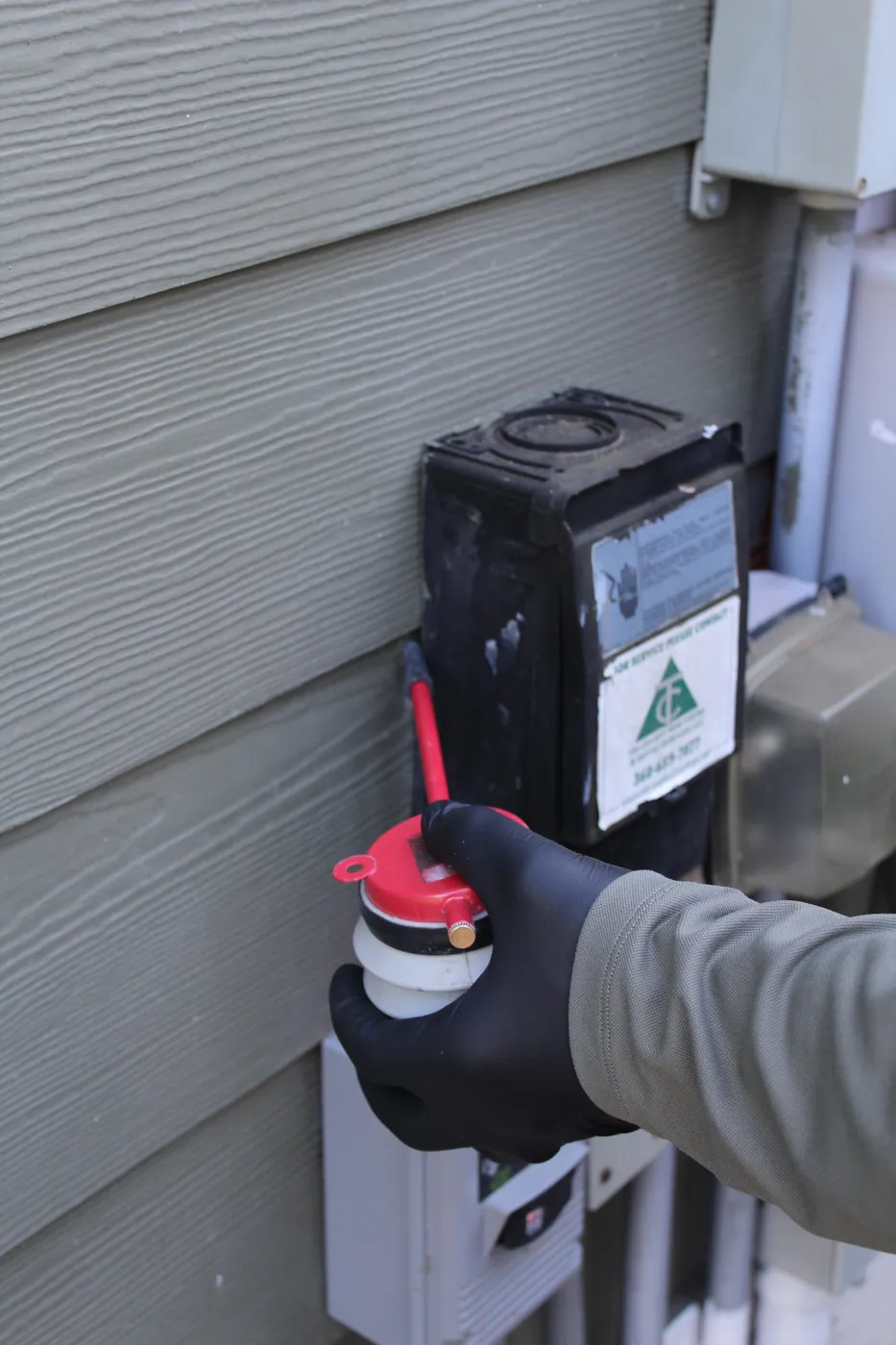
Tamper-resistant bait stations sit around the exterior, locked, anchored, and keyed so only a rodent reaches what is inside. Nothing loose, nothing indoors, nothing a dog or a kid can get into. On recurring service we refill and re-check every station on every visit, which is the part that separates a station that works from a station that is decoration. A bait box dropped once and never opened again is an empty plastic box.

The interval most homes here settle into is quarterly, with the fall visit weighted heaviest because that is when the population moves. Homes backing onto a greenbelt or a creek line, and anything with a history of roof rats, usually run bi-monthly through the wet season. We cover the same interval on every route we run, including rodent control in Everett and the rest of the north sound.

Why call us instead of DIY

Most rodent jobs fall apart at the same spot: somebody baited or trapped, but nobody closed the entry points, so it just opens a vacancy for the next rat. Any rat exterminator can set a trap. We do both halves: seal the house up, keep bait stations working around the outside, and we don't call it done until we've confirmed the activity is gone.

Call now (425) 332-6566
Pure Guard servicing a tamper-resistant rodent bait station outside a Snohomish County, WA home
Pure Guard on the job in Lake Stevens, WA

Backed up

What the
research says.

Washington's Department of Health puts prevention ahead of trapping for the same reason we do. A mouse fits through a quarter-inch gap, so until the crawl space vents and utility penetrations are sealed you are removing rodents faster than the house lets new ones in.

Source: Washington State Department of Health, Rodents

Do not sweep or vacuum droppings. State health guidance is to air the space out first, wet the material with disinfectant rather than dry-brushing it, and bag it, because dry sweeping is what puts contaminated particles into the air.

Source: Washington State Department of Health, Rodents

Questions, answered

Rodents
questions.

Still not sure what you've got? Send us a photo or give us a call and describe what you're seeing, and we'll tell you what it is and whether it's worth treating.

(425) 332-6566

What is rodent exclusion?

Rodent exclusion is the physical sealing of every opening on a building a rodent can use, done with hardware cloth, sheet metal, mortar, and copper mesh rather than foam. It is the half of rodent control that ends the problem instead of managing it. We survey to a quarter inch, because that is what a house mouse fits through, and we work the roofline, the foundation penetrations, the crawl-space vents, and the utility chase. Bait and traps clear what is already inside. Exclusion is what stops the next one getting in.

Do you use bait or traps for rats and mice?

Both, because they do different jobs. We place tamper-resistant bait stations around the outside of the house and refill them every time we come out, which keeps the outdoor population down so there is less pressure on your home. Inside, we snap-trap the confirmed runways and remove what we catch. The bait is an anticoagulant, essentially a blood thinner, and rodents that feed on it dehydrate and tend to move off away from the structure rather than settling deeper into it.

How do exterminators get rid of rats in walls?

We do not open the wall. Rats run fixed routes inside a cavity, usually up the utility chase from the crawl space and out at the top plate into the attic, so we find both ends of that run, seal them, and set traps in the runway the rat is already travelling. It comes to the trap on its own, normally within a few days. Cutting drywall is a last resort, and on most homes it is slower than closing the route and letting the rat walk to you.

What do rat exterminators do?

Three things, in order. We inspect the building inside and out and identify what you have and how it is getting in. We seal every opening a quarter-inch or larger with rodent-proof materials, which is the exclusion work. Then we bait the exterior in locked stations and trap the interior runways to clear whatever is already inside, and we come back to verify instead of assuming. A rat exterminator who skips the middle step is selling you a recurring problem.

What is the fastest way to get rid of mice?

Snap traps in the active runways clear the mice already inside within a week or two, but speed is not the point if you skip the exclusion. As long as the entry points are open, more keep coming. We seal first so the trapping actually finishes the problem instead of running forever.

How are rats getting into my attic or crawl space?

Roof rats almost always enter at the roofline through gaps at the eaves, vents, and roof penetrations. Norway rats come in low, through foundation gaps and crawl-space vents. We inspect both and identify which one you have before we close anything up.

When should I call an exterminator for rats?

As soon as you hear something moving in a wall or ceiling at night, or find droppings anywhere inside the house. Rats gnaw wiring, and that is a fire risk rather than a nuisance. Waiting a season also changes the job: a pair becomes a nest, and a nest in a crawl space ruins the insulation and the vapor barrier under your floor, so a two-gap sealing job turns into a full clean-out.

How long does it take to get rid of rats?

Most homes are clear within a couple of weeks. We exclude the entry points first so no new rodents come in, then trap the ones already inside and return to verify. We do not close the job until two consecutive checks come up empty.

Does ultrasonic rodent control work?

No, and we will not sell you one. Rodents get used to the sound quickly, it does not pass through walls or furniture, and it does nothing at all about the gap they walked in through. Plug-in repellers are one of the most common things we find still running in a house with an active infestation. Sealing the entry points is the only thing that has ever ended a rodent problem.

Is rodent control safe for pets?

Yes. The bait stations we use are tamper-resistant and locked, they sit outside the home, and only a rodent can get to what is inside one. There is no loose bait anywhere a dog or a cat can reach. Traps go where rodents travel, not where your pets go, and we will show you exactly where everything is placed before we leave.

How do exterminators get rid of mice?

Not with a handful of snap traps and hope. We find how they are getting in first, because a mouse fits through a quarter-inch gap and a house that still has one will keep restocking itself. We seal every opening that size or larger with hardware cloth and proper materials, set locked exterior bait stations that get refilled every visit, and trap indoors to clear what is already living inside. Then we come back and verify rather than assuming it worked.

How much does a rat exterminator cost?

Every rodent job here is quoted after the inspection, because the exclusion work is measured in how many openings your house actually has, and you get that quote in writing before any work starts.

Do I need a rat exterminator or a mouse exterminator?

Tell us what you are hearing and we will work it out on the inspection. Rat control and mouse control overlap, but the gaps are different sizes and the two react to bait and traps differently, so the treatment is not identical. Rats are loud enough to hear moving in a wall or ceiling at night. Mice are quieter and usually announce themselves through droppings in a drawer or under the sink first.

Do you seal the entry points or just trap?

We seal, and it is the step most companies skip. Baiting or trapping without exclusion just opens a vacancy for the next rat. We close every gap a quarter inch or larger with hardware cloth and proper rodent-proof materials, clear whatever is already inside, and keep the exterior baited so the pressure stays off the house.

Rodents service area

Rodent Control
across the north sound.

We run rodent control out of Lake Stevens across more than 35 cities in Snohomish County, King County, Skagit, and Island, down to just past Seattle.

See all Pure Guard service areas

Ready when you are

Get the rodents
handled today.

We guarantee someone out within 48 hours across Snohomish County and King County, and since we're a local family out of Lake Stevens, we treat your home like it's on our own street.

Call today

(425) 332-6566

Call now