Most of the signs of rats in crawl space insulation show up in the house above it long before anybody goes under and looks. A smell near one floor register that comes and goes. A bedroom that went cold this winter and was fine last winter. Scratching that sounds low and off to the side rather than overhead. By the time somebody opens the access hatch, the rats have usually had a season down there.
Below is what to look for upstairs, what you’ll find under the house, and how to check without turning a rodent problem into a health problem.
Why rats go for the crawl space first
A crawl space is the easiest part of your house to get into and the least likely part to get looked at. It’s dark, it’s dry once you’re past the vent, it sits over bare ground that holds heat better than the outside air all winter, and it has fiberglass insulation stapled overhead that pulls apart into perfect nesting material. Most homeowners go under once when they buy the place and never again.
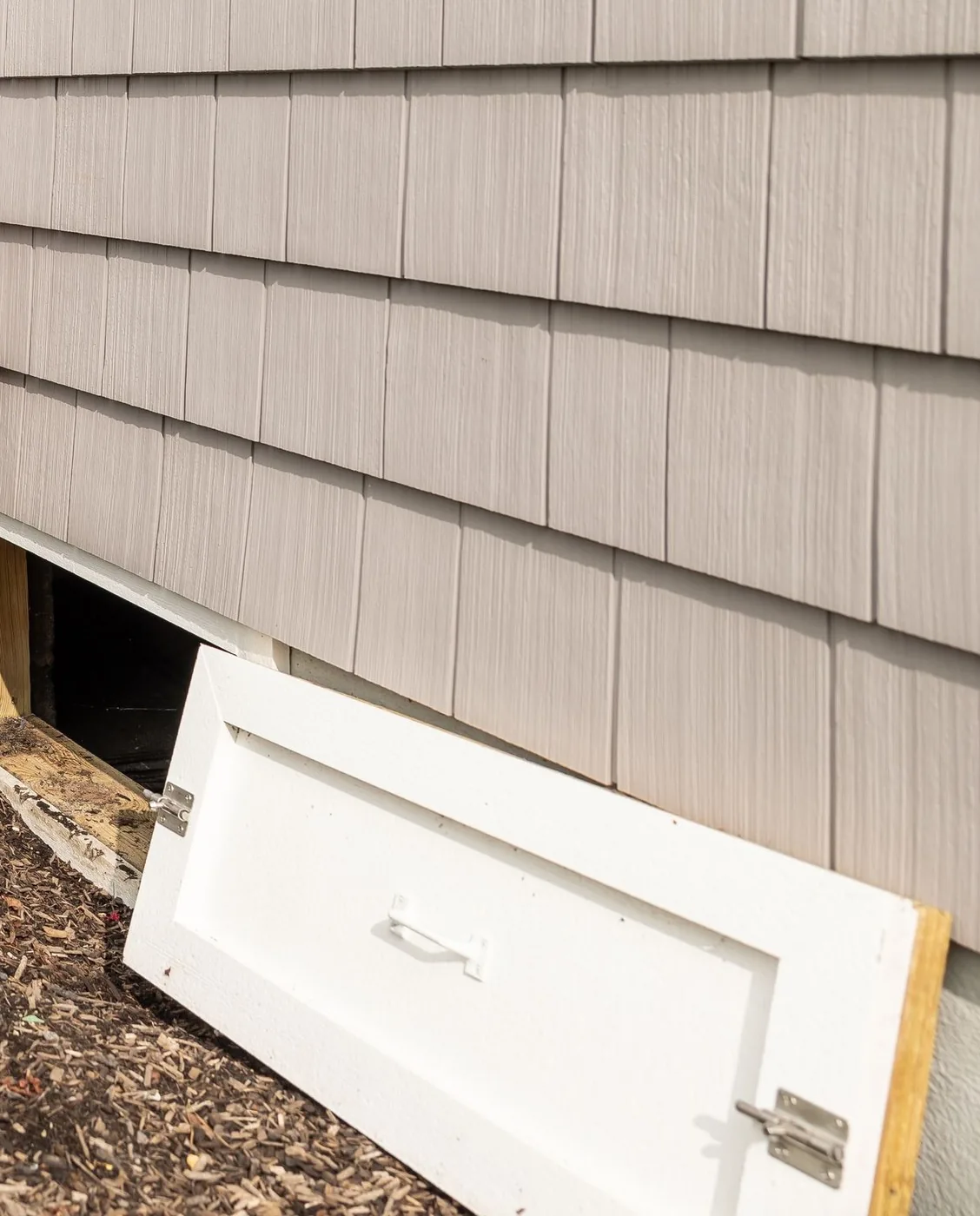
Getting in barely qualifies as breaking in. Foundation vents rust out or lose their screens, the access door warps and stops sitting flush, and there’s a gap where the water line passes through the rim joist that nobody sealed after the plumber left. A rat needs an opening about the size of a quarter, and a crawl space perimeter usually has several.
Norway rats are the ones that end up down there: they stay low, they burrow, and they work the foundation line, unlike the roof rat that climbs into attics. The difference is laid out on our rodent control page. What matters here is that low noises and a smell near the floor point down, not up.
The housing stock matters too. Edmonds, Everett, Shoreline and the older end of Lake Stevens are full of dirt-floor crawl spaces well past their first vapor barrier, and those are the houses we get called to. Our Edmonds pest control page covers what we see locally, and the timing is predictable enough that we wrote a separate post on why rats get in during fall.
The ammonia smell and other signs from upstairs
You can catch most of this without lifting the hatch.
The ammonia smell under the house, coming up through the floor. This is the one that brings people to us. Rat urine builds up in one spot and the smell is sharp and sour, closer to cat box than to mildew. It reaches you through floor registers, the gap around a toilet flange, or the underside of a sink cabinet. The tell that it’s rodents and not plumbing is that it moves: strong for two days, gone for a week, back again, because warm air rising out of the crawl space carries it up and the weather decides when.
Floors that got cold. Rats pull insulation off its staples to nest in it, and where a batt has dropped, the floor above loses its R-value. One room colder than the rest of the house this year when it was fine last year is worth a look underneath. Same with a new draft along an exterior baseboard.
Scratching low, not overhead. Attic rats sound like they’re above the ceiling. Crawl space rats sound like they’re in the wall at ankle height, behind a cabinet kick plate, or under the floor near an exterior wall. Late evening and just before dawn are the loud hours.
The dog that stares at one spot. Pets hear and smell it long before you do. A dog that keeps going back to one heat register, one corner of a closet floor, or one stretch of baseboard is telling you something.
Droppings inside. Droppings under the sink or behind the range mean they’re already past the crawl space and into the floor cavity. That moves the timeline up.
Rat droppings and what you find under the house
Once you’re under there with a light, the evidence is easy to read.
Rat droppings in the crawl space are the first thing you’ll see, and they’re worth reading rather than counting. Norway rat droppings run about three-quarters of an inch, dark, blunt at both ends and thicker than you’d expect. Mouse droppings are a quarter of that and pointed. Fresh ones look dark and soft, old ones go grey and crumble, so a heavy grey pile with a scatter of dark on top means an old problem that’s still running. Pattern matters as much as size: droppings spread evenly over a wide area means feeding, a dense concentration in one spot means you’ve found the nest.
Insulation pulled off its staples. Batts hanging down, torn open, or bunched into a corner. Look for tunnelling through the fiberglass rather than damage from below, and look up at the subfloor for a bare stripe where a batt used to be.
Grease and rub marks along the joists. Rats run the same routes over and over and leave a dark, waxy smear where their fur touches wood. Run your light along the bottom edge of the joists and the top of the foundation wall. A continuous smudge line is a runway, and it leads to the entry point at one end and the nest at the other.
Chewed vapor barrier. The plastic on the ground gets shredded, dragged, and burrowed under, because the gap between the barrier and the soil is warm and hidden. Once it’s torn open across the floor it has stopped keeping ground moisture out of your framing, which is a second problem sitting on the first.
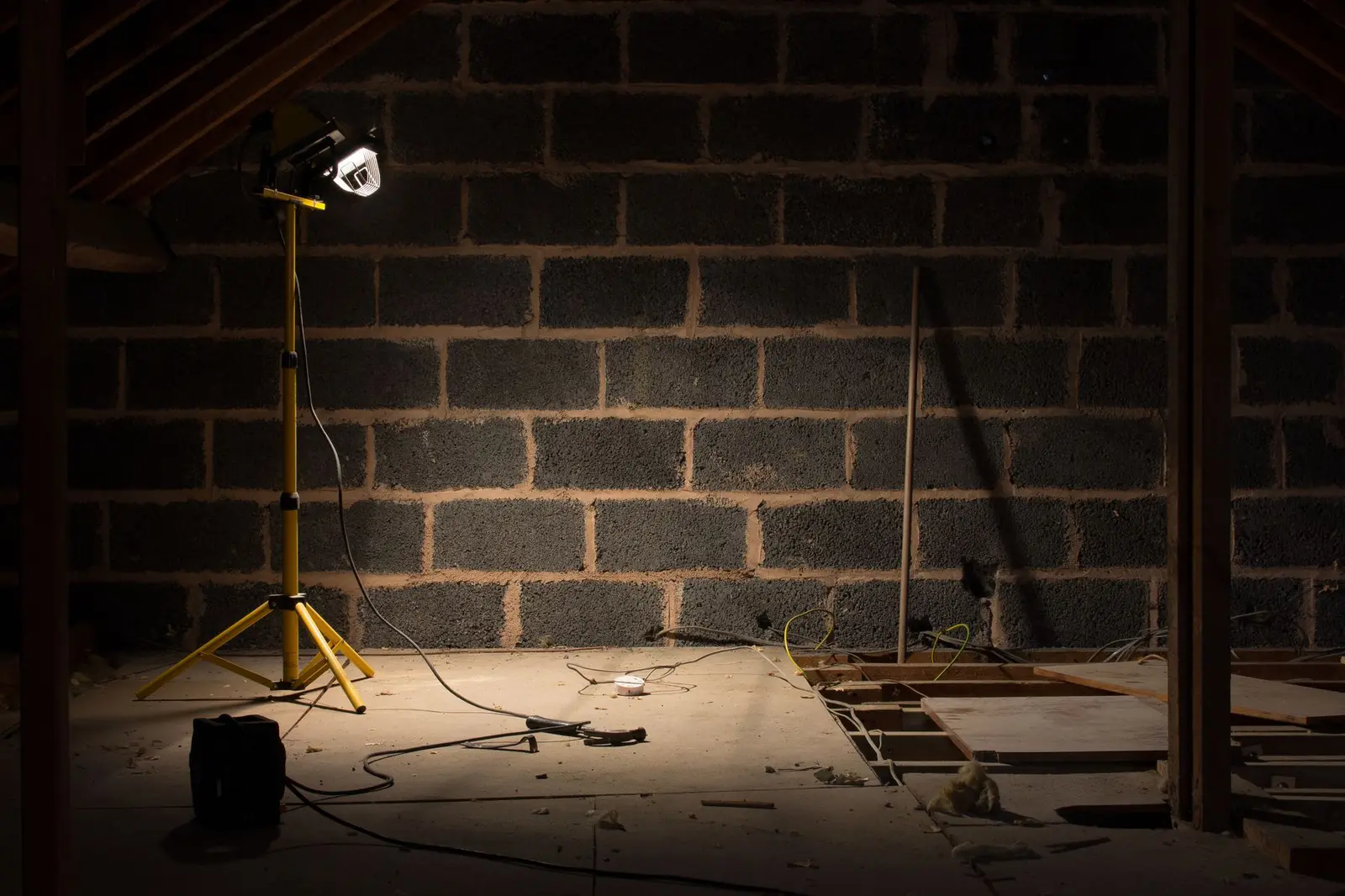
Gnawed wiring. This is the one that changes the urgency. Rats chew wire insulation to keep their incisors filed down, and low-voltage runs, romex and the flex line to a furnace are all fair game down there. Bare copper under a house is a fire risk, and it’s why we don’t treat crawl space rodent activity as a wait-and-see.
How to check without making it worse
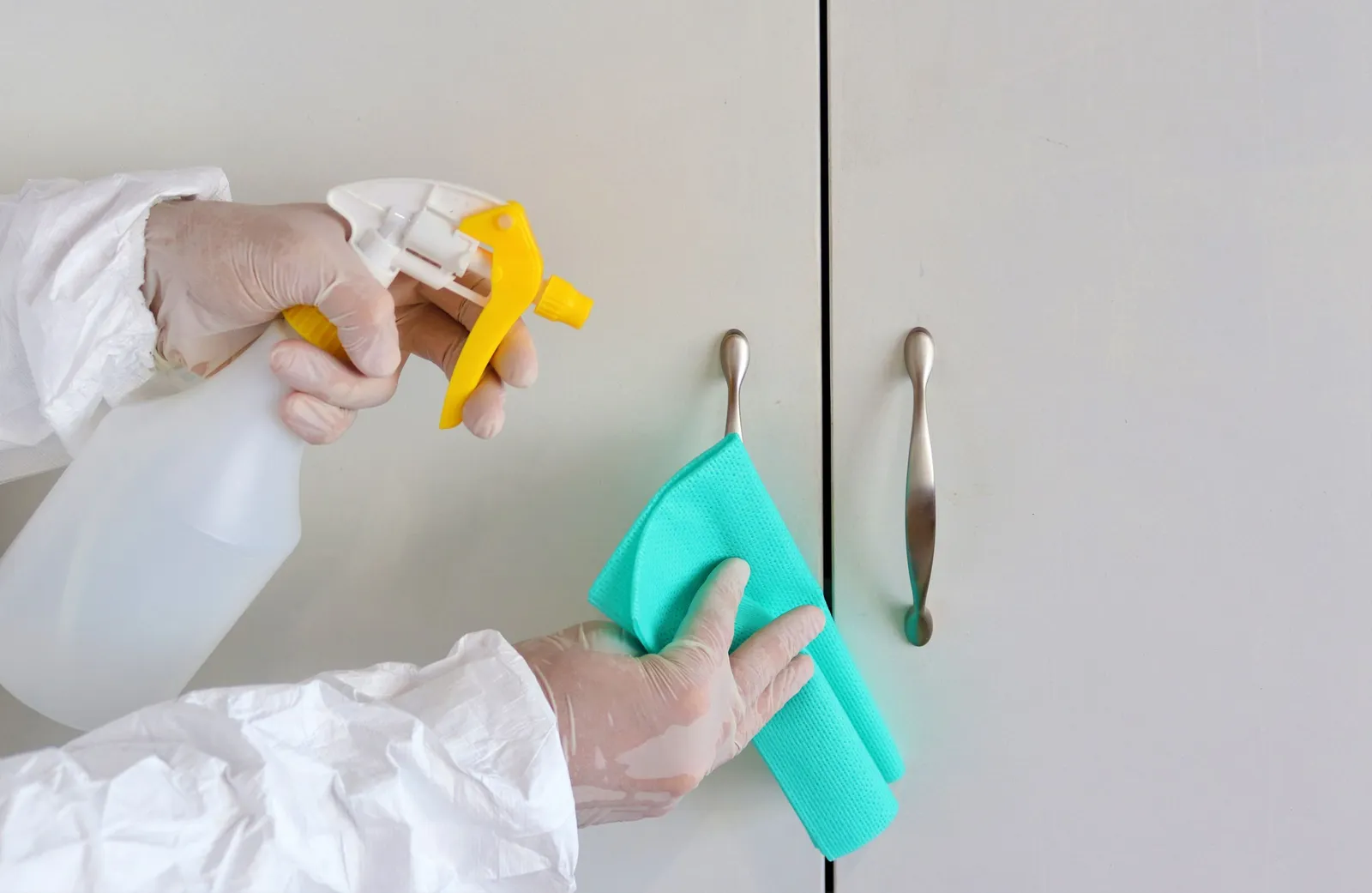
Know what you’re crawling into first. Rodent droppings and urine dry out, break up, and go airborne the moment they’re disturbed, and inhaling that dust is how people get hantavirus. Washington’s Department of Health publishes the cleanup procedure, and it’s worth reading before you open the hatch rather than after.
The short version of what the state asks: air the space out for at least 30 minutes with the vents and access open before you go in, wear rubber gloves, and wet droppings and nesting material down with a bleach solution and let it soak before you touch any of it. Do not sweep and do not run a shop vac. Dry brushing or vacuuming is the worst thing you can do down there, because it takes contamination that was sitting still and puts it in the air you’re breathing. A dust mask helps with dust and does not stop a virus.
Add coveralls you can throw out, knee pads, a real flashlight rather than a phone light, and somebody upstairs who knows you’re under there.
The tap-and-listen trick
Here’s a check that costs nothing. Get under with your light off, let your eyes settle, tap a joist once with the handle of a screwdriver, and stay still for thirty seconds. Rats freeze at the noise and then move. What you’re listening for is a scuffle in the insulation above you or a body running the top of the foundation wall, and it tells you which quadrant of the crawl space is active. Do it in two or three spots and you’ve mapped the problem without touching anything.
That’s also where you stop. If something moves near you, if you find a carcass, if the ground is wet, if the insulation is heavily soiled across a wide area, or if the ammonia is strong once you’re down there, back out and let somebody go under who has the respirator for it. A crawl space is a bad place to find out you’re claustrophobic.
What a crawl space inspection covers
The inspection is the whole footprint, not the first ten feet past the hatch. We map where the droppings are heaviest, find the runways off the grease marks, and follow them back to the openings the rats are using. We go over the insulation section by section, check the state of the vapor barrier, and photograph the wiring, the ducting, and any standing water that’s going to keep the space damp no matter what else gets fixed.
Then we walk the outside: foundation vents, the access door, the rim joist, and every place a pipe or a wire passes through the wall. The inside tells you how bad it is, the outside tells you how they’re getting in, and you need both before anybody sets a trap.
We get out to look within 48 hours, and it’s a licensed applicator doing it. Brian holds WSDA Commercial Applicator License #112338, which is the credential worth asking any company for before you let them under your house.
Why trapping alone leaves the problem
Traps clear the rats that are in the crawl space right now. They do nothing about the reason there were rats in the crawl space.
The gap they came through is still open, the runway is still scented, and the nesting material is still stapled overhead. Rats follow the scent trails other rats leave, so an emptied crawl space with an open vent isn’t a solved problem, it’s a vacancy with directions to it. That’s the call we get most: somebody trapped six rats in October, thought it was handled, and is hearing scratching again in February.
Exclusion comes first. Every opening a quarter inch or larger gets closed with hardware cloth and proper rodent-proof material, vents get re-screened, and then trapping actually finishes instead of running forever.
When the vapor barrier has to be replaced
Patching works when the damage is one tear from somebody’s boot. It doesn’t work once rats have lived on it.
The contamination isn’t on top of the plastic, it’s underneath it and in the insulation above it. Rats burrow between the barrier and the soil, so the urine and droppings end up in the ground contact layer where nothing can clean them. Laying new plastic over that buries the smell instead of removing it, which is why some crawl spaces still stink after a cleanup. If the sheeting is shredded, tunnelled under, coming down with soiled insulation, or slipped off the foundation walls, the old material comes out and new goes in.
That’s the job we do as crawl space vapor barrier replacement: haul out the old barrier and the contaminated insulation, seal the rodent openings while the space is empty and reachable, then lay new 6-mil edge to edge with the seams overlapped. In that order it’s a ten to fifteen year fix. In any other order it isn’t.
Does crawl space encapsulation stop rodents?
Not on its own. Crawl space encapsulation seals the space into a conditioned part of the house with a heavy liner up the walls and usually a dehumidifier, and it’s a moisture and energy system rather than a rodent system. Leave the vents and penetrations open and rats get in and chew the liner the same way they chewed the last barrier. Encapsulation keeps rodents out only when the exclusion was done first, and at that point the exclusion is what’s doing the work.
The other thing people ask about is a rat slab, a thin non-structural pour of concrete over the crawl space floor. It does what it sounds like: takes away the dirt Norway rats burrow into and gives you a hard floor instead. It’s a real answer to burrowing and a much bigger project than most crawl spaces need, and it still doesn’t close a rusted-out foundation vent.
Most homes here need neither. They need the contamination gone, the openings sealed, and a barrier that’s actually intact.
Questions about rats in the crawl space
What does rat urine smell like in a crawl space? Sharp and ammonia-like, closer to a cat box than to mildew or mold. It builds up where rats nest and latrine in the same spot, and it reaches the house through floor registers, plumbing penetrations, and the gap under a sink cabinet. It typically comes and goes with the weather rather than staying constant, which is what separates it from a damp or musty smell.
How do I know if it’s rats or mice under my house? Size and sound. Rat droppings run about three-quarters of an inch, blunt-ended and thick, while mouse droppings are around a quarter inch and pointed at the ends. Rats are loud enough to hear moving through insulation from the room above. Mice usually announce themselves through droppings first because you rarely hear them at all.
Are rats in the crawl space dangerous? Yes, in two ways. Dried droppings and urine become airborne dust when they’re disturbed, and that dust is how hantavirus spreads, which is why Washington DOH tells you to air the space out and never sweep or dry-vacuum it. Separately, rats chew wire insulation to file their teeth, and bare copper under a house is a real fire risk.
Can rats get from the crawl space into the house? Often, yes. The routes are the same penetrations that let them into the crawl space: plumbing chases, the gap around a drain line, HVAC boots, and the wall cavities that run straight up from the mudsill. Finding droppings under a kitchen sink or behind an appliance usually means the crawl space population has already found the way up.
Should I look in the attic or the crawl space? Follow the noise. Scratching overhead at night is roof rats in the attic; scratching low, behind a baseboard or under the floor, is Norway rats underneath. If you’re hearing both, check both, because they’re two different entry points and closing one does nothing for the other. Either way it’s the same rat and mouse control work: find the openings, close them, then clear what’s inside.
Do I have to replace the insulation too? If it’s been nested in, soiled, or pulled down, yes. Contaminated fiberglass holds the smell and the contamination even after the droppings on the ground come out, and compressed or fallen batts have already stopped insulating. Sections that are clean, dry, and still stapled up can stay.
When to call somebody
Plenty of the signs of rats in crawl space framing are things you can confirm yourself in an afternoon. Where it stops being a homeowner job is when you’ve got droppings and a smell but no idea where they’re getting in, when the vapor barrier is torn up, when you find chewed wiring, or when you’ve trapped and it came back. At that point the space needs somebody under it with a respirator and a plan for the entry points. Crawl space work is quoted per job once we’ve been under the house and seen what’s actually there, so tell us what you’re finding and we’ll come look. You get the photos either way, including the ones where the answer is that it isn’t as bad as it smells.
If this is happening at your place, our local pages cover what the work looks like in each of our core markets: rodent control in Lake Stevens, Lynnwood rat control, rat and mouse control in Edmonds, rodent control in Woodinville, and Everett rat control.