You’re sitting on the couch on a gray October evening when something thumps against the lampshade. A few minutes later there’s another one crawling up the window frame, and when you go to wipe it away, the smell tells you exactly what kind of bug it is.
If you’ve been wondering how to get rid of stink bugs, you’re in good company, because every fall, homes across western Washington get a wave of the same three visitors.
The three are the brown marmorated stink bug, the boxelder bug, and the western conifer seed bug. They look different, but they show up for the same reason and the fix is nearly identical for all of them.
Why Stink Bugs, Boxelder Bugs and Conifer Seed Bugs Come Inside
They aren’t after your food, your pantry, or your family. They’re looking for a place to spend the winter.
When the days shorten and the nights cool off, adults of all three species go looking for a sheltered, protected spot. On a sunny afternoon you’ll see them gathered on the walls that catch the most warmth. Colorado State Extension notes that boxelder bugs favor south and west exposures, where the walls get the most sun, and they slip into cracks around doors, foundations and walls.
The WSU stink bug fact sheet says the same about stink bugs: in fall the adults collect on building exteriors looking for protected places to overwinter, and attics are a common choice. They may wander into your living space during warm spells in winter and spring.
How to Tell Them Apart
 Brown marmorated stink bug
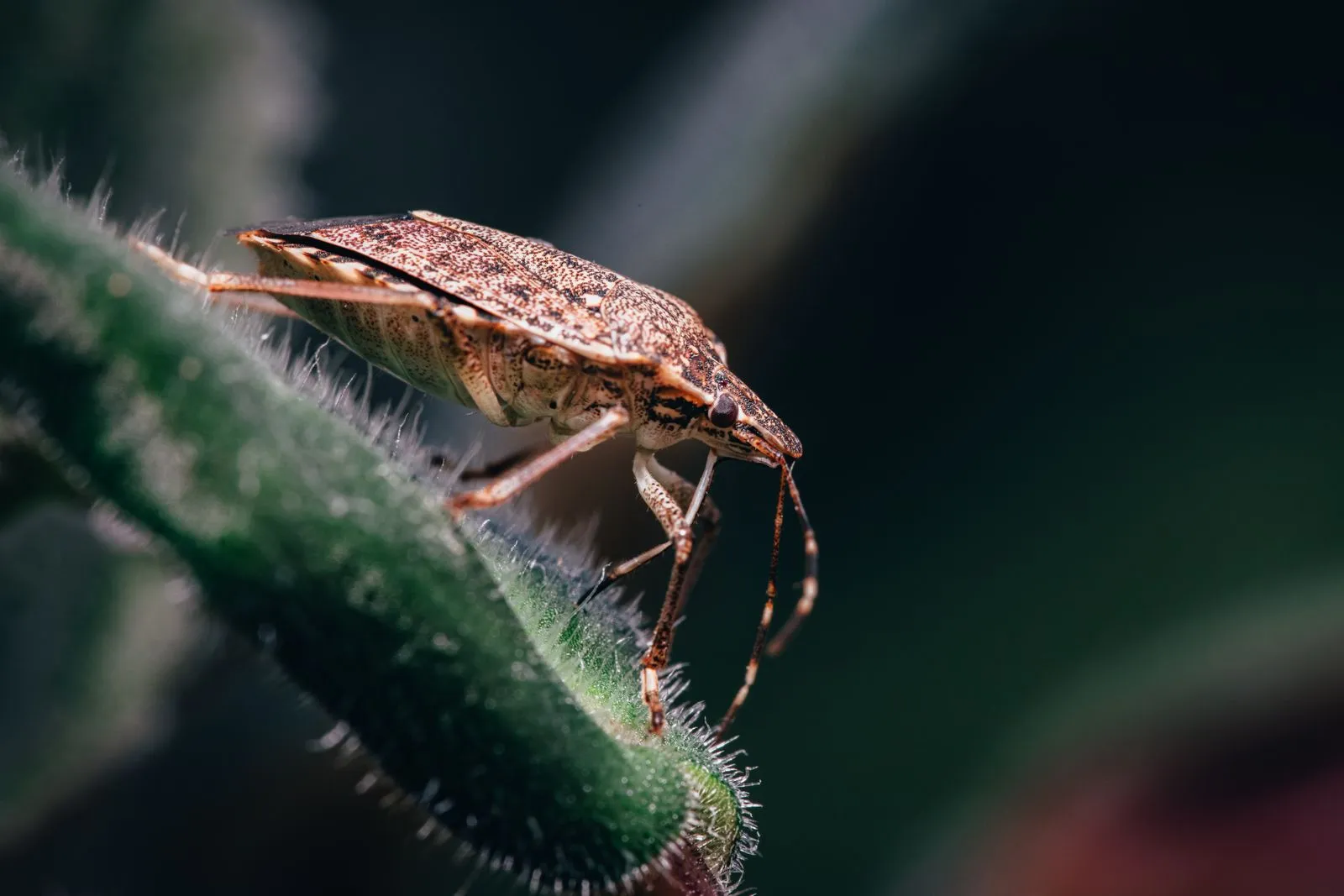
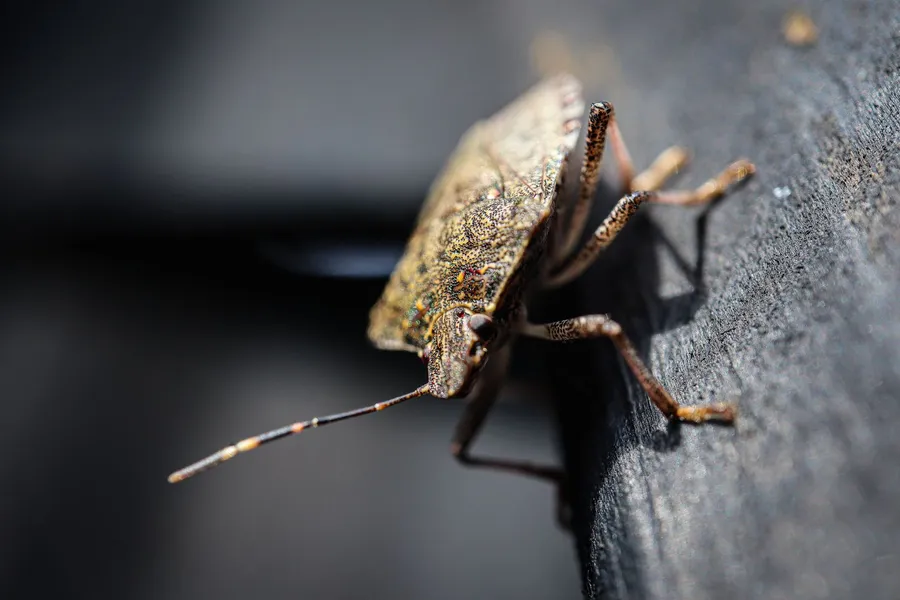
Shield-shaped and mottled brown, with thin white bands on the antennae.
Brown marmorated stink bug
Shield-shaped and mottled brown, with thin white bands on the antennae.
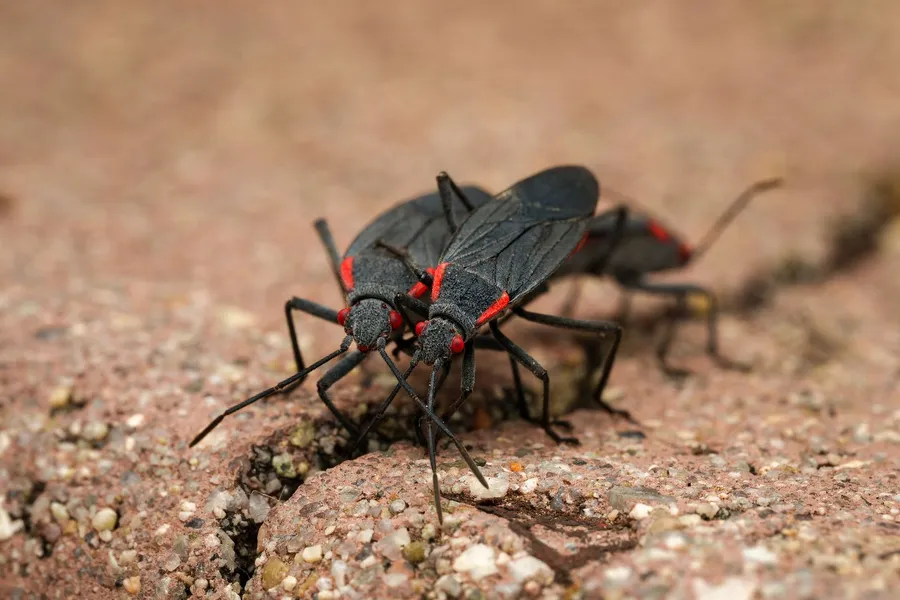 Boxelder bug
Black with red lines on its back, about half an inch long.
Boxelder bug
Black with red lines on its back, about half an inch long.
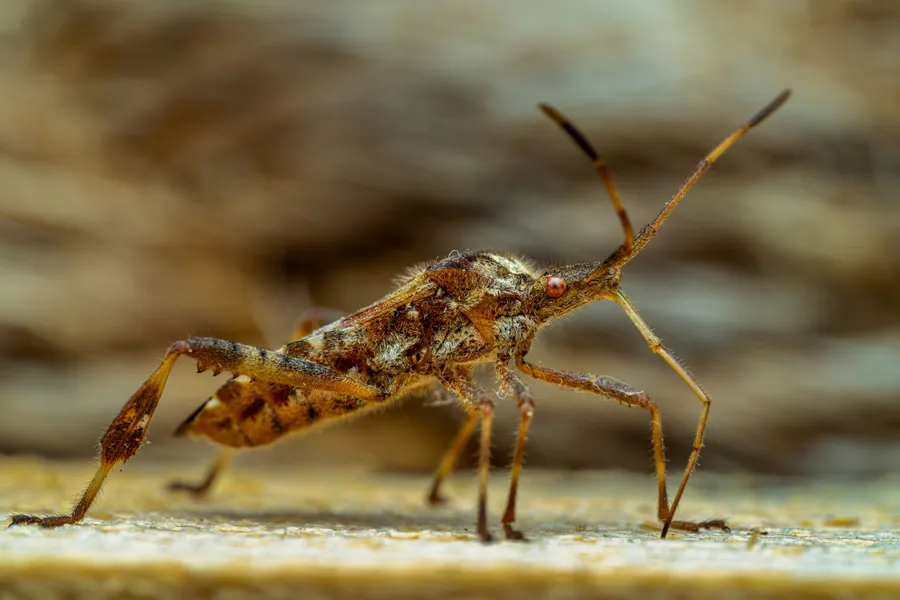 Western conifer seed bug
Long and brownish, with flat, leaf-like hind legs.
Western conifer seed bug
Long and brownish, with flat, leaf-like hind legs.
Brown Marmorated Stink Bug
This is the one most people mean when they search for stink bugs. WSU’s entomologists tell people to look for thin white bands on the antennae, which separates it from our native stink bugs. It has the classic shield shape, and it gives off a “smelly socks” odor when it’s threatened or squashed.
Boxelder Bug
Adult boxelder bugs are about half an inch long and black, with three red lines on the thorax, a red line down each side, and a diagonal red line on each wing. Young ones are smaller, wingless, and have red abdomens. Colorado State points to female boxelder trees as the long-term source, which is why you tend to see them near those trees.
Western Conifer Seed Bug
This one gets mistaken for a stink bug all the time, and it’s the biggest of the three. Utah State Extension lists it at five-eighths to three-quarters of an inch long, brownish, with flat, leaf-like projections on its hind legs and a yellow-orange abdomen you’ll mostly see in flight. It also gives off a piney smell when handled.
The Western Conifer Seed Bug Is a Local
Unlike the stink bug, the western conifer seed bug is no newcomer. Penn State Extension describes it as native to temperate areas of the Pacific Coast in western North America, and it only began spreading east in the 1950s. It feeds on the seeds of conifers, which our Douglas firs and pines supply in abundance.
If you live near big evergreens in Snohomish or King County, you’ll probably see a few every fall. They arrive in late September and October as it turns cold, and they’re looking for the same thing the others are: a dry, sheltered corner.
What Washington Sources Say About Brown Marmorated Stink Bugs
The brown marmorated stink bug is not native to the Northwest. In a 2018 report, WSU said it was first detected in Washington in 2010 and had since turned up in 21 counties, from Spokane and Whitman in the east to Kitsap, King and Clark in the west. The same report noted that the majority of sightings were in King, Pierce and Thurston counties.
So if you see a bug with banded antennae on your walls in Snohomish or King County, you’re looking at a species WSU has been tracking across western Washington for years. WSU’s report asked residents to email a photo with the date and location.
Are Stink Bugs in the House Dangerous?
No. This is the part that tends to calm people down.
- They don’t breed indoors. WSU says stink bugs don’t damage structures, don’t reproduce indoors, and don’t bite.
- Boxelder bugs are mainly a nuisance. Colorado State says they don’t reproduce indoors, and bites are rare. They can stain drapes and light surfaces, and they smell unpleasant when crushed.
- Conifer seed bugs are harmless to people. Penn State says they aren’t considered a medical risk, and that indoors, beyond being annoying, they are not a threat.
The one real downside is the smell. Which brings us to the first rule of removal.
How to Get Rid of Stink Bugs Already in the House
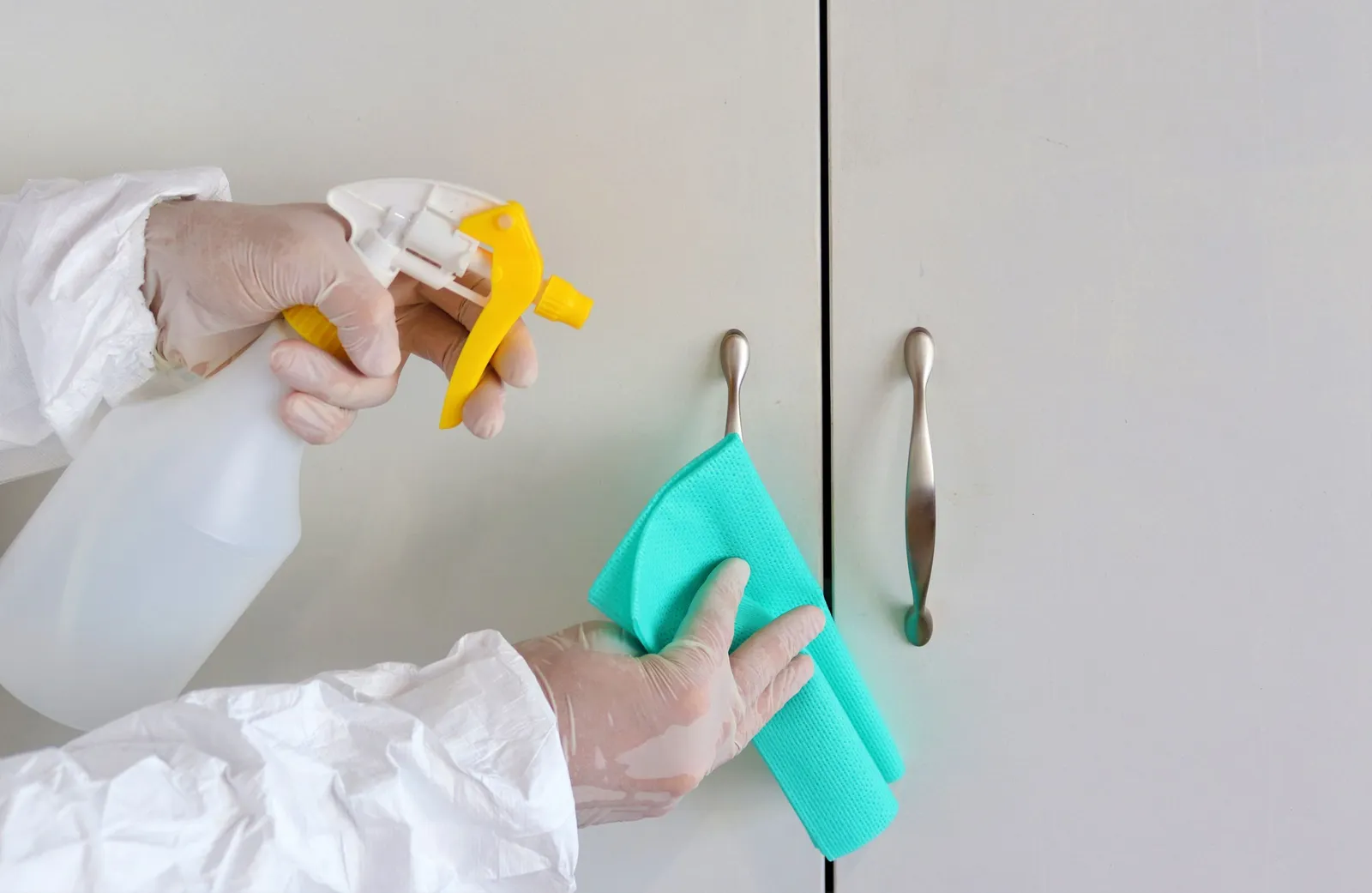
Don’t squish them. That releases the odor, and boxelder bugs can leave a stain behind. Here’s what the extension services suggest instead.
- Vacuum them up. WSU recommends vacuuming or sweeping them up, sealing them in a bag, and putting the bag in the trash. Use a vacuum with a disposable bag and empty it right away, since Cornell warns the vacuum will hold the odor of conifer seed bugs.
- Try the soapy-water jar. Cornell also says you can collect them by hand in soapy water. Keep a wide jar with a few drops of dish soap and water handy, and flick or brush the bug in.
- Skip the bug bombs. WSU advises against foggers and indoor sprays, because dead bugs left in wall voids can smell and attract other pests, such as carpet beetles.
You’ll find the most bugs near sunny windows in the afternoon, so check there first. If you keep finding a few every day, they’re probably coming from inside a wall or attic, and sweeping up won’t stop it.
How to Keep Them Out Next Year
Prevention is the real answer, and it’s mostly a matter of closing gaps before the bugs arrive. The WSU fact sheet recommends non-chemical options first, and the same steps keep out all three species:
- Check that window screens and door sweeps fit tightly.
- Screen attic and crawl space vents with fine mesh. Utah State suggests tight-fitting screens on foundation and attic vents during warmer months.
- Seal gaps around siding, fascia and soffits, around air conditioners, and where pipes and wires enter the house.
- Trim weeds back from the foundation, which Utah State also recommends.
Timing matters. These bugs start arriving in September, so the best time to seal up is late summer, once you know the weather is about to turn.
What about spraying the outside of the house? Extension sources are lukewarm. Colorado State says residual insecticides can be applied to the resting spots on building exteriors, but most labeled products aren’t very effective against boxelder bugs. Cornell goes further for conifer seed bugs, calling outdoor sprays costly, rarely effective, and useless indoors. Sealing the gaps does more for you than any spray.
Where an Inspection Helps
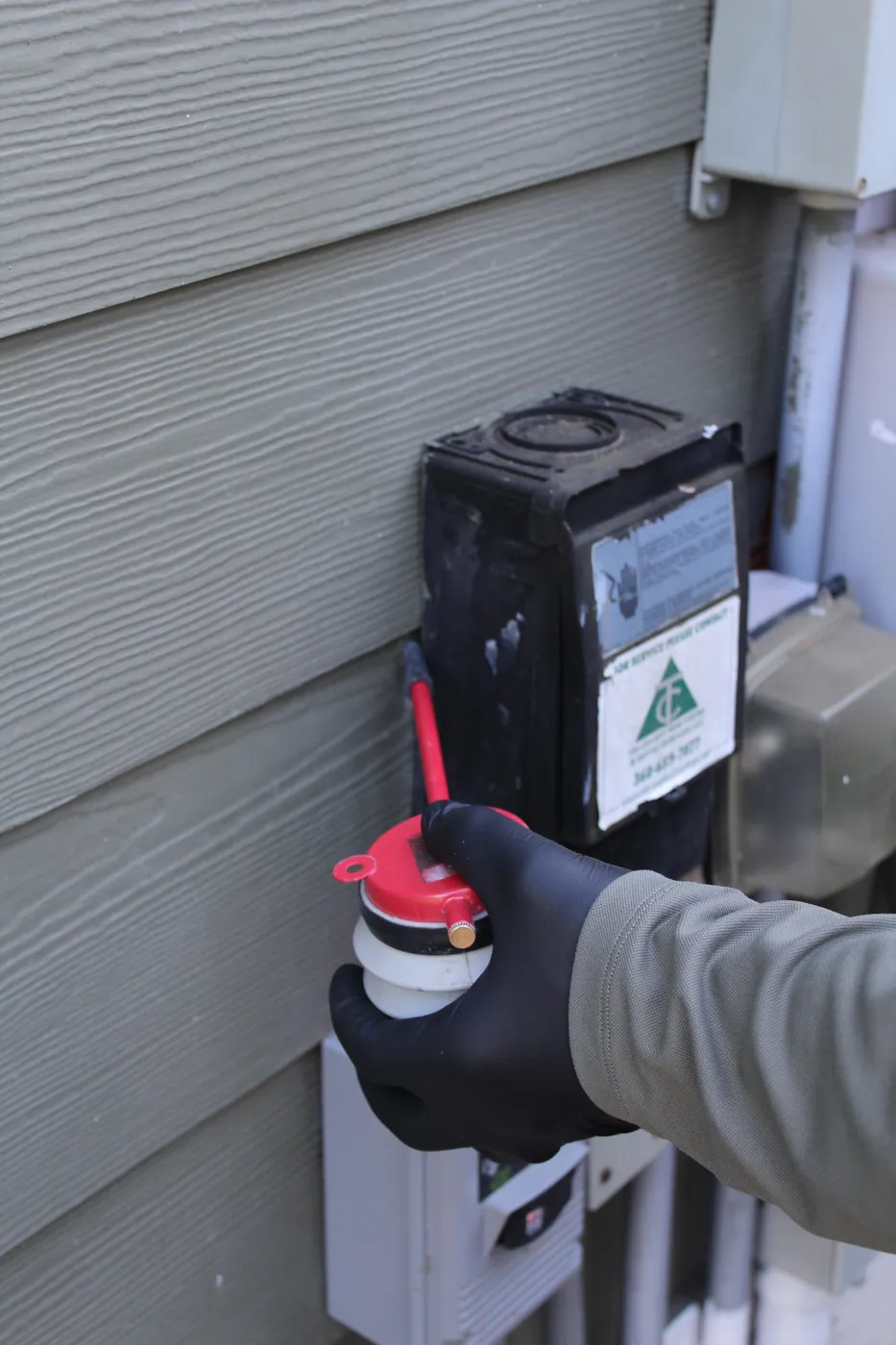
The hard part of sealing a house is finding the gaps the bugs are actually using. A hairline crack behind a piece of trim doesn’t look like much, but it’s all an adult stink bug needs.
Checking the roofline, vents, siding seams and utility penetrations is familiar work for us from rodent jobs, where rats and mice go through the same kinds of openings in the same season.
If you’d like a second set of eyes on where the bugs are getting in, request an inspection and we’ll look at your home’s exterior with you. You can see everything we help with on our services page.
Frequently Asked Questions
Do Stink Bugs, Boxelder Bugs and Conifer Seed Bugs Damage a House?
Extension sources say they don’t. They don’t chew wood, they don’t breed inside, and they don’t eat your food. The problems are the smell, the occasional stain, and the sheer number that can gather on one wall.
Will They Go Away on Their Own?
Mostly, yes. Colorado State says boxelder bug problems usually end by late May as the bugs head back outdoors. But they’ll return the next fall unless the entry points are closed.
Can I Get Rid of Them With a Spray?
Indoor spraying isn’t recommended, and exterior sprays have a mixed record. Vacuuming and sealing gaps are the steps extension services point to first.
When Should I Call for Help?
When you keep seeing them in the house even after vacuuming, or when you can’t tell where they’re coming in. Request an inspection and we’ll look at the gaps with you.
For the specifics where you live, see our pages on rat and mouse control in Lake Stevens, rodent control in Lynnwood, Edmonds rat control, rat and mouse control in Woodinville, and rodent control in Everett, each with what changes the job in that city.