The ants on your counter aren’t the problem. They’re the visible three per cent of a colony that’s somewhere else, and killing them changes nothing, which is why the spray works for a day and then the trail comes back two feet to the left.
Getting rid of ants means reaching the nest. Everything below is about how to do that, and what to do first depending on which ant you actually have.
Work out which one you have first
Four species cover almost every call we get in the Pacific Northwest, and the right fix is genuinely different for each.
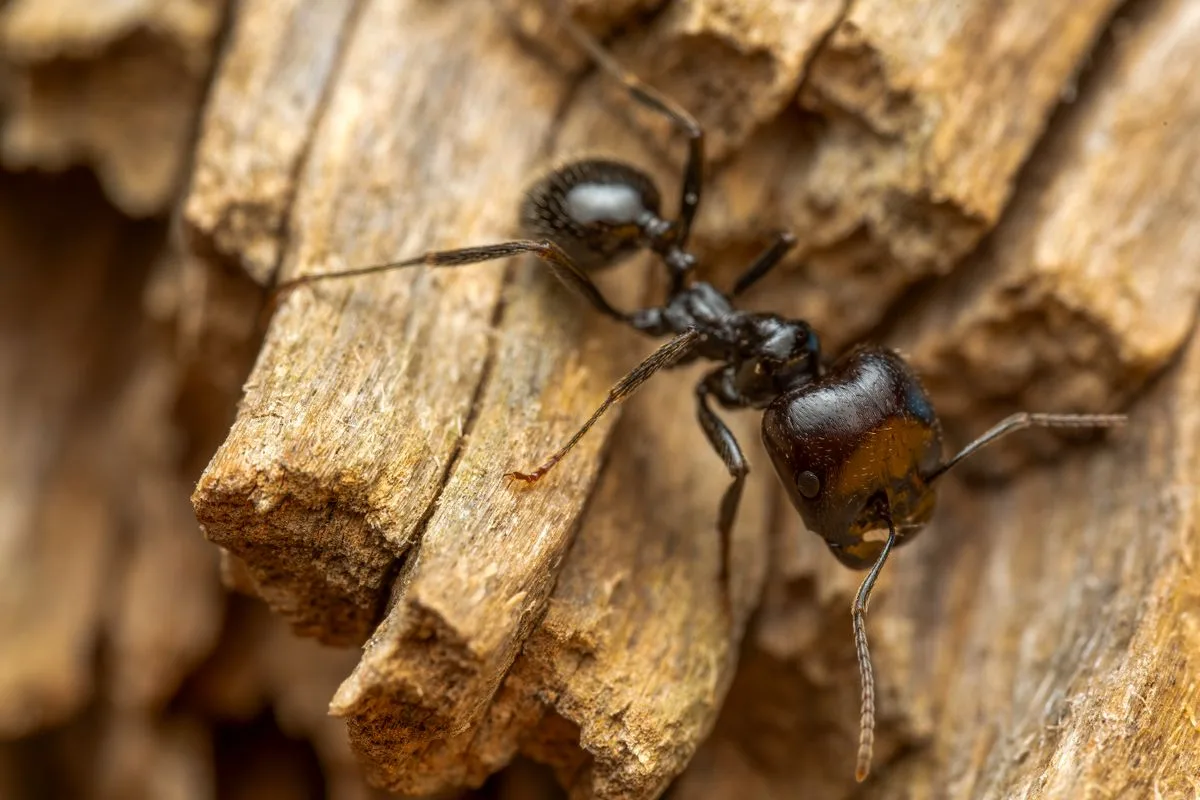
Carpenter ants. Large, black, often winged in spring. They don’t eat wood; they excavate wood that has already gone soft. Finding them inside means something has been wet long enough to soften framing, and that’s the actual problem. Sawdust-like shavings near baseboards or window frames is the tell.
Odorous house ants. Small, dark, and they smell faintly of blue cheese when crushed. The most common kitchen ant here by a distance.
Sugar ants. A catch-all name people use for several small sweet-feeding species. Behaviourally they’re baited the same way.
Pavement ants. Nesting under slabs, driveways and patios, trailing in along an expansion joint.
What backfires
Spraying the trail. A contact spray kills the foragers you can see and signals the colony to fragment. Odorous house ants in particular respond to stress by budding, so one colony becomes several, in several places. You’ve now made it harder, not easier.
Spraying near bait. If you’ve put bait down, don’t spray around it. The bait only works if ants keep walking to it, carrying it home and feeding it to the colony. Repellent product on the approach route stops that dead.
Cleaning up the trail immediately. Counterintuitive, but the trail is information. It tells you where they’re entering and which direction the nest is. Follow it before you wipe it.
What actually works
Bait, and then leave it alone. Sweet-feeding ants are a baiting job, not a spraying one. Place bait on the trail, near the entry point, and resist checking it for a few days. Seeing more of them before you see fewer is the process working, because those ants are carrying it home.
Deal with the moisture if it’s carpenter ants. WSU Extension’s work on moisture-associated ants describes nests in decayed sill plates in crawl spaces: the wood was wet and rotting before the ants arrived. Treating the ants without fixing the water means doing it again next year.
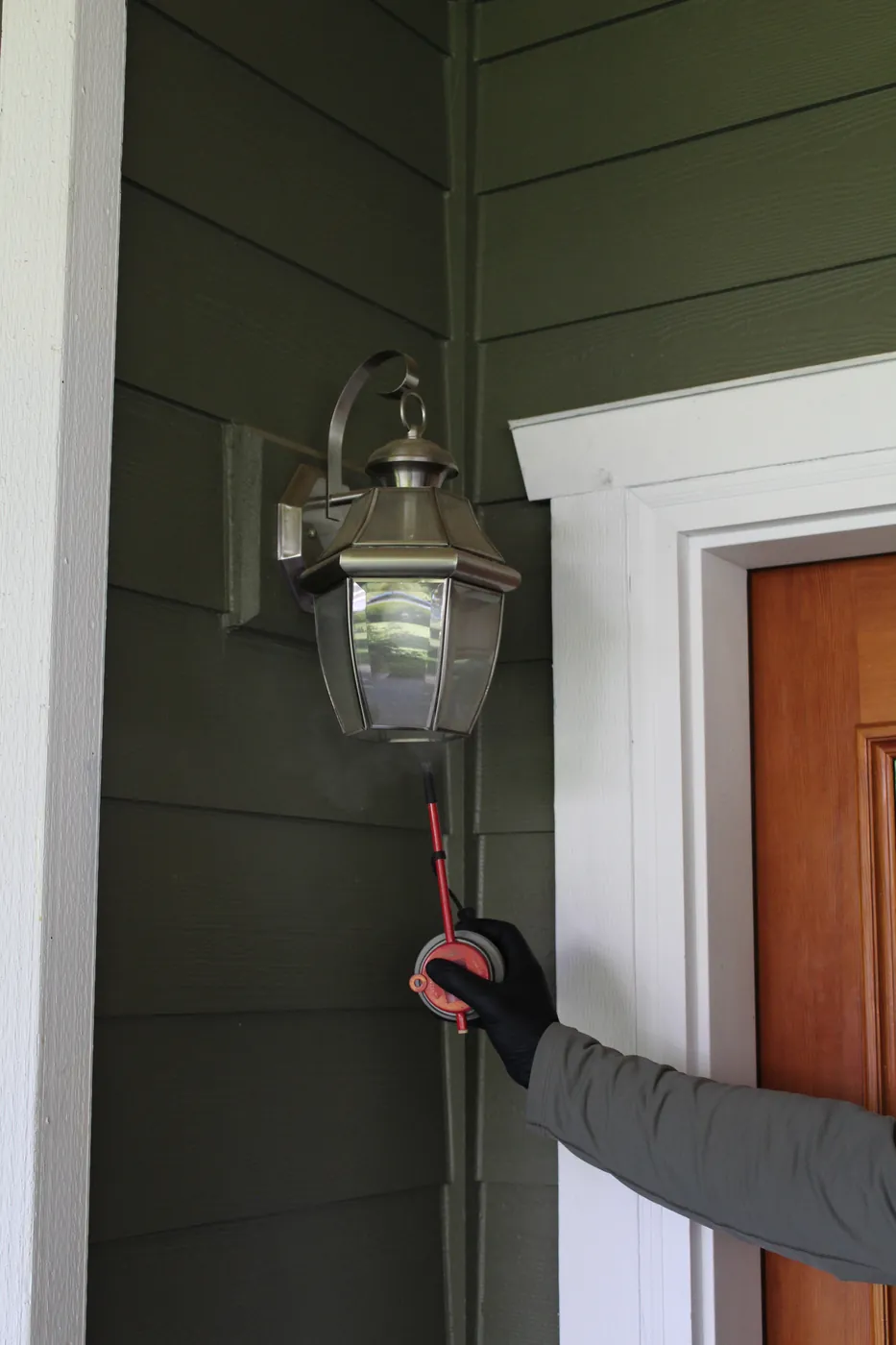
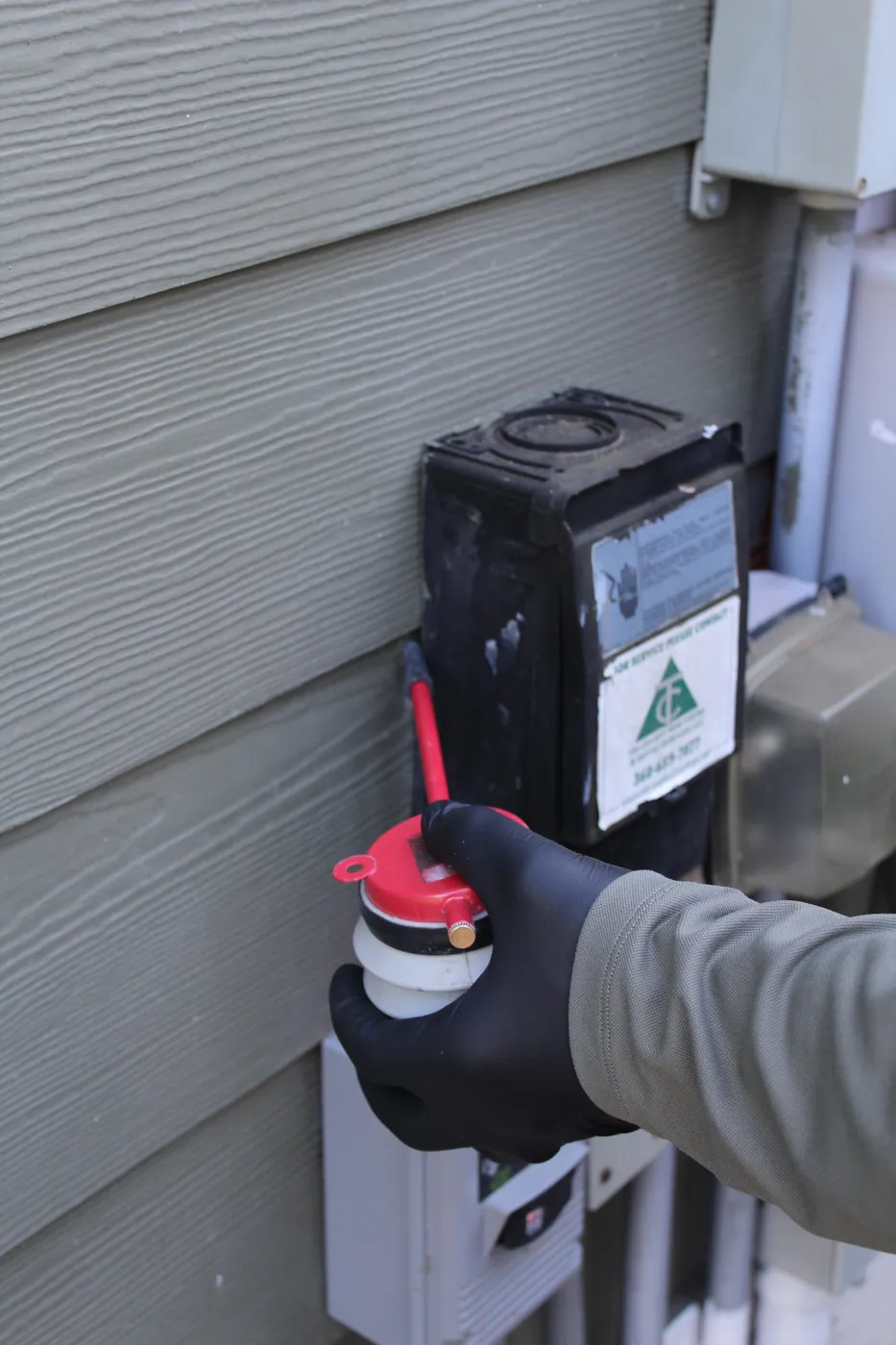
Close the approach. Trim anything touching the siding. Branches, shrubs and climbing plants are all bridges over whatever you treated at ground level. Keep mulch off the foundation line. Seal the gaps around hose bibs and utility penetrations.
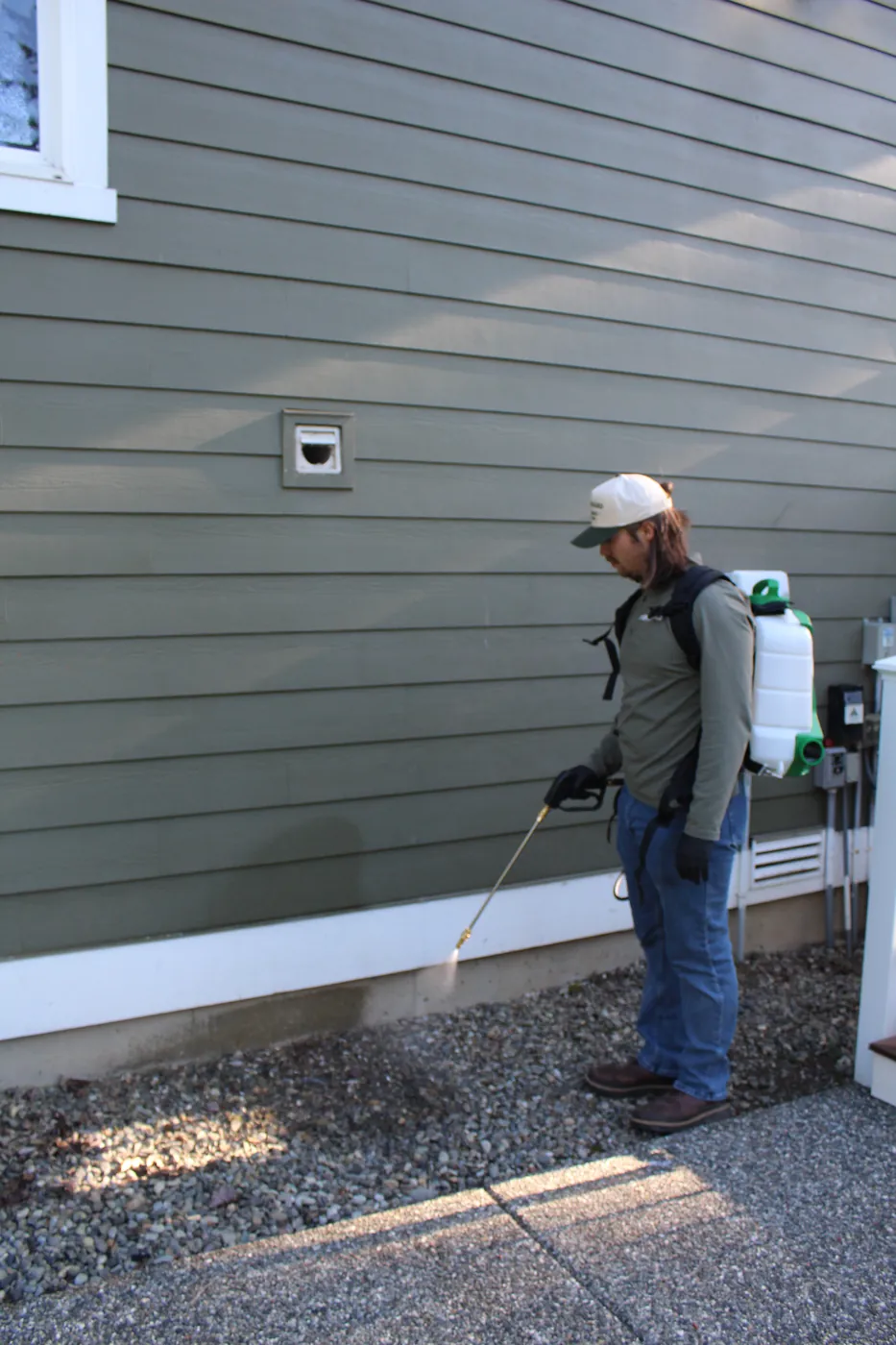
Treat the perimeter, not the kitchen. The kitchen is where you see them. The foundation line is where they cross.
Ants in the yard
Most of them are doing no harm and are worth leaving alone. It matters when they’re trailing to the house, farming aphids on your plants, or nesting against the foundation. If they’re already coming inside, the yard trail is a symptom and the nest is the job.
When it’s worth calling someone
If you have carpenter ants in framing, if the trail disappears into a wall void, or if you have baited properly for two weeks and the volume has not dropped, the colony is somewhere you can’t reach. That’s when a positive ID and a treatment at the source is worth paying for. The wrong product on the wrong species genuinely does scatter a colony and double the problem, which is why we identify before we treat.