If you’ve got a line of ants marching across your counter, the first thing you want to know is whether it’s a nuisance or a problem. In the Pacific Northwest, those are usually two different ants, and telling them apart changes everything about how you deal with them.
Here’s the short version: sugar ants are after your food. Carpenter ants are after your house.
Size is the fastest tell
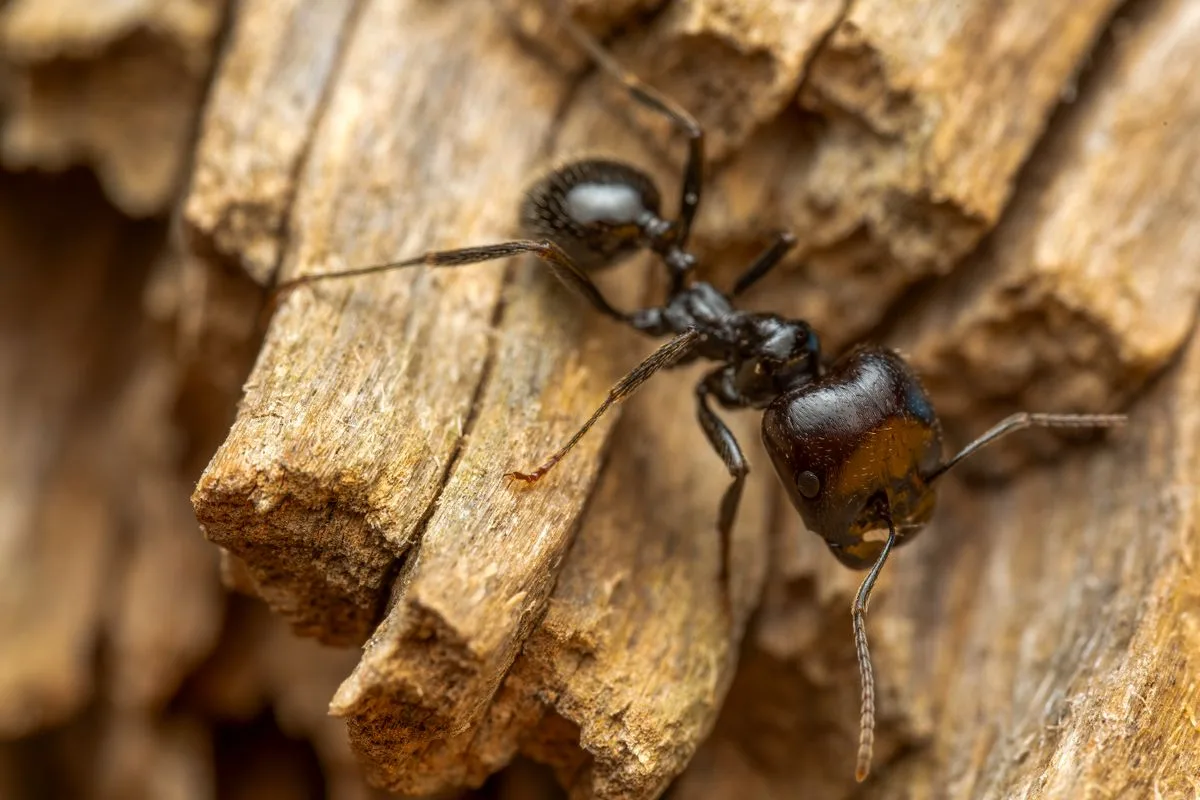
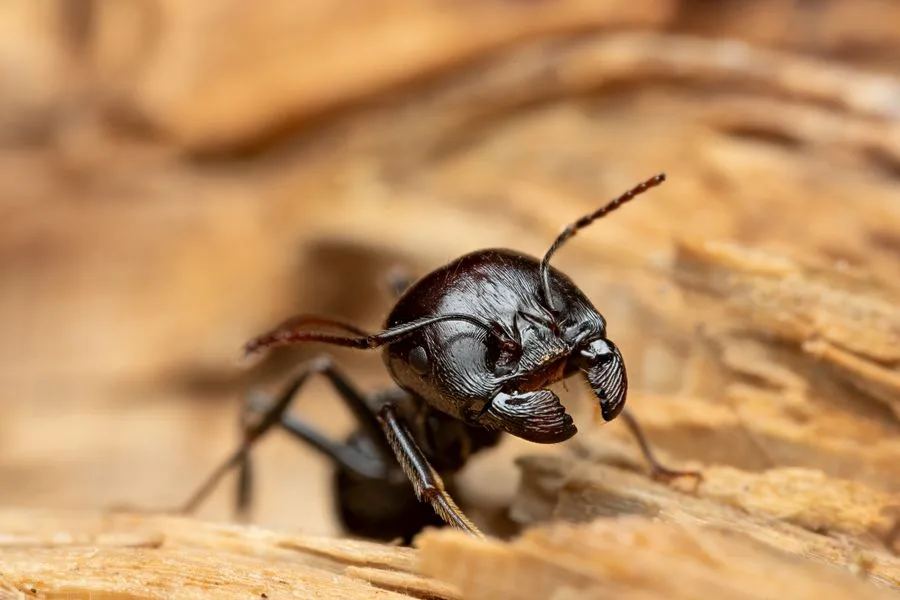 Carpenter ant
Big (a quarter to half an inch), dark, usually wandering alone and after dark.
Carpenter ant
Big (a quarter to half an inch), dark, usually wandering alone and after dark.
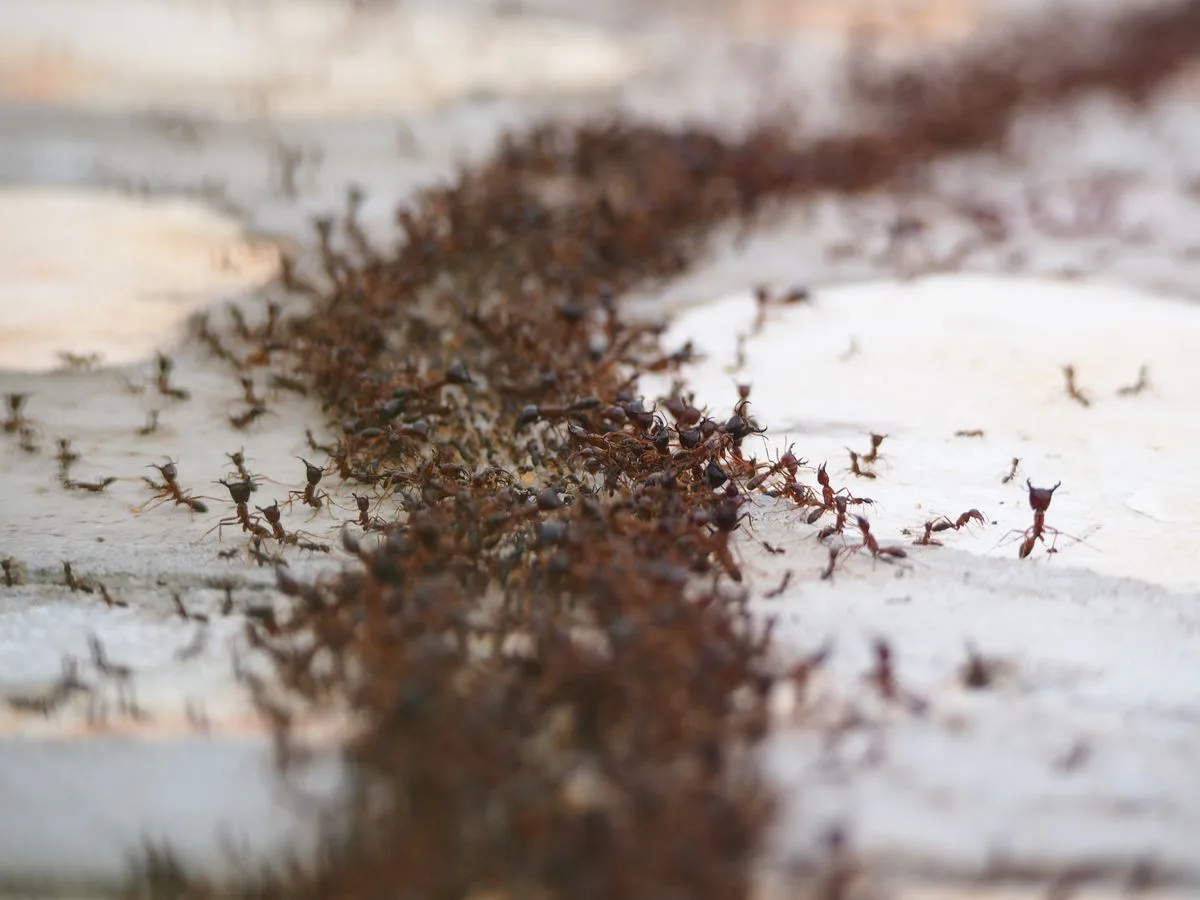 Sugar ant
Tiny (about an eighth of an inch) and almost always in a dense trail.
Sugar ant
Tiny (about an eighth of an inch) and almost always in a dense trail.
Sugar ants (the catch-all name people use for odorous house ants and a few similar species) are small, usually around an eighth of an inch. They move in tight, organized trails, and you’ll see a lot of them at once. Crush one and it smells faintly like a rotten coconut. That’s the “odorous” part.
Carpenter ants are the big ones. A worker can run a quarter to half an inch long, and they’re often black, sometimes with a reddish tint. You won’t see them in the same dense trails. Instead you’ll spot one or two big ants wandering, usually in the evening, because carpenter ants are most active after dark.
If the ants you’re seeing are noticeably large and you keep finding loners rather than a parade, you’re probably looking at carpenter ants.
What they’re actually doing
Sugar ants are foraging. A few scouts find a crumb or a sticky spot, lay down a scent trail, and the rest follow. Annoying, but they’re not damaging the structure. Wipe the trail, find the food source, and you’ve cut their supply.
Carpenter ants are a different story. They don’t eat wood like termites do, but they excavate it to build nests, and in our climate they go for wood that’s already a little soft from moisture. That means the area under a leaky window, around a bathroom, behind gutters that overflow, or anywhere the siding stays damp. By the time you’re seeing them indoors, there’s a decent chance the nest is in or against the house.
A few signs it’s carpenter ants nesting, not just visiting:
- Small piles of what looks like sawdust (it’s called frass, and it’s the wood they’ve cleared out)
- A faint rustling sound inside a wall on a quiet night
- Winged ants showing up indoors in spring, which usually means a mature nest nearby
Why the PNW gets so many carpenter ants
This part is just geography. Carpenter ants love moisture, and we have plenty of it. Lake Stevens, Snohomish County, and the rest of the north Puget Sound sit in exactly the kind of damp, wooded environment they thrive in. Big trees near the house, shaded north-facing walls that never fully dry out, and the steady winter wet all add up. It’s not that your house did anything wrong. It’s that we live where they like to live.
What you can do before you call anyone
For sugar ants, the DIY checklist actually works pretty well:
- Wipe down counters and seal food, especially anything sweet or greasy
- Track the trail back to where they’re getting in and caulk the gap
- Skip the spray-on-sight reflex. Killing the foragers you can see often makes the colony split and scatter, which makes it worse
For carpenter ants, you can fix the conditions that invite them: clear gutters, trim branches off the roofline, and deal with any wood that stays wet. But finding and treating the actual nest is where it gets tricky, because it’s often hidden in a wall or a tree stump in the yard, and treating the wrong spot just relocates the problem.
When it’s worth bringing us in
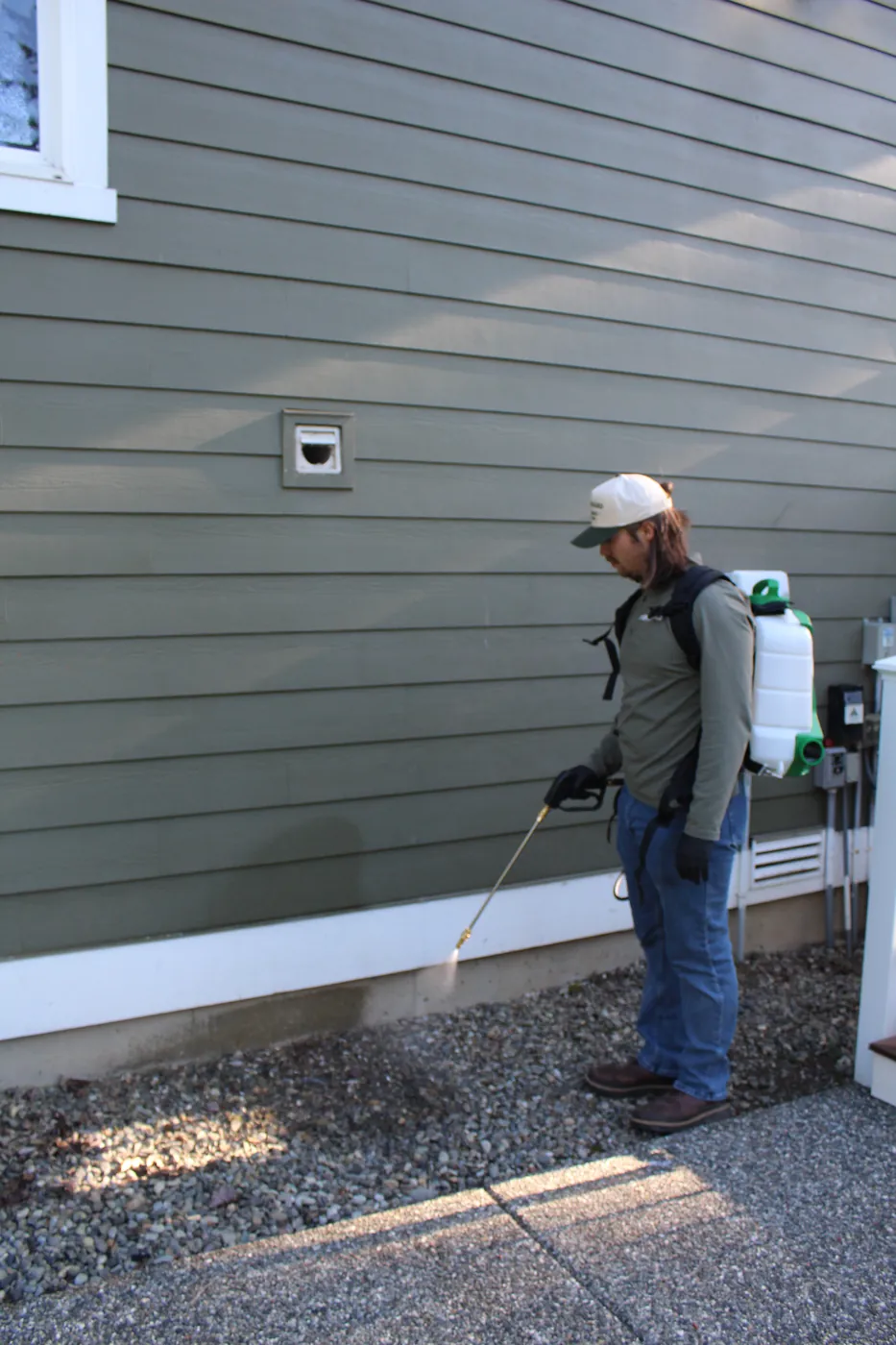
If you’re seeing big ants indoors regularly, finding frass, or you’ve already tried the store-bought stuff and they keep coming back, that’s the point to call. Our ant control service maps the trail back to the colony instead of guessing, treats the source, and seals the entry points so the next colony doesn’t just move into the same spot.
Not sure which ant you’ve got? Take a quick photo and send it our way, or call us at (425) 332-6566 and describe what you’re seeing. We’ll tell you straight whether it’s a wipe-the-counter situation or something worth a visit.