
Snohomish County · 30 min south of Lake Stevens HQ

Pest control in
Mill Creek, WA.

Mill Creek is mostly newer, planned-community construction, so we see more wasps and ants here than the rodent calls that dominate the older cities.

Call now (425) 332-6566

Get a free Mill Creek quote

Step 1 of 3

What's the pest problem?

Pick all that apply.

Pest control in Mill Creek, WA

Mill Creek started as a planned country-club community in the late 1970s and grew outward from there, with the Town Center and newer neighborhoods filling in to the east. North Creek, Penny Creek and Nickel Creek run through it, and wooded greenbelts separate most of the subdivisions.

Because the homes are fairly young and well kept, pest control in Mill Creek is mostly about what comes out of the landscaping and the greenbelts: yellow jackets, ants and spiders. Deep rodent work in old framing is less common here than in older towns like Snohomish or Everett, though homes backing onto the creek corridors still deserve a closer look.

Wasps & Bees in Mill Creek

Yellow jackets in Mill Creek's landscaped beds and greenbelts

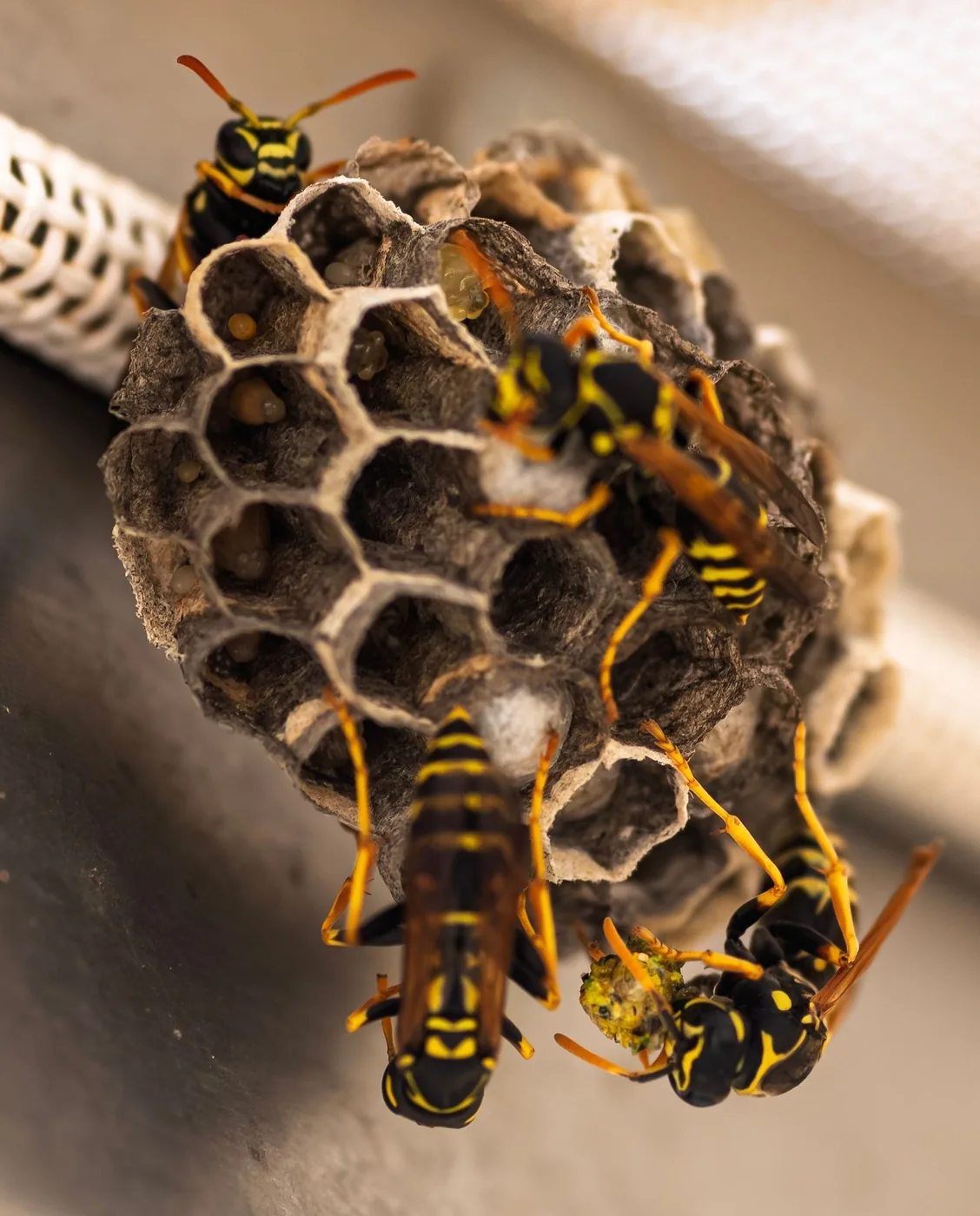
Yellow jackets nest in the ground, in wall voids and under eaves, and this city gives them all three. Bark beds, rockeries and lawn edges hold ground nests, and the greenbelts behind many homes supply the insects they hunt. By August the colonies are at full size, and the workers get aggressive around decks, patios and garbage cans.

We treat nests at dusk or dawn, when the workers are inside, and we treat the void or entry so a new colony doesn't move into the same spot next year. Honey bees are never killed; we refer them to a local beekeeper. Watch for a steady line of wasps flying in and out of one spot in a lawn, a rockery or a siding gap. Don't plug the hole yourself, since that can drive them into the house.
Ant Control in Mill Creek

Ants in the mulch beds and patios of Mill Creek's planned neighborhoods

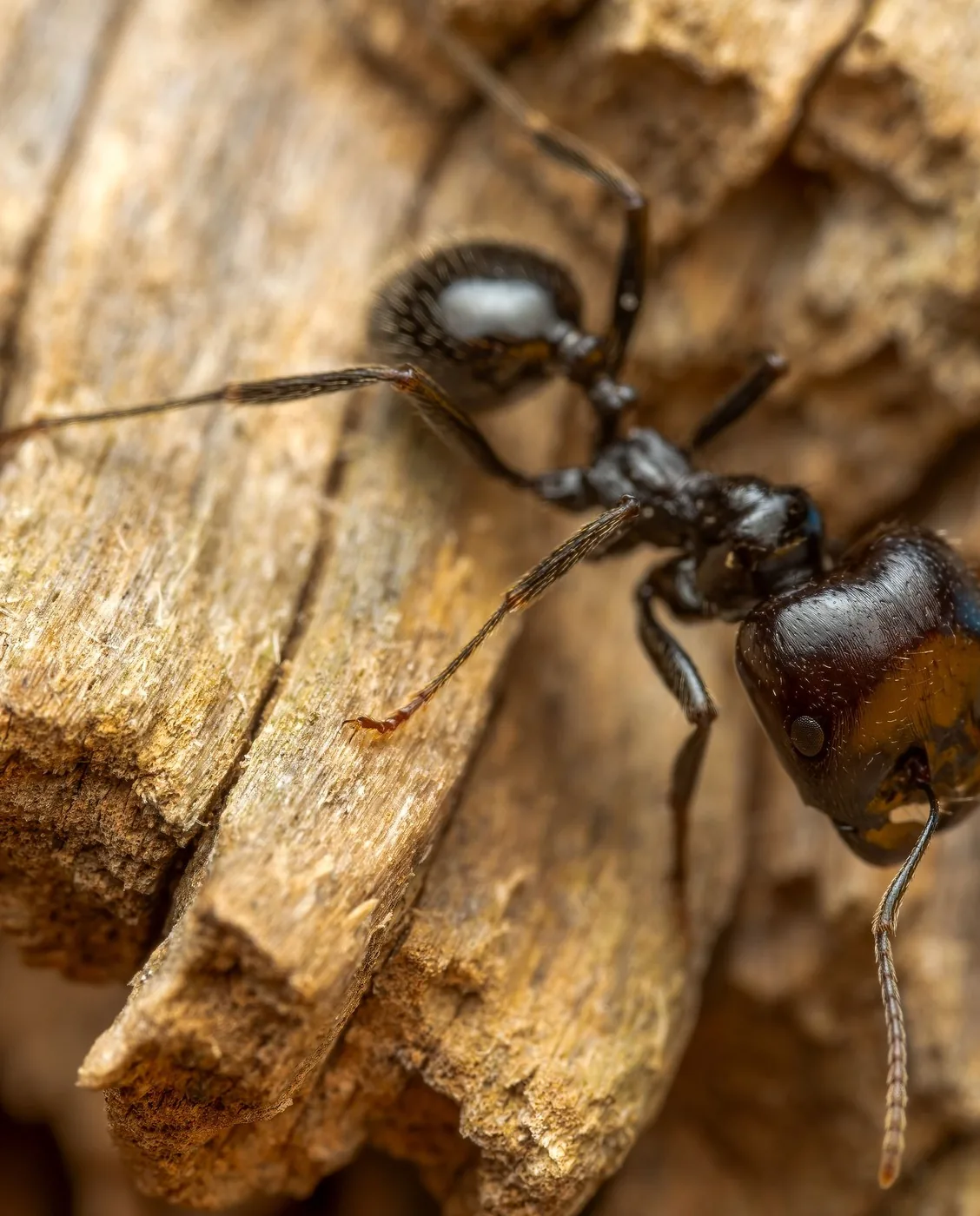
Planned-community landscaping puts irrigated shrub beds, bark and pavers right against the foundation. Odorous house ants and pavement ants nest in that warm, damp soil and trail inside along slab edges and door thresholds. Homes near the Penny Creek and North Creek greenbelts also get carpenter ants foraging out of old stumps and logs.

We identify the ant before treating. Sugar ants are baited, so workers carry the bait home and the colony dies off, instead of being sprayed and scattered into new nests. Carpenter ants get the parent nest and satellites treated. Keep sprinklers from soaking the siding, pull mulch back from the wall, and watch for trails along kitchen counters and bathroom baseboards in spring. Sawdust under a deck or window trim points to carpenter ants.

Spider Control in Mill Creek

Spiders on the eaves of Mill Creek homes backing onto the creeks

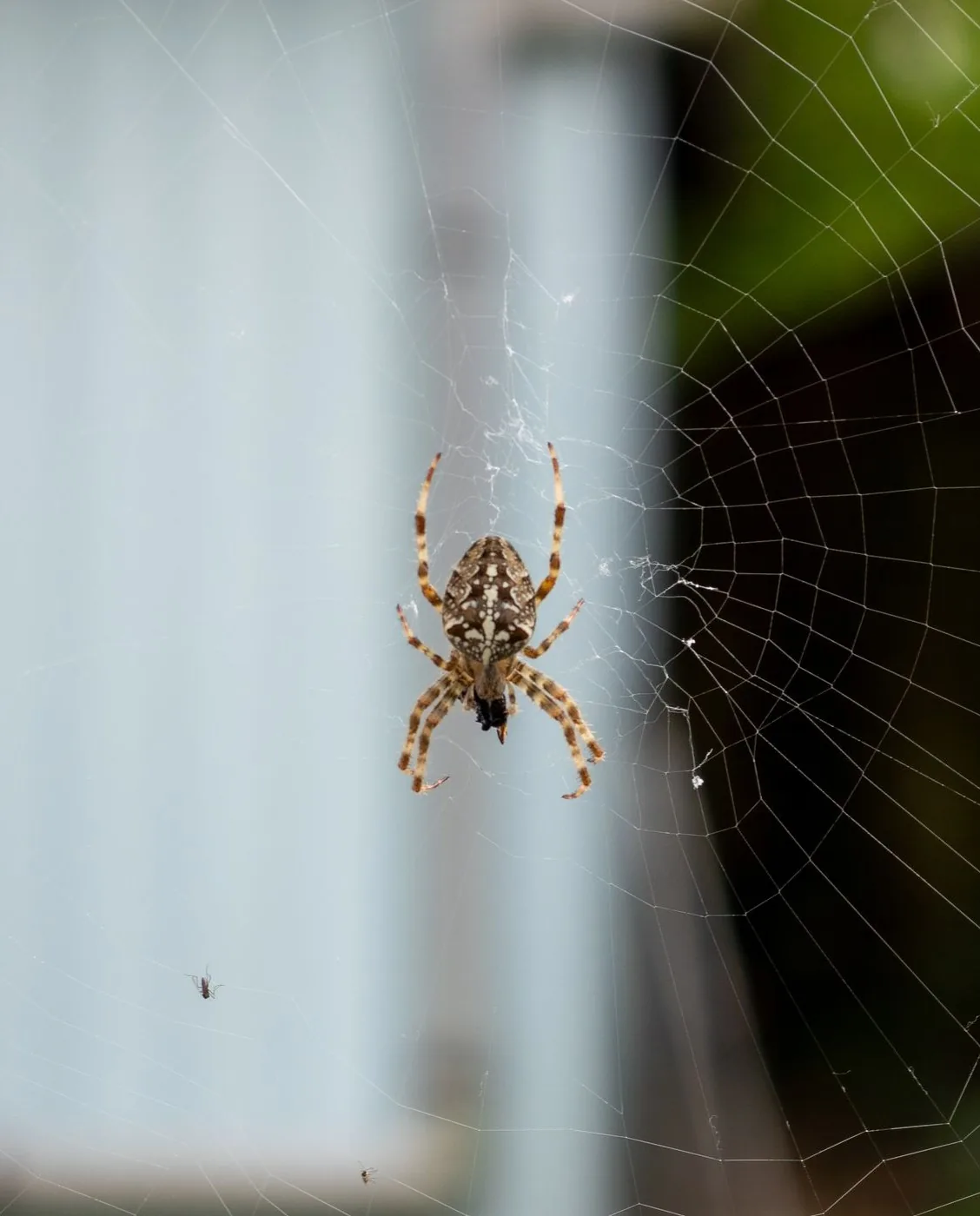
Greenbelts and creek corridors hold a lot of insects, and homes along them get more spiders on the eaves, decks and window frames. Big windows, deck lighting and porch lights pull in moths at night, which is exactly what orb weavers build webs to catch. In late summer and fall, giant house spiders and hobo spiders start moving toward garages and lower floors.

We treat the foundation, garage and window frames where spiders get in and knock down webs and egg sacs on the eaves and siding. Keeping outdoor lights off when you don't need them helps, and so does keeping stored boxes off the garage floor where spiders hide. Watch for webbing building up under soffits and around exterior lights in August and September.

From the call to the follow-up

Hiring a Mill Creek exterminator

Call a Mill Creek exterminator from Pure Guard and you can expect a visit within 48 hours, plus a text about 30 minutes before arrival. A lot of the city is under HOA rules, so we keep the work neat: no stations cluttering the front yard, nothing left on the entry walk. Wasp nests get treated at dusk or dawn, when the colony is home. If something comes back under warranty, the return visit is free.

Licensed
WSDA Commercial Applicator #112338
Response
Someone out within 48 hours
Warranty
Re-treatments at no charge

What changes the job here

Planned-community homes from the late 1970s on in Mill Creek

The oldest homes, around the Mill Creek Country Club golf course, date from the late 1970s and 1980s, typically on crawl spaces with cedar siding and wood decks. They are now old enough for vapor barriers to be worn out, vent screens to rust and cedar trim to soften, so that is where we look for rodent and carpenter ant entry.

Later neighborhoods, and the townhomes and apartments near the Town Center, are tighter and newer. They see fewer rodents but more ants in the landscaping and wasps in the architectural details: gable vents, soffit returns and the seams where stone veneer meets siding. HOA standards mean we plan for discreet stations and clean work from the start.

Across Mill Creek

Mill Creek neighborhoods and what they deal with

Mill Creek Country Club
The original homes around the golf course are old enough for worn crawl spaces and softening cedar that invite carpenter ants and mice.
Town Center
Condos, apartments and mixed-use buildings where ants and the occasional mouse move along shared walls and landscaped courtyards.
Penny Creek greenbelt
Homes along the creek buffer get foraging carpenter ants and heavy spider webbing from the tree line.
North Creek corridor
Wetland and trees along North Creek keep mosquitoes and spiders active for the homes that back onto it.
East Mill Creek
Newer subdivisions with young landscaping beds that make prime nesting ground for pavement ants and sugar ants.

Through the year

The Mill Creek pest year, season by season

Spring
Sugar ants trail in from warming mulch beds in April, and yellow jacket queens start new nests in rockeries and eaves.
Summer
Yellow jacket colonies peak in late July and August around decks and patios along the greenbelts.
Fall
Spiders crowd the eaves and slip into garages in September, especially on homes backing onto North Creek and Penny Creek.
Winter
The older homes near the golf course are the ones most likely to get a mouse in the crawl space once the rains settle in.

Questions, answered

Pest control in Mill Creek, the common questions.

Will bait stations or equipment break my HOA's rules?

We place exterior stations where they do their job without drawing attention, usually along the sides and back of the house behind plantings. They are low, dark and tamper-resistant. If your HOA has specific rules about what can be visible from the street, tell us ahead of time and we will work around them.

Wasps are coming out of the ground in my flower bed. What should I do?

Keep people and pets away from it, and don't pour anything in or cover the hole, which can push the colony to a new exit or into the house. Ground nests are almost always yellow jackets. We treat them at dusk or dawn when the workers are home, and treat the entry so the spot isn't reused next year.

My house backs onto a greenbelt. Why do I get more pests than my neighbors across the street?

Greenbelts are full of logs, stumps, leaf litter and insects, which support ants, spiders and wasps. Homes right on the edge are the first structures those pests reach. Treating the side facing the trees, keeping firewood and yard debris away from the house, and sealing gaps at the foundation make the biggest difference.

How quickly can you get to Mill Creek?

Someone will be at your door within 48 hours. Mill Creek is 30 min south of Lake Stevens HQ, and you get a text about 30 minutes before the truck arrives. Stinging-insect calls get priority on the schedule.

Is the treatment safe around kids and pets?

Yes. We use products rated for occupied homes and apply them where pests travel, not across your living space. The technician walks you through what goes down and where before anything is treated. If you keep bees, chickens or a vegetable garden, tell us and we work around them.

Mill Creek, WA

Tell us what you're seeing.

Family-owned and based in Lake Stevens, WA. Call or send the form and someone will be out within 48 hours.