Most of what goes wrong with wasp nests goes wrong for one of two reasons: somebody did it in daylight, or somebody sprayed the outside of the nest.
Timing is most of the job
Do it at dusk or dawn. The whole colony is inside and slow, and the foragers that would otherwise fly back at you mid-job are already home for the night.
In the middle of a warm afternoon the opposite is true: a good share of the colony is out, they return to a disturbed nest, and they’re looking for whatever caused it.
Treat the entrance, not the shell
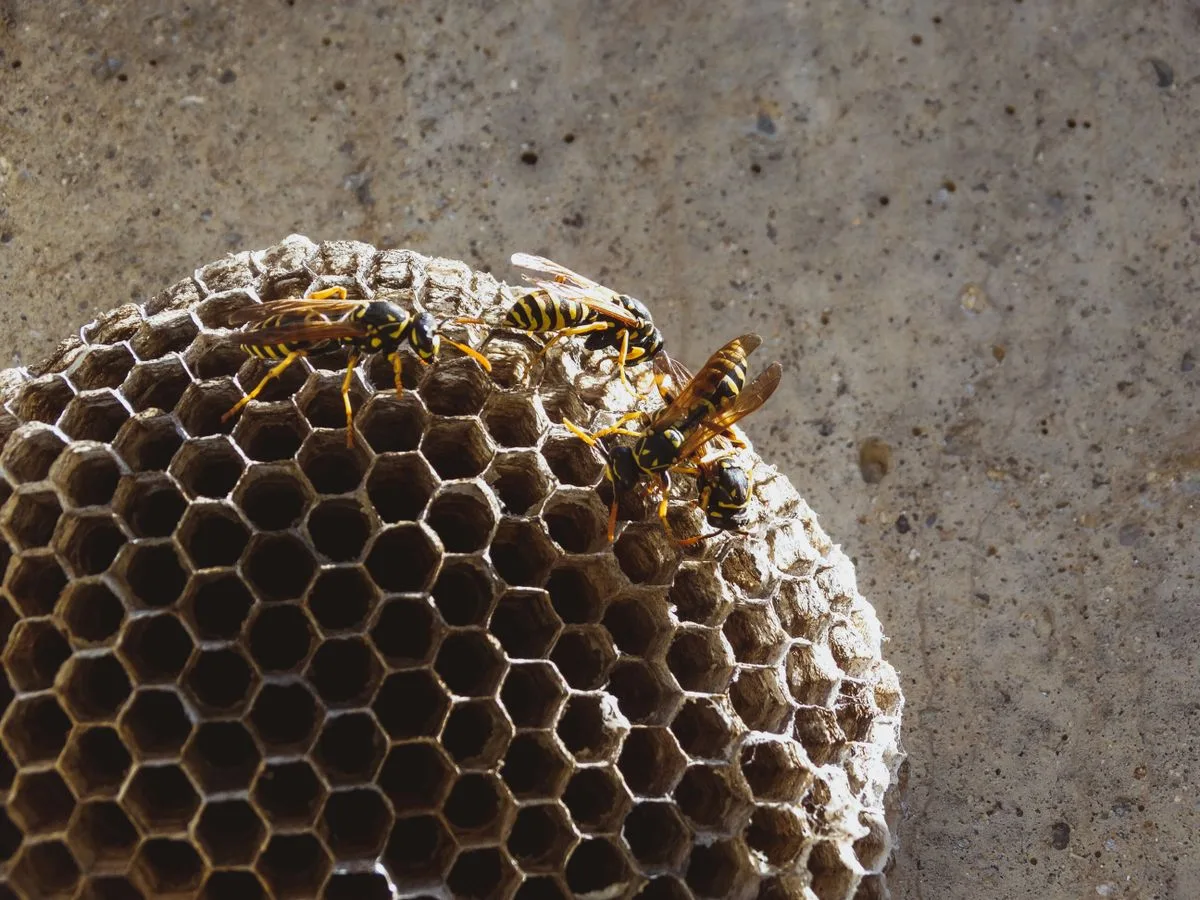
The papery grey shell is structure. Soaking it does very little to the colony inside and a lot to announce your presence.
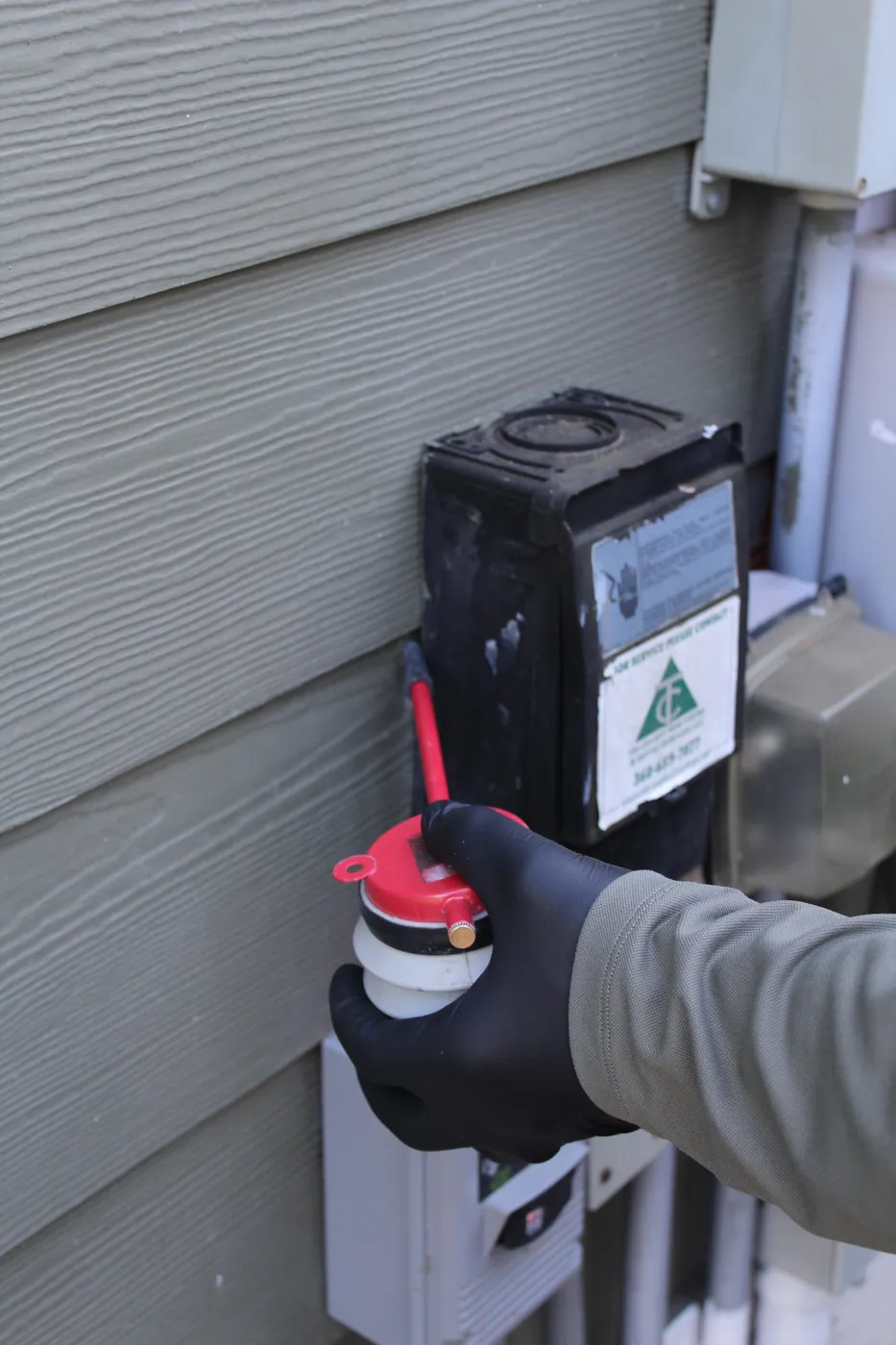
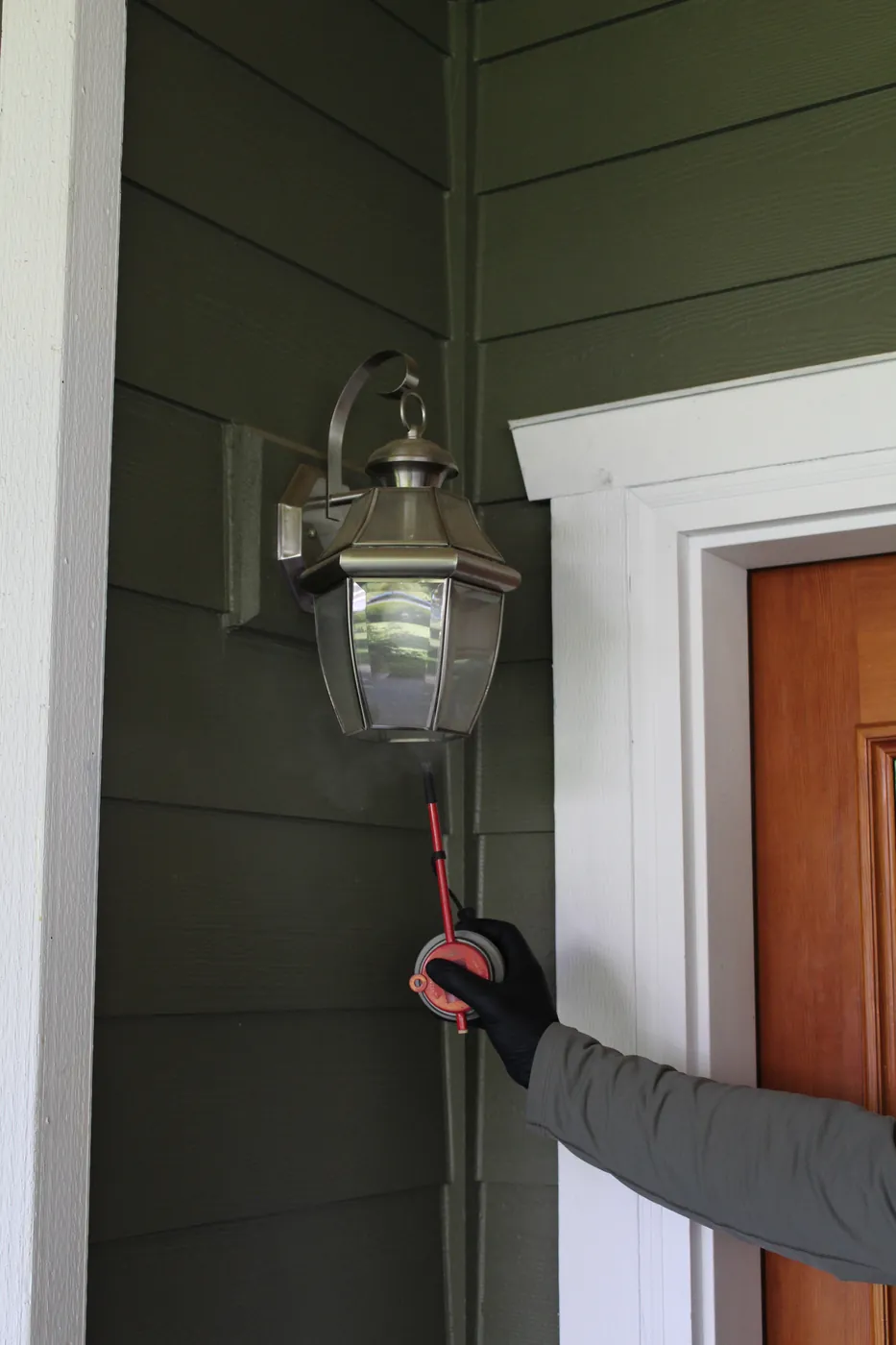
What matters is the entrance, and that’s where every wasp passes. Treat into it and let them carry it in. This is also why a nest in a wall void can’t be solved from outside: you’re treating a wall, not a colony.
Don’t seal the entrance. It’s the single most common mistake with in-wall colonies, and it’s covered in full on our page about a yellow jacket nest in wall removal.
Which ones are reasonable to do yourself
Reasonable: a single paper wasp nest, in the open, within easy reach from the ground or a stable ladder, at dusk, with an exit route behind you.
Not reasonable:
- Anything in a wall void, soffit or roof space
- Anything underground, meaning yellow jackets in a lawn or bank
- Anything above the first storey
- Anything bigger than a fist
- Any nest at all if anyone in the household reacts badly to stings
Yellow jackets are the ones that go wrong fastest. A disturbed colony sends hundreds of workers out at once and they sting repeatedly, unlike a honey bee. A ground nest you’ve just mown over is the classic emergency-room version.
Is it safe to remove a wasp nest in winter?
Yes, and by then it’s usually pointless.
A wasp nest is annual. The colony dies off with the first hard frosts and only new queens survive, overwintering somewhere else entirely. An old nest won’t be reused next year.
The one reason to take it down is that the spot has proven attractive. If a colony chose that soffit once, another queen may well choose it in spring. Removing the nest and treating the void in winter is genuinely worth doing. Just don’t imagine you’re killing anything.
Honey bees are a different call entirely
If it’s honey bees, don’t treat them and don’t call an exterminator. The Washington State Beekeepers Association asks people not to use insecticide on a swarm, and a local beekeeper will usually collect one at no charge and be glad of it.
We refer honey bees out rather than treat them. Yellow jackets, paper wasps and bald-faced hornets we handle.
And the murder hornet question
We still get asked. The northern giant hornet was declared eradicated from the United States in December 2024, after four nests were destroyed in Whatcom County and three years of trapping turned up nothing. What’s on your siding is almost certainly a bald-faced hornet or a yellow jacket queen.
When to hand it over
If it’s in a void, in the ground, high up, or big, or if you’re not confident about your exit route in the dark, that’s the point to stop. We treat at the right time of day, remove the nest where we can reach it, and treat inside the entry point so next spring’s queen doesn’t settle into the same gap.