Every summer the calls pick up. Something’s nesting under the eaves, in the ground by the patio, or inside a wall void, and the family wants it gone before someone gets stung. Before you grab a can of spray, it helps to know what you’re actually dealing with, because the three most common stingers around here behave very differently, and one of them you genuinely should not kill.
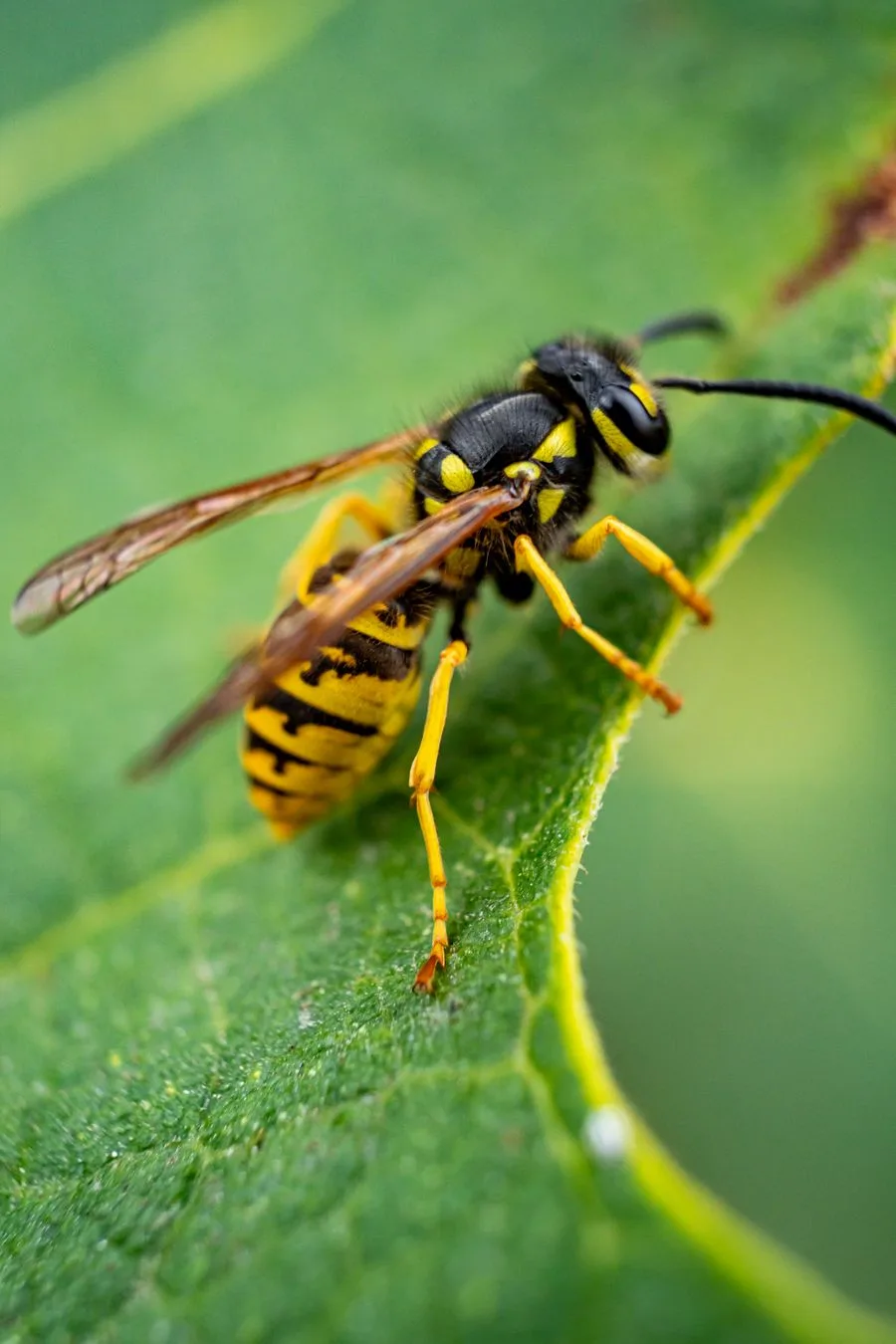 Yellow jacket
Bright, smooth, stocky. The aggressive one.
Yellow jacket
Bright, smooth, stocky. The aggressive one.
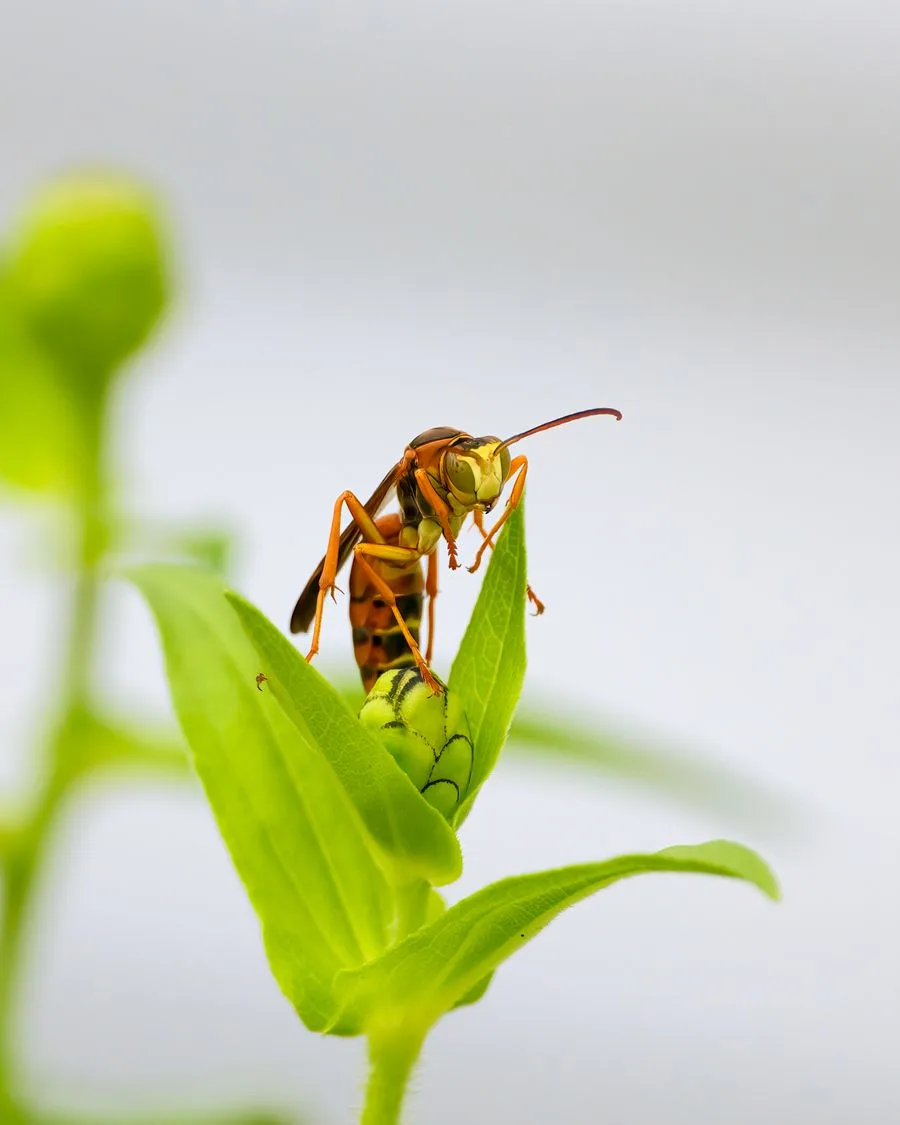 Paper wasp
Slender, long legs that dangle in flight. Calmer.
Paper wasp
Slender, long legs that dangle in flight. Calmer.
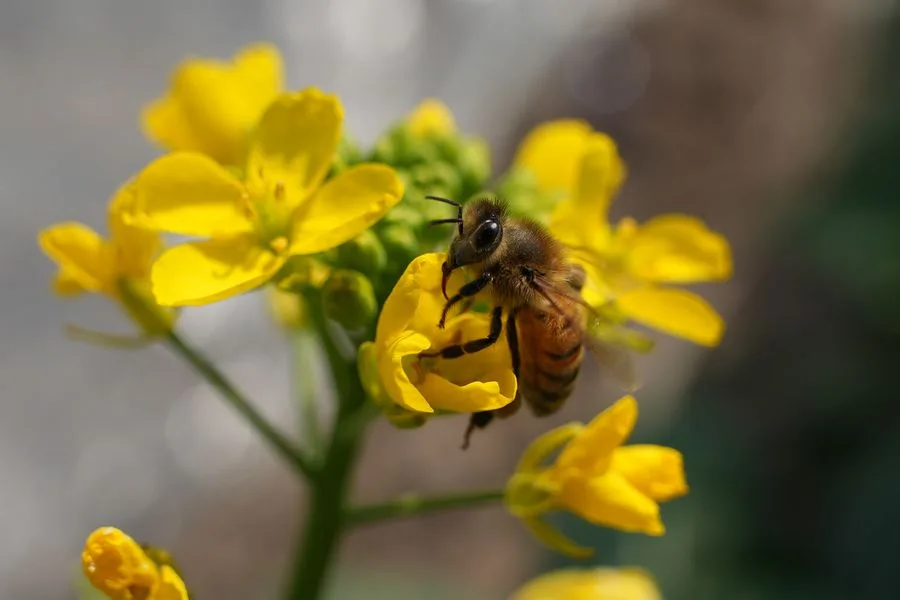 Honeybee
Fuzzy and golden, not smooth. Leave it alone.
Honeybee
Fuzzy and golden, not smooth. Leave it alone.
Yellow jackets: the aggressive one
Yellow jackets are the wasps most people picture when they think “wasp problem.” They’re bright yellow and black, fast, and they get nasty when the nest is disturbed. Unlike a honeybee, a single yellow jacket can sting over and over.
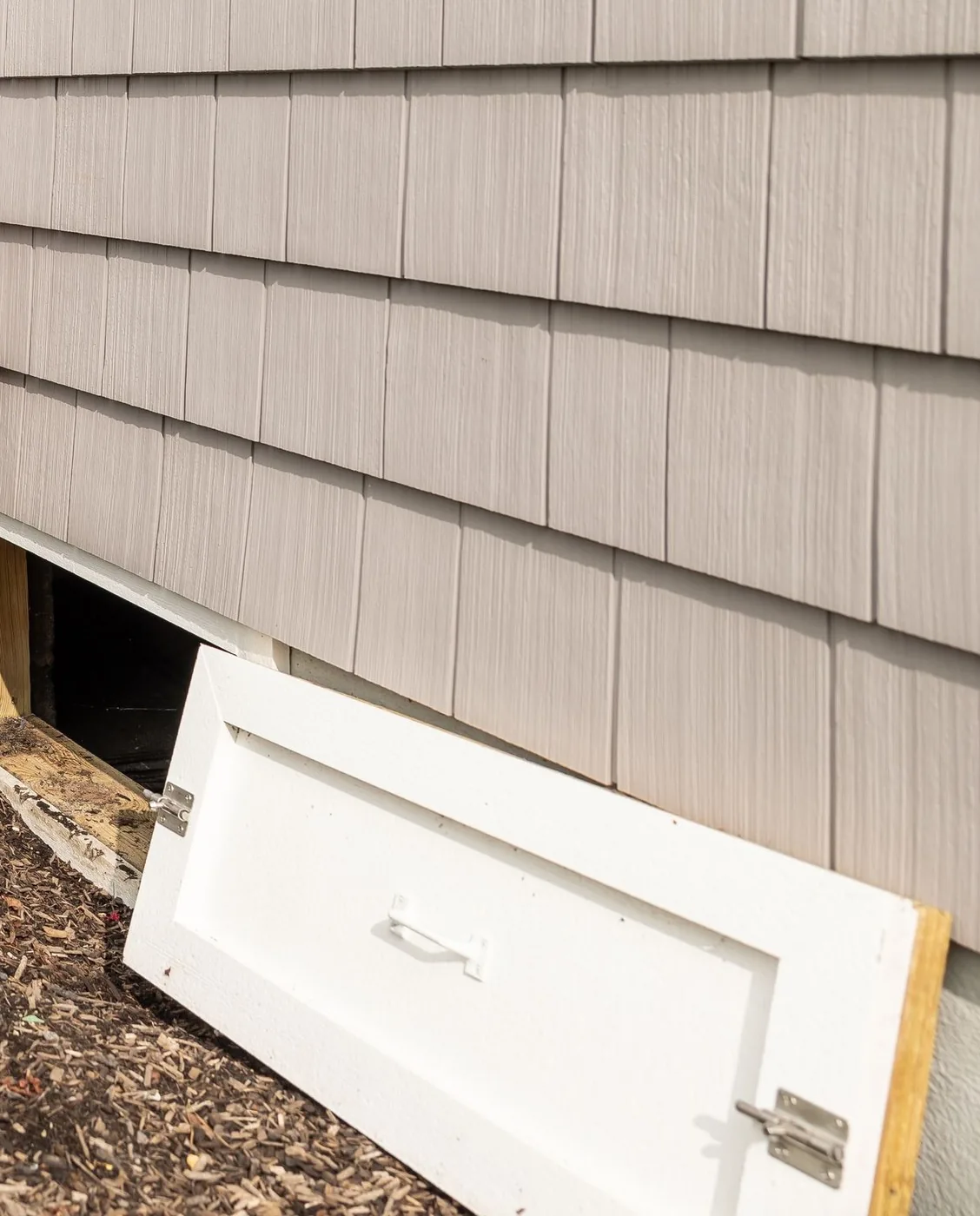
They nest in wall voids, under the ground in old rodent burrows, and in dense shrubs. The tricky part is the entry point. You might see them streaming in and out of a single hole in the lawn or a gap in the siding, with the whole nest hidden out of sight. Late summer is when colonies are biggest and most defensive, which is exactly when people get stung trying to handle it themselves.
If you’ve found a ground nest or a hole in the house they’re flying into, do not pour anything down it or block it. Sealing the exit just drives them deeper into the wall, sometimes into the living space. If it’s the siding they’re going into rather than the lawn, yellow jacket nest in wall removal walks through how to find the entry and why the hole has to stay open.
Paper wasps: the visible, calmer one
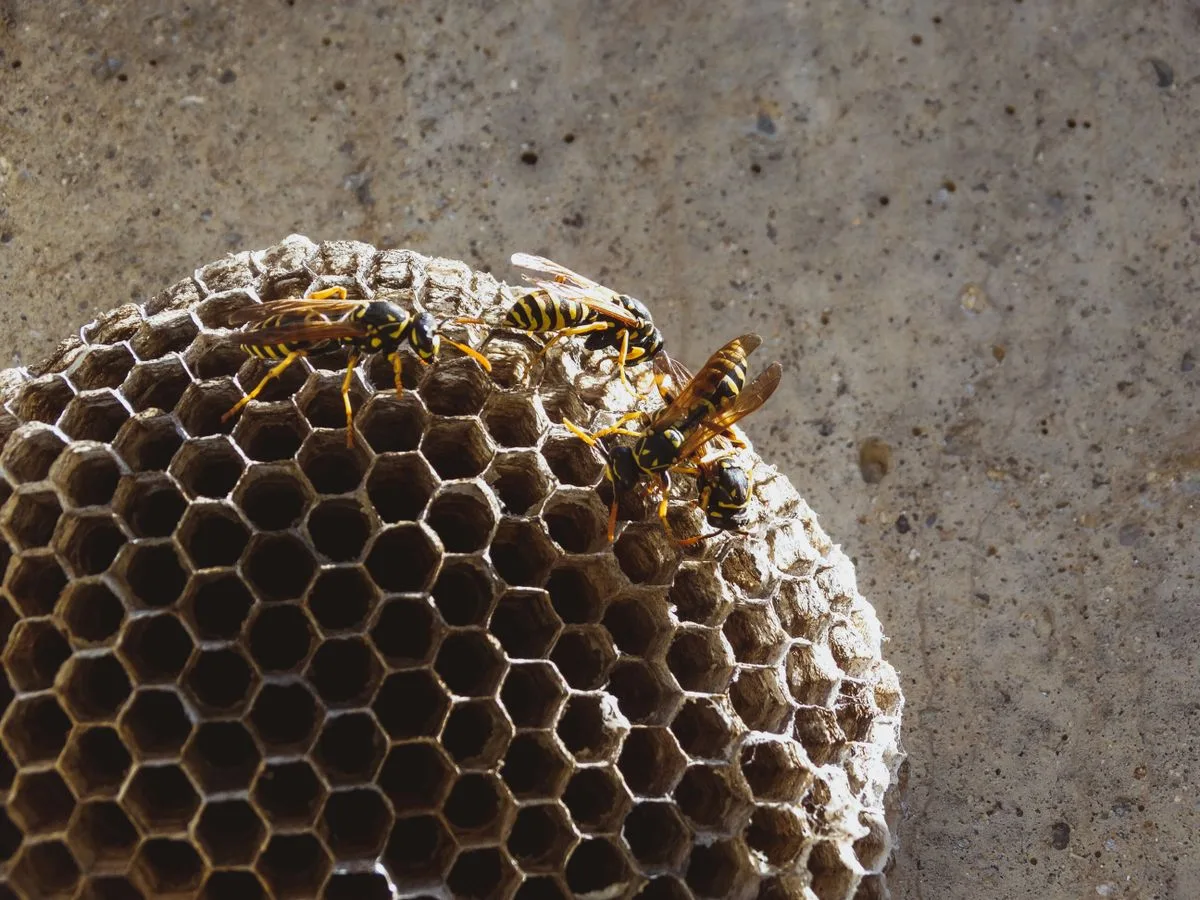
Paper wasps build the open, umbrella-shaped nests you see hanging under eaves, on deck railings, and inside porch ceilings. The nest looks like gray paper with visible cells, almost like a tiny honeycomb facing down. The wasps themselves are longer and more slender than yellow jackets, often with a reddish-brown or dark color and dangling legs in flight.
Paper wasps are far less aggressive. They’ll defend the nest if you get right up on it, but they’re not out hunting trouble the way yellow jackets are. A small nest in a low-traffic corner is sometimes worth leaving alone. One right over the front door or where kids play is worth removing.
Honeybees: leave these alone
This is the important one. Honeybees are fuzzy, golden-brown, and rounder than wasps. If you see a swarm, a softball-to-basketball-sized cluster of bees hanging on a branch or fence, that’s not an attack. It’s a colony in transit looking for a new home, and a resting swarm is usually very docile.
Honeybees are pollinators, and they’re protected in spirit if not always in law. We don’t treat them. When someone calls us about bees, we point them to a local beekeeper who will come collect the swarm and relocate it for free or close to it. If bees have already moved into a wall, that’s a removal job for a beekeeper or a specialist, not a spray job.
The quick way to tell: wasps are smooth and shiny with a pinched waist, bees are fuzzy and stout. If it’s fuzzy, call a beekeeper, not us.
Why timing matters in the PNW
Wasp season here runs roughly from late spring through the first real cold snap, often into October. Colonies start small in spring with a single queen and grow all summer. A nest that’s a minor annoyance in June can be a few thousand wasps by late August. Treating earlier is easier, cheaper, and a lot less dramatic than waiting until the nest is the size of a basketball and everyone’s afraid to use the back yard.
What we actually do
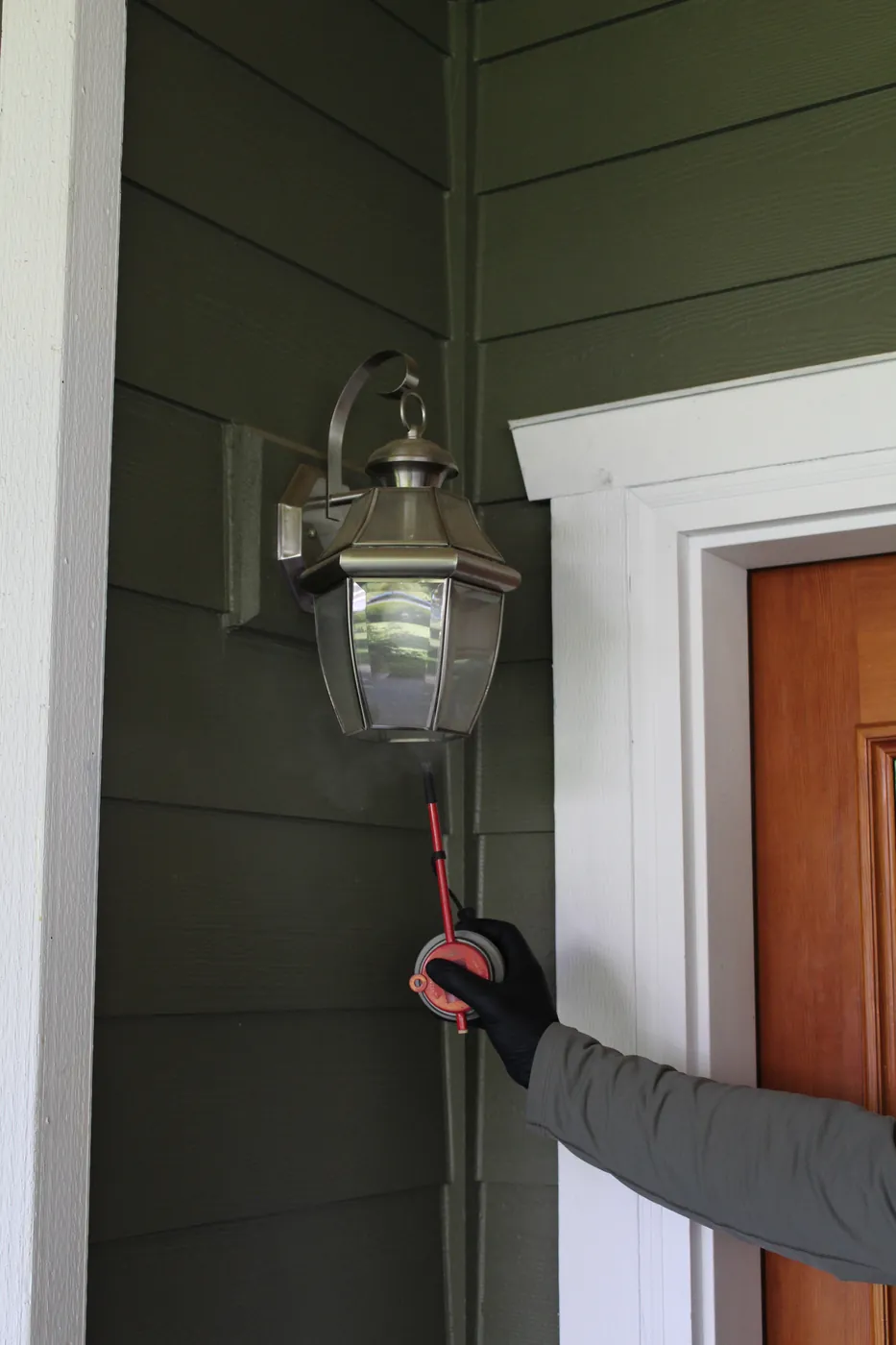
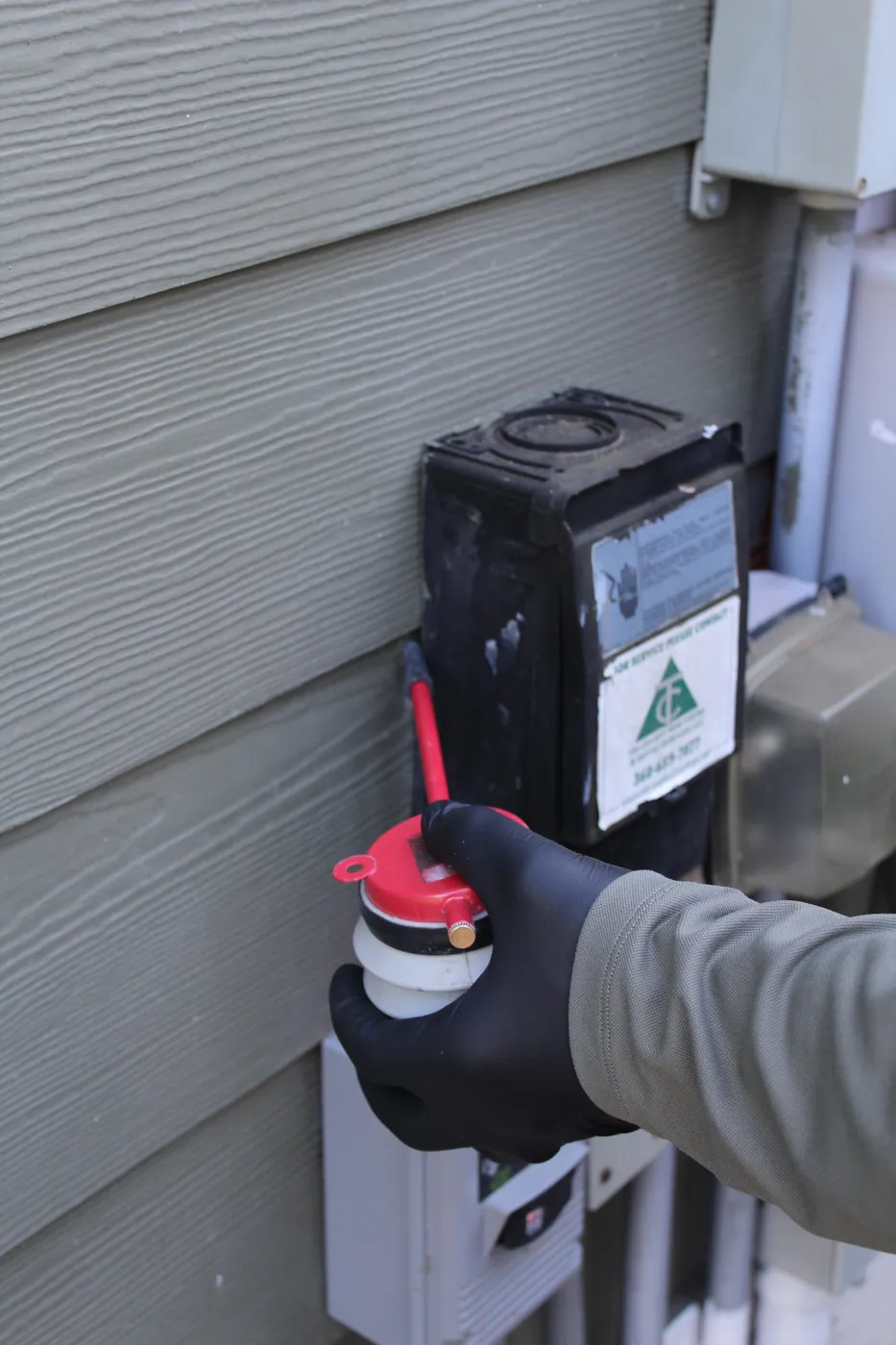
Our wasp and hornet control is built for exactly this. For yellow jackets, we treat the nest at the source, including the hidden ones in walls and the ground, and we do it timed so the returning foragers carry the treatment back in. For paper wasps, we knock down the nest and treat the spot so they don’t rebuild in the same corner. For honeybees, we hand you off to someone who’ll save the colony.
Found something nesting and not sure which it is? Snap a photo from a safe distance and send it to us, or call (425) 332-6566. We’ll tell you whether it’s a wasp visit inside 48 hours or a beekeeper situation, and we won’t talk you into treating bees that shouldn’t be touched.