It is the middle of October, you are trying to finish your coffee on the porch, and a wasp keeps circling the cup. It seems angrier than any wasp you met in June, and you wonder how much longer you have to put up with it. The good news is that the end is in sight, and the answer to “do wasps die in winter” is mostly yes.
What happens to a yellowjacket or paper wasp colony between now and spring explains why fall wasps act the way they do, and what to do about the nest you can see (and the one you can’t).
So, Do Wasps Die in Winter?
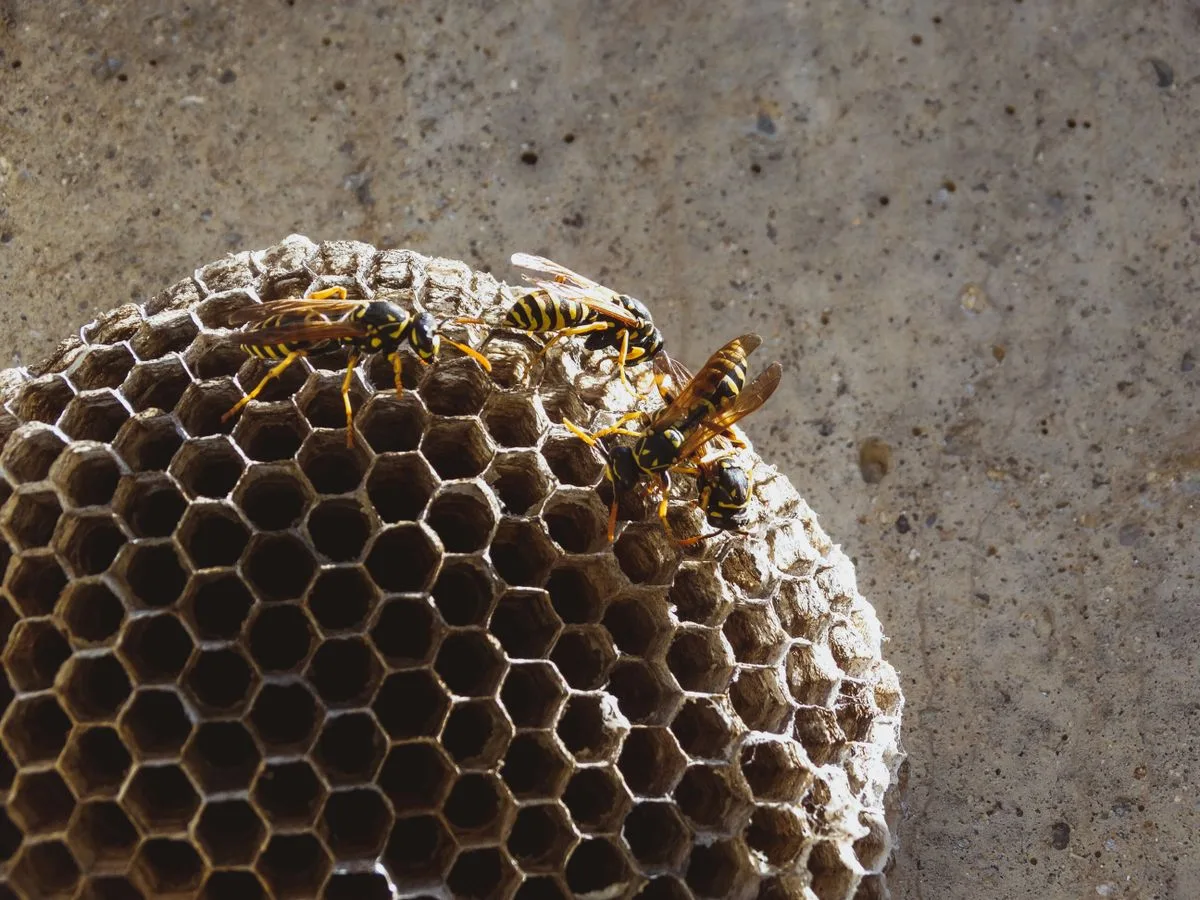
Most of them do. Social wasps, which include yellowjackets and paper wasps, live in colonies that last a single season. Iowa State’s extension service says a social wasp colony lasts only one year and that all the workers die with the first freezes.
The exception is the new queens. The same source explains that the only wasps to overwinter are the fertilized queens. The Pacific Northwest Insect Management Handbook describes it this way: by the time of first frost, most workers and male wasps have died and only new, fertilized queens remain. Those queens leave the nest and look for a protected spot to wait out the cold.
So the wasps that bother you this fall will not be around in January. A handful of queens will be, tucked away somewhere you will never see them.
What Time of Year Do Wasps Go Away?
In Western Washington, it is a gradual fade rather than a single day. A Pacific Northwest School IPM Consortium publication reports that paper wasp numbers typically decline in August and September, while yellowjacket populations may persist into late November. The same publication notes that these wasps abandon their nests each winter and die or become inactive when cold weather arrives.
In practice, that means:
- Paper wasps thin out first, often by early fall.
- Yellowjackets hang on the longest, and a mild, dry autumn can keep them around into November.
- After a hard frost, the worker wasps are gone, even if you had them at the picnic table a week earlier.
Why Yellowjackets Seem So Aggressive in Fall
If it feels like yellowjackets in fall are more aggressive, you are not imagining it. The same handbook says yellowjackets become more aggressive and dangerous later in the summer and as summer turns into autumn.
Three things are going on at once.
- The colony is at its biggest. The School IPM Consortium publication says yellowjacket nests can be a foot or more across by September and hold over a thousand wasps. More wasps around the nest means more chances to meet one.
- The nest has more to defend. UC Statewide IPM says defensive behavior increases as the season progresses.
- The food changes. The School IPM Consortium publication says yellowjackets begin foraging heavily for sugar in late summer and early fall, often on decaying tree fruit. UC IPM adds that in fall, foraging yellowjackets are primarily scavengers, which is why they show up at picnics, barbecues, and trash cans.
That is why a soda can, a pear on the ground, or an open recycling bin can draw a crowd right now. If trash cans and recycling are where you meet them most, our guide to yellowjackets and trash or recycling bins in Snohomish County walks through what helps.
Do Wasps Come Back to the Same Nest?
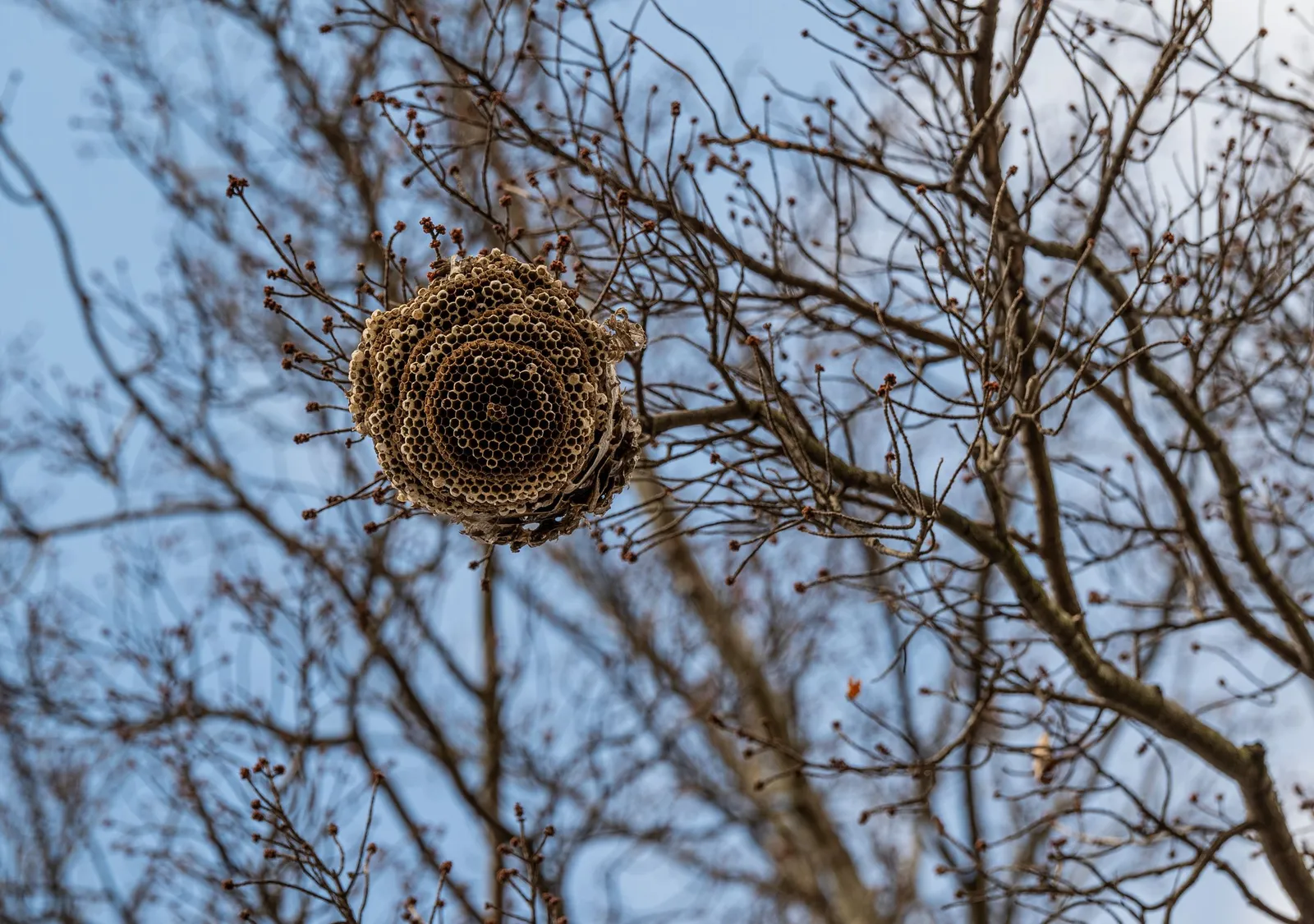
No. Iowa State’s extension service says that paper wasps, hornets, and yellowjackets build a new nest from scratch each year and do not reuse the previous year’s nest.
That surprises many people, because the old nest is still hanging there in January and looks like a place that must be occupied. It is not. The queen who started that nest is long gone, and so are her daughters.
What you may see is a new queen starting a fresh nest in the same general neighborhood next spring, because a sheltered eave or a quiet corner of the shed looks as good to her as it did to the last one.
Where Do Queens Spend the Winter?
After mating, a new queen looks for a sheltered, protected spot. The University of Florida’s extension notes that yellowjacket queens usually overwinter as an adult, often under the bark of a log.
The School IPM Consortium publication says paper wasp queens may sometimes overwinter in attics and structural eaves, so it is common to find them indoors the following spring as they try to escape outside.
That is the explanation for the sleepy wasp that turns up on a window in March. That handbook also says that slow-moving yellowjackets or hornets seen in early spring are usually emerging queens, and they are often drawn to the light of a window.
If you find one indoors:
- Remember that she is not an invader on a mission. She is just trying to get outside.
- Guide her to a window or door, or catch her gently under a cup and release her outdoors.
- Don’t swat at her, since a cornered wasp may sting.
What to Do With an Old Nest in Winter
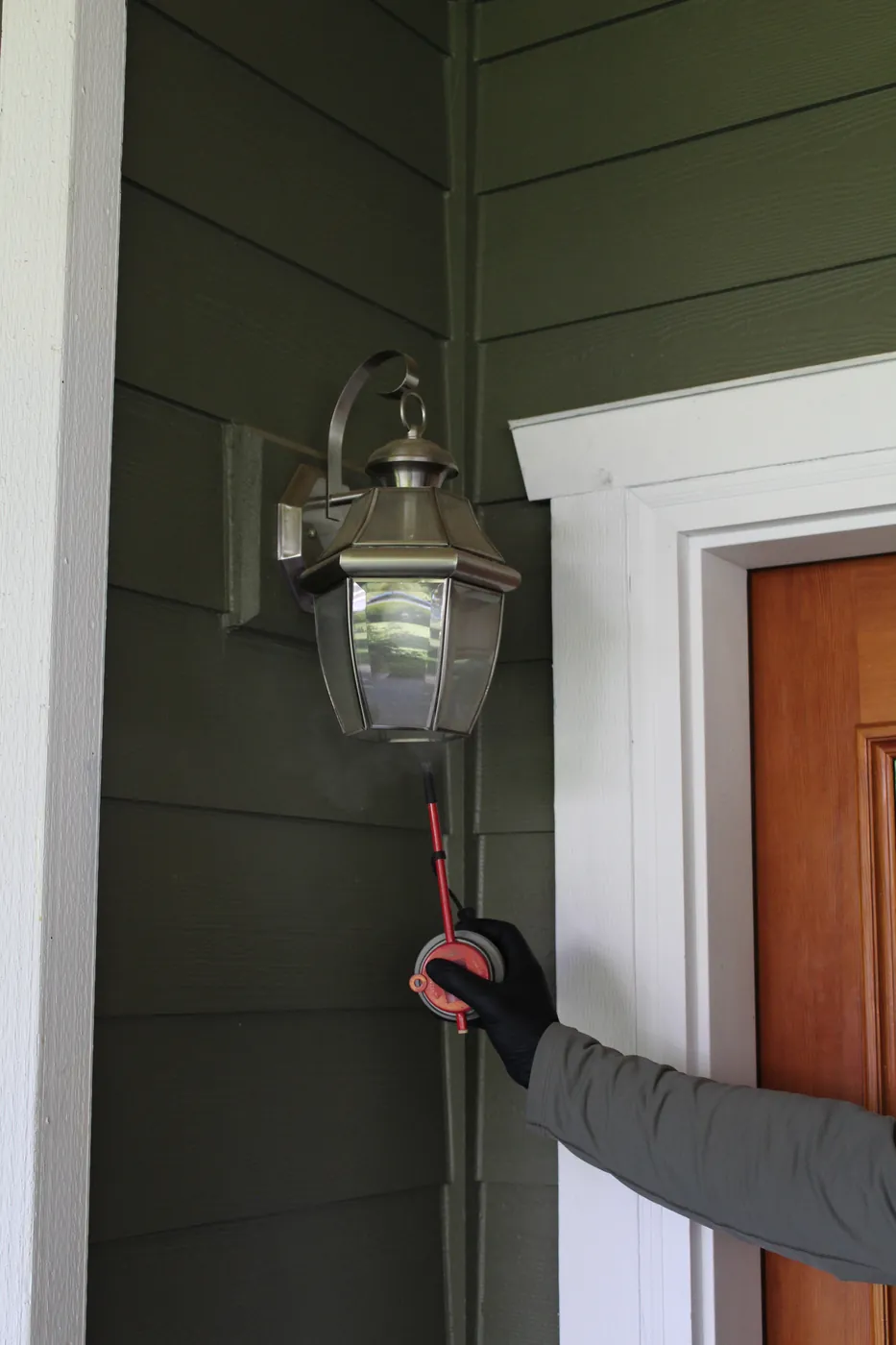
A nest that is in the open and sits under an eave, on a branch, or on a fence is generally a low-risk job once the wasps are gone. The handbook says that paper wasp nests that are unsightly can be power-washed in the fall, after activity has ceased.
A few things help the job go well:
- Wait for a hard freeze. Once you have had several frosty nights and have not seen a single wasp come or go for days, the nest is almost certainly done.
- Look first. Watch the nest for a few minutes on a milder afternoon. If anything is flying in or out, leave it alone.
- Dress for it anyway. Long sleeves, gloves, and eye protection cost nothing.
- Don’t expect a reason to hurry. A winter nest is not a risk to your house. It is mostly cosmetic.
If you are not sure whether a nest is still active, or it is too high to reach safely, our guide on how to remove a wasp nest covers when to do it yourself and when to leave it. And if you are still sorting out what kind of wasp built it, yellow jackets vs. paper wasps vs. honeybees shows how to tell them apart.
What About a Nest Inside a Wall?
This one is different, because you cannot see it. The School IPM Consortium publication says yellowjackets nest underground most often, but less often they nest in wall voids, attics, garages, or abandoned cars. UC Statewide IPM adds that nest removal for cavity-dwelling yellowjackets isn’t practical in many cases because the nests are often inaccessible.
A nest in a wall follows the same yearly cycle, but the old paper stays in the wall after the wasps are gone.
If you heard buzzing in a wall this summer, or saw wasps going in and out of a small gap in the siding, it is worth having someone look at it before the spring. Our page on yellow jacket nests in walls covers how we handle that call.
What to Do Next Spring
The best time to deal with wasps is before there is a colony to deal with. Spring nests are small, and a queen is working on one by herself. UC Statewide IPM notes that early in the season, simply knocking down newly started paper wasp nests will cause the founding female to go elsewhere.
For April and May, the plan is simple:
- Walk the outside of the house. Check eaves, soffits, deck rails, the underside of the porch roof, vents, and the shed.
- Look for a tiny nest. An early paper wasp nest is a small, open cluster of papery cells, and it is much easier to deal with now than in August.
- Seal what you can. Gaps in siding, trim, and vents are the same openings a queen is looking for.
- Watch for slow queens. A lone, sluggish wasp near a window in spring is usually a queen on her way out.
If you find a nest that is already bigger than your hand, in a spot you can’t reach, or in a wall or ground hole, that is a good time to call. Our wasp and bee control service starts with an inspection, and spring is when we would rather see a small nest than a big one.
Wasps, Hornets, and the Big Gray Nest
If the nest you are looking at is the large, gray, football-shaped kind hanging in a tree, you may be dealing with bald-faced hornets rather than a yellowjacket or paper wasp. They follow the same winter pattern: the queens leave and the old nest is not reused.
Common Questions About Wasps in Winter
Can a wasp nest survive the winter? The nest itself will still be there, but the colony will not. The workers die in the cold, and only new queens survive.
Will the wasps come back to the old nest in spring? No. They start over with a new nest each year.
Is it safe to remove a nest in winter? Usually, for an open paper nest that has been quiet through a hard freeze. Look before you touch it, and leave anything that might still be active. A nest inside a wall is a different matter.
Do I need to spray anything on the old nest? No. Once the colony is gone, there is nothing living in it to treat.
When to Call
Call if you have wasps going in and out of a wall or soffit this late in the season, a nest you can’t safely reach, or a history of nests in the same spot every summer. We are a family-owned company based in Lake Stevens, licensed by the Washington State Department of Agriculture, and we serve Snohomish County and north King County.
When you book, someone is out within 48 hours, and you get a text about 30 minutes before the truck arrives.
If you would like us to take a look, request an inspection and tell us where the wasps are and when you first noticed them.
If this is happening at your place, our local pages cover what the work looks like in each of our core markets: wasp nest removal in Lake Stevens, Lynnwood yellow jacket removal, wasp control in Edmonds, wasp nest removal in Woodinville, and Everett yellow jacket removal.