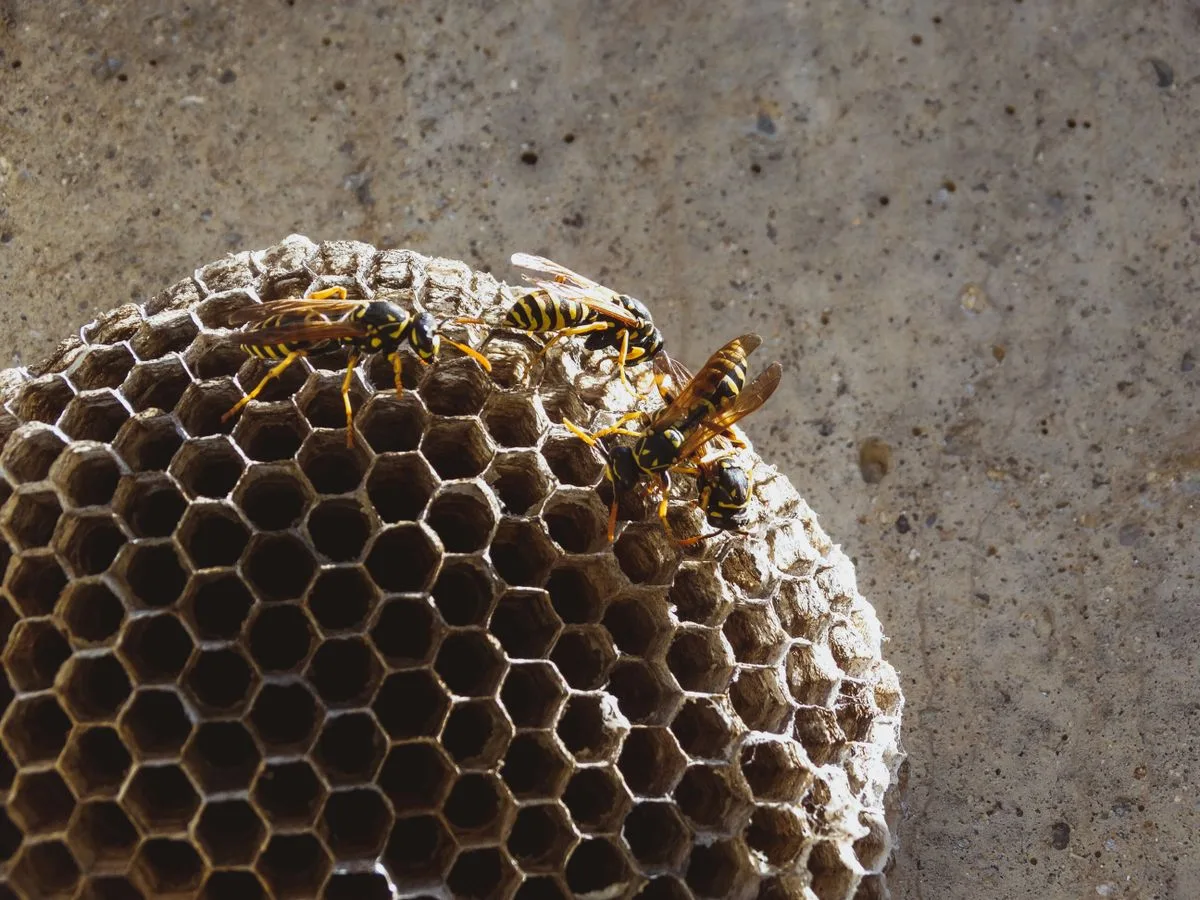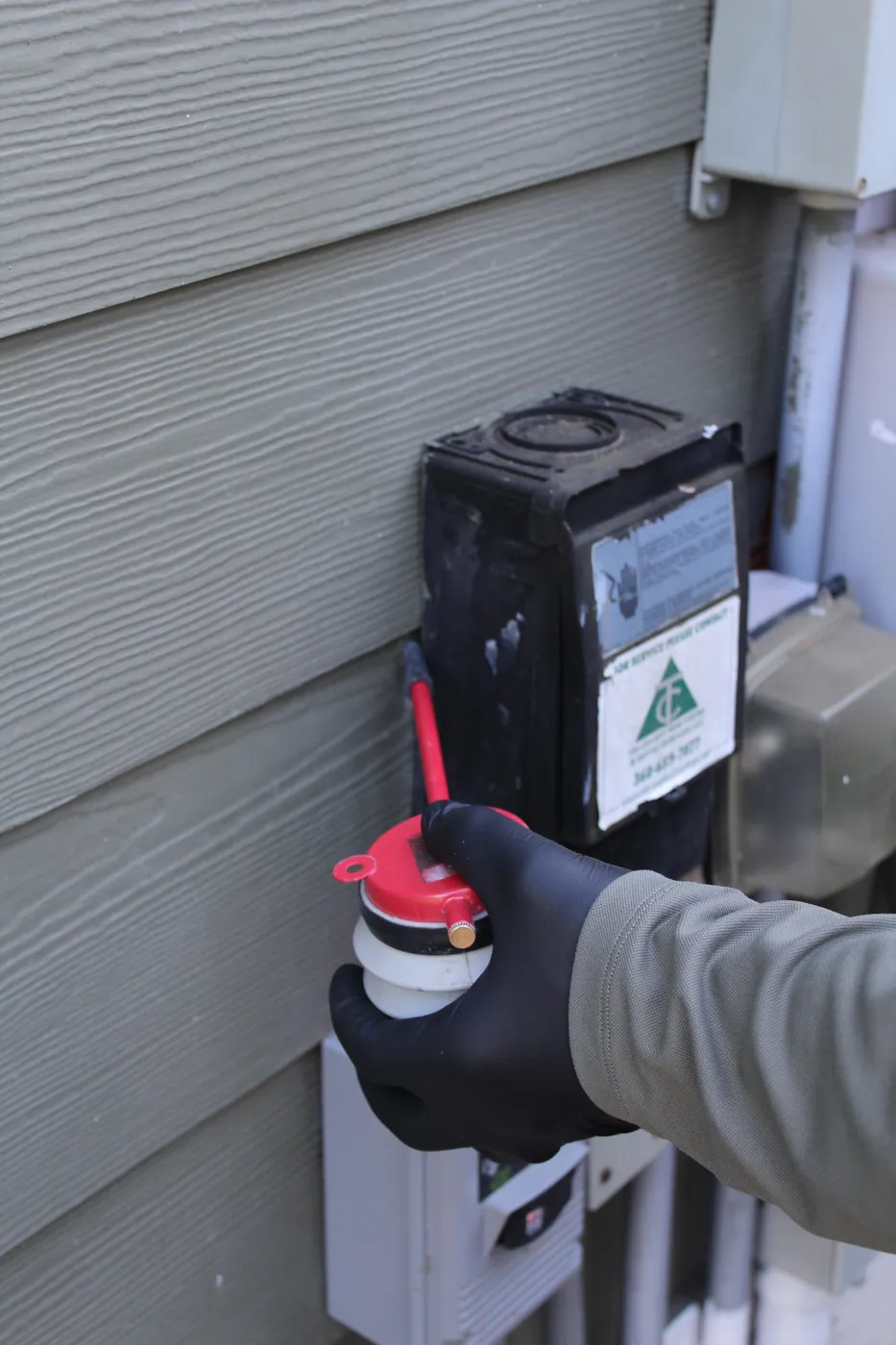
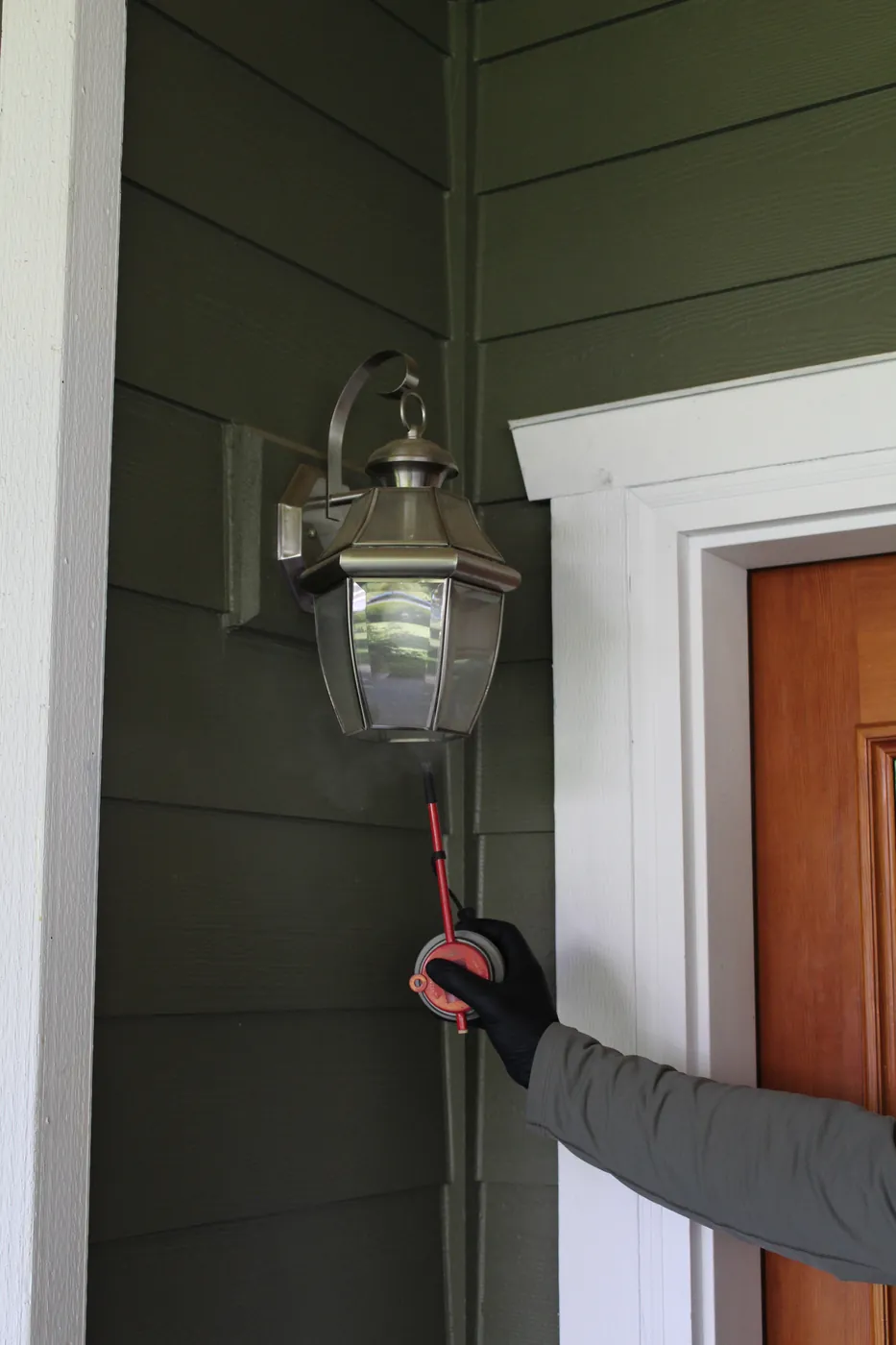
A few yellowjackets inspecting the recycling bin do not tell you where their nest is. They do tell you to check what is available to eat. That distinction matters when the first impulse is to spray the bin or plug a hole in the fence.
In September, begin with a careful look at the activity from a distance. Are the insects stopping at drink containers and scraps, or repeatedly disappearing into one opening in the ground or building? Those observations lead to different next steps.
Check the bin area without disturbing the insects
Wait until you can approach the area without moving through concentrated activity. Check whether the trash lid closes fully, whether a bag is keeping it propped open, and whether the recycling contains sugary residue. Plan the cleanup for a time when the area can be used safely; do not reach into a bin full of wasps.
UC Integrated Pest Management identifies uncovered food, garbage, and ripe fruit as yellowjacket attractants. Keeping those sources covered or removed can reduce the reasons for wasps to visit an outdoor eating area.
Make the cleanup practical for your household. A small container with a working lid may serve an outdoor meal better than an open bag beside the table. Bring serving dishes indoors when everyone has finished, and include pet food in the cleanup. If a fruit tree drops into the same part of the yard, make that area part of the routine when it is safe to work there.
Observe the route, not just the number of wasps
From a safe distance, note where insects go after leaving the bin. Do not follow them through a hedge or put your face close to siding to get a better view. A zoomed photo or short video is enough if you can take one without approaching.
Steady traffic into one hole deserves particular attention. Write down its location using something easy to recognize: “Beside the downspout near the back gate” is helpful. “Somewhere outside” is much harder to assess before an appointment.
If the activity involves an opening in the house, stop before adding caulk, foam, or tape. Our yellowjacket nest in a wall service page explains why that situation needs its own approach. The visible opening is not a reliable map of the colony behind it.
Change the gathering area while you assess the problem
If insects are repeatedly interrupting meals, move the meal indoors or use another part of the property. Do the same for a children’s play area or the route to a dog run if it passes close to suspected nesting activity. Giving up one patio lunch is easier than trying to work around an unresolved nest beside the chairs.
For a shared property, tell the person who handles waste collection and the person who handles landscaping. Otherwise, one person may know about the activity while another starts moving bins or trimming shrubs directly beside it.
Use a simple location note or photo to identify the area. Place any temporary warning where it can be seen without approaching the insects. Do not attach a sign to the suspected nest location itself.
Know what a trap can and cannot answer
A trap catching yellowjackets confirms that some foraging insects reached the trap. It does not establish that a hidden nest is gone. Before placing one, read its directions and consider whether its location brings insect traffic near people, pets, or a neighbor’s seating area.
You should not have to identify the species with certainty before asking for help. A photo, the pattern of activity, and the location provide a starting point. Our bee and wasp comparison can help you describe what you see without assuming every yellow-and-black insect needs the same treatment.
When cleanup is not enough
Request an assessment if traffic continues into one opening, the insects are entering a building, or the activity affects a route people must use. Tell us whether anyone has already treated the area or sealed an opening. That history is useful even when the attempt seemed unsuccessful.
Pure Guard offers wasp and bee control for homeowners in Snohomish County, including Everett and Lake Stevens. Send us the location and a photo so we can help you distinguish a food-source problem from a nest that needs attention.