The hardware store aisle has a lot of rat traps, and the packaging all makes the same promise. The people who study rats for a living give much simpler advice than the labels do.
Most of what separates a trap that catches a rat from one that sits untouched is the kind of trap, where it goes, and how patient you are with it.
Best Rat Traps: Why Snap Traps Come First
UC Statewide IPM names snap traps as the recommended option for rats. They are reusable, economical and effective, though they take some work. The Washington Department of Fish and Wildlife says snap traps kill rats instantly and are more humane than poison.
The Washington State Department of Health reaches the same conclusion for indoor rodents: snap traps are inexpensive and effective, and should be kept away from pets and young children.
Choosing the Best Rat Traps for Your Home
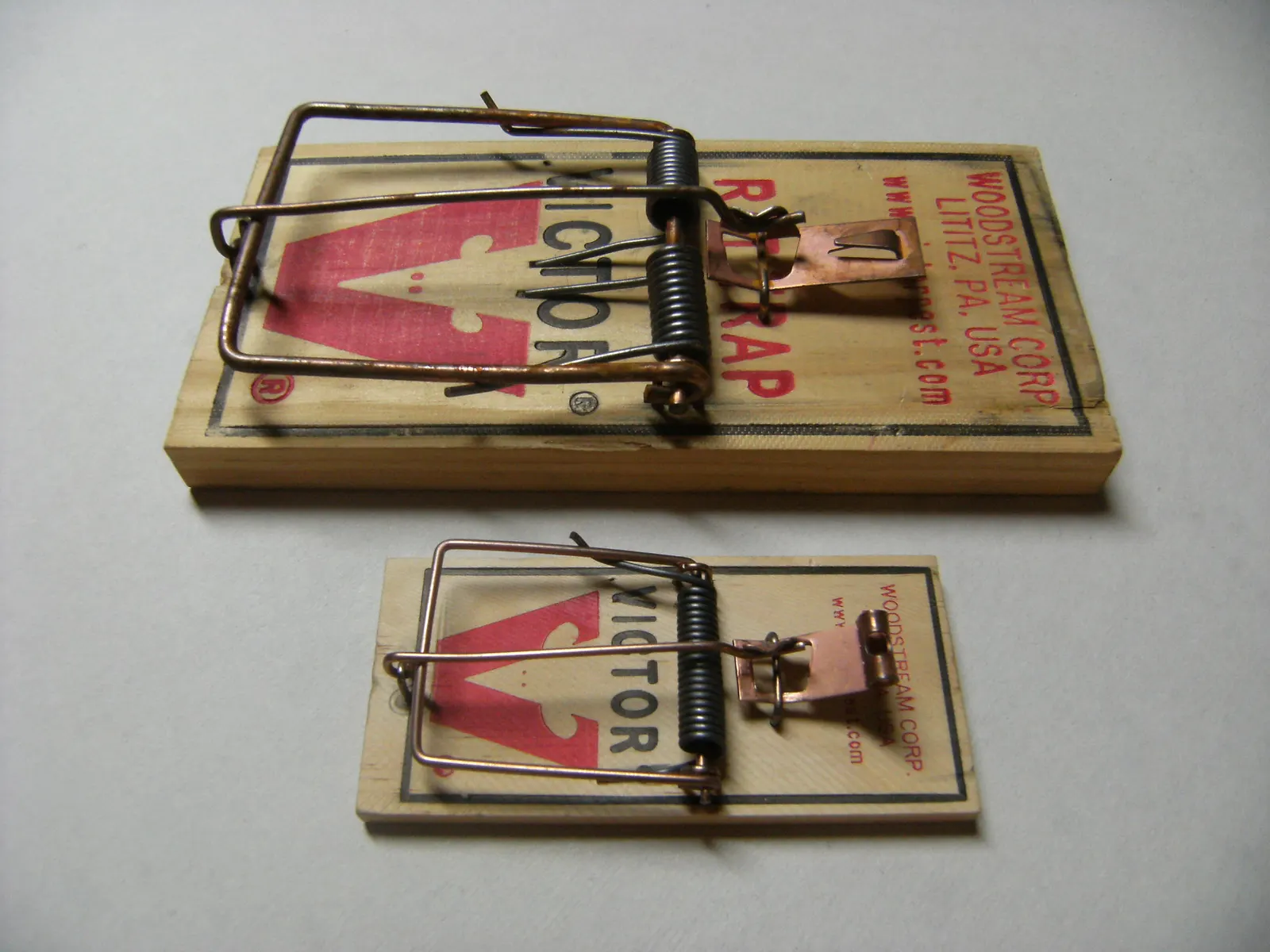
Pick a trap sold for rats, which is much larger than a mouse trap. WDFW says traps with an expanded trigger work better than ones with a small metal trigger.
What about the other kinds?
- Electronic traps: WDFW calls them costly with little advantage over snap traps.
- Glue boards and live traps: Not recommended by WDFW or UC IPM.
- Poison: WDFW calls it the least preferred method, and says to use tamper-resistant bait boxes where pets or wildlife could reach it.
At Pure Guard we use trapping rather than bait indoors, so a rat does not die somewhere you cannot reach.
Where to Set Rat Traps
Place the trigger side of the trap next to a wall. WDFW says rats prefer a stationary object on at least one side of them. UC IPM suggests setting traps perpendicular to the wall with the trigger near it, in dark corners and where you find droppings or burrows. If a trap has to run parallel to a wall, set two together.
Put traps where the activity is. WSU Extension lists the clues: gnaw marks, droppings, urine stains and grease smudges on walls. Our guide to signs of rats in a crawl space shows what to look for under the house.
Rat Traps for Roof Rats and Norway Rats
The species changes the placement. Norway rats run along the ground, so wall placement works. Roof rats climb, and UC IPM says to set traps both on the ground and off it, on ledges, fences, pipes, branches or beams, and to secure them where possible. Our comparison of a Norway rat vs roof rat explains how to tell which one you have.
The Best Bait for Rat Traps
Use less than you think. UC IPM says a pea-sized amount is enough. Suitable baits include nuts, dried fruit, bacon, dry pet food and peanut butter. Dry bait can be tied or glued to the trigger, and the trigger should be sensitive.
WDFW lists peanut butter, hot-dog slices and bacon. All of them work because rats eat what people and pets eat, and pet food and birdseed are what draws them to a house in the first place.
Why Rats Ignore a New Trap
Rats are cautious. UC IPM says they often avoid new objects for days or weeks, so a fresh trap may sit untouched while the rat studies it.
The fix is patience. UC IPM suggests leaving traps baited but unset until the bait is being taken regularly, then setting them all. If bait disappears from every trap, double the number of baited traps until some keep their bait, then set them.
How Many Rat Traps to Use
For one or two rats, a few traps along the active routes is a start. UC IPM says a heavy infestation can take a dozen or more, spaced about 10 to 20 feet apart. WDFW says to check traps daily.
Wear gloves when you handle a trap, and never handle a rodent with bare hands. UC IPM notes that human scent does not affect trapping, but rats can carry disease.
Rat Traps Outdoors
WDFW says not to set snap traps outdoors. Use a trapping box instead, so a pet, a child or a bird cannot reach the trigger. UC IPM also advises enclosing traps in boxes or stations wherever children, pets or birds could get to them.
Rat Traps Do Not Fix the Entry Points
A trap removes the rats that are already inside. It does not stop new ones.
The Department of Health says rodents can squeeze through openings about a quarter inch wide, and recommends steel wool and caulk for small gaps and hardware cloth or metal for larger ones. Why rats get in during fall covers where the openings usually are, and the mouse version of this plan is in how to get rid of mice.
When to Call for Rat Control
Call when traps keep getting taken without a catch, when the noise is in the attic and out of reach, or when you are setting more traps every week. Our rodent control service pairs trapping with sealing the openings, which is what keeps the problem from coming back.
If you are in our home area, the rodent control page for Lake Stevens shows how an inspection works. Request an inspection and tell us what you are hearing and where.
Rat trap and mouse trap photo by Capt. Phœbus, public domain, via Wikimedia Commons.
We handle this across Snohomish and King County, and the city pages go into the local detail for Lake Stevens rat control, rat and mouse control in Lynnwood, rodent control in Edmonds, Woodinville rat control, and rat and mouse control in Everett, including how fast we can get there.