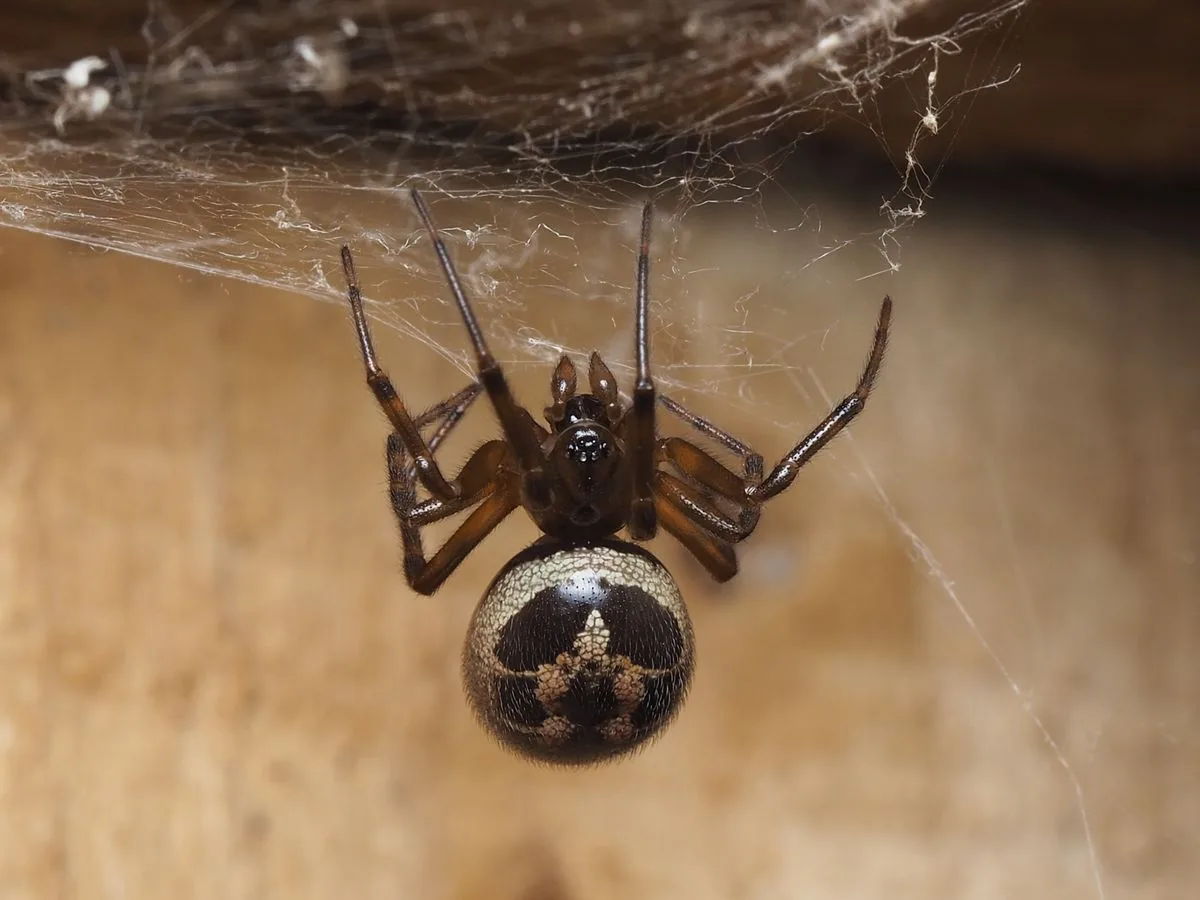
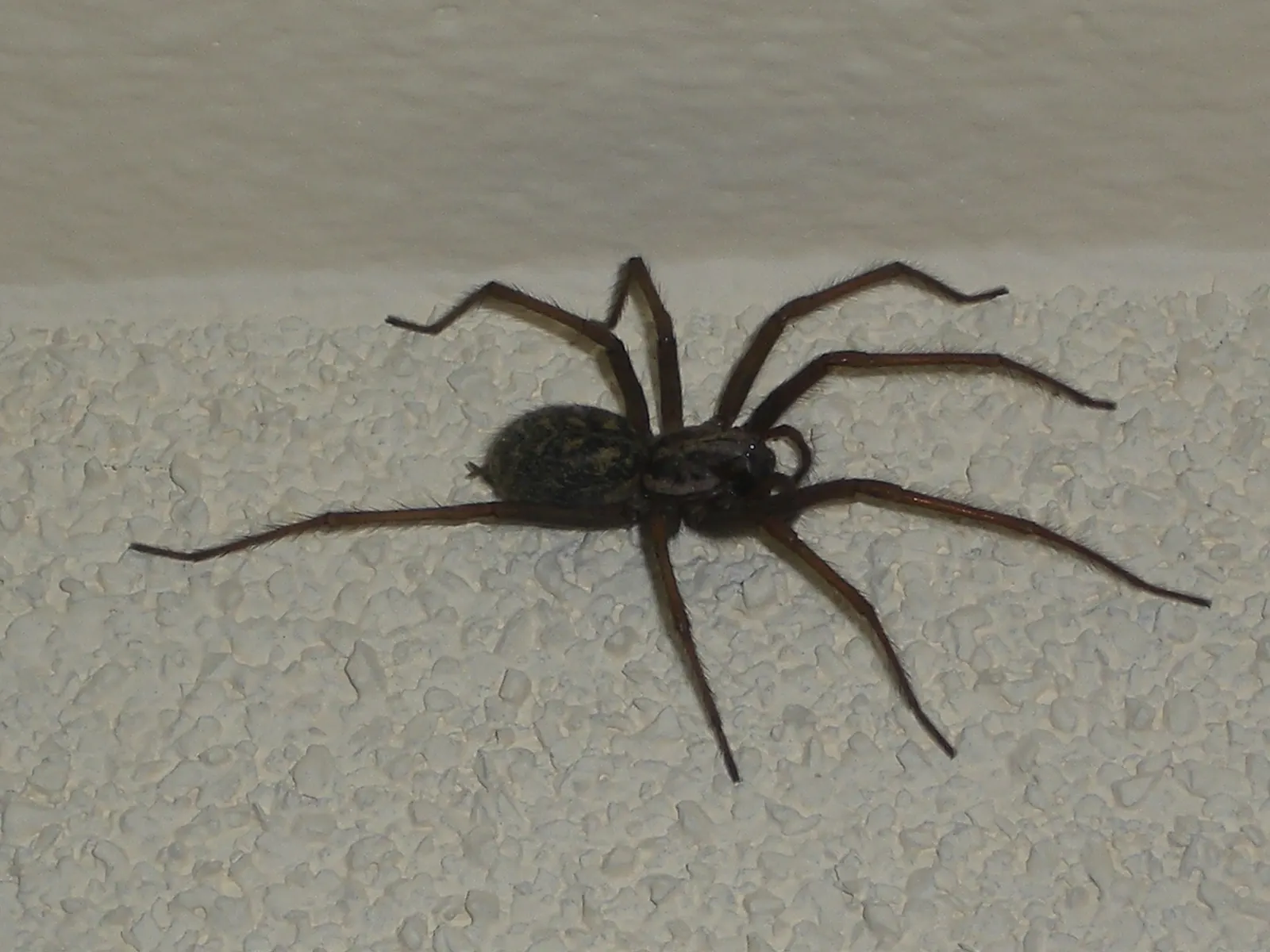
You come around the corner of the garage, or pull back the shower curtain, and there it is: a brown spider with legs that could cover your palm, moving a lot faster than you expected. It is easy to assume you have found something dangerous.
Almost always it is a giant house spider, and the Pacific Northwest has plenty of them.
What a Giant House Spider Looks Like
WSU Extension says the body of a giant house spider is typically about half an inch to an inch long, not counting the legs. Large adults can have a leg span of up to 4 inches. The color runs from brown to grayish-brown, and the legs and body are somewhat hairy rather than shiny.
Color and markings vary a lot, so they are not a reliable way to identify one. Size, fast movement and the setting are better clues.
Why You See a Giant House Spider in Fall
These spiders live in western Washington all year. WSU says they are not found east of the Cascades and are often seen from mid-summer to early fall, when the males are highly mobile.
Rod Crawford, the spider expert at the University of Washington’s Burke Museum, told the Spokesman-Review that from early August to mid-September, mature males leave their webs to look for mates. That is why one seems to appear overnight. The spider was already living in your garage or crawl space, and now it is walking across open floor.
Where a Giant House Spider Lives
WSU lists garages and basements indoors, and firewood and gaps between bricks or stones outdoors. They build sheets of webbing with a funnel-like hole in the middle, where the spider sits and waits for prey.
If you keep a woodpile against the house, expect some of them there. WSU suggests wearing gloves and checking each log before it comes inside, and bringing in only what you will burn right away.
Giant House Spider in the Bathtub
The tub is the classic place to meet one. The Burke Museum explains that spiders in sinks and bathtubs come down the walls, attracted by water, and that they cannot come up through the drains.
They drop in, then cannot climb the slick sides. WSU notes the same thing: indoors, they are usually found on the floor or trapped in a sink or tub while searching for water.
Does a Giant House Spider Bite?
WSU says the bite of a giant house spider is not known to pose any threat to humans. The Burke Museum adds that spiders very rarely bite people at all, and that most skin sores blamed on spiders have other causes.
If you do get bitten, WSU suggests catching the spider so an expert can identify it, and seeing a doctor. For spiders in general, our guide to spiders in Washington homes covers which ones are worth knowing by name.
Giant House Spider vs Hobo Spider
Smaller males are often mistaken for hobo spiders, and the two do look alike at a glance. Both are brown, long-legged and build funnel webs in low, dark spots.
The Burke Museum says you need a microscope to confirm a hobo spider, and that patterns, funnel webs and the shape of the palps do not settle it. A big brown spider in the garage is far more likely to be a giant house spider than anything to worry about. You do not need to settle the species to decide what to do with it.
How to Get Rid of a Giant House Spider
One spider on the floor does not need a treatment. WSU recommends starting with mechanical control: a vacuum, a fly swatter or a broom, or capturing it and releasing it outdoors. Glue traps in dark garage corners can show you where they travel.
The longer fix is keeping new ones out:
- Seal or screen openings, and keep window screens tight.
- Check door sweeps and weather-stripping, especially on the garage.
- Caulk or repair cracks around water lines and other entry points.
- Store firewood away from the house and check logs before carrying them in.
WSU is direct about sprays: pesticide applications are a temporary fix unless efforts are made to prevent spider entry into the house. Closing the gaps and clearing the webs matter as much as any treatment, because a spider treatment does little when the openings stay open.
When a Giant House Spider Is Worth a Call
Call when you are finding them daily, when webs come back in the same corners within days, or when you are not sure what you are looking at. Heavy spider activity often follows heavy insect activity, so cluster, fruit and drain flies are worth checking too.
Our spider control service covers web removal around the eaves, doors and entry points, plus the insects the spiders are hunting. For homes near the lake, the spider control page for Lake Stevens explains what that visit looks like.
If you would rather have someone look at it, send us a photo or request a visit and tell us where you are seeing them.
Hero photo of a giant house spider by TheBlob, public domain, via Wikimedia Commons.
If this is happening at your place, our local pages cover what the work looks like in each of our core markets: spider control in Lake Stevens, Lynnwood spider treatment, spider control in Edmonds, Woodinville spider treatment, and spider control in Everett.