If there’s one pest that gets a bigger reaction than it deserves, it’s spiders. We get calls every fall from people who found a big brown spider sprinting across the basement floor and are now convinced it’s something dangerous. Almost always, it isn’t. But the Pacific Northwest does have a couple of spiders worth knowing by name, so let’s sort out what you’re actually looking at.
Why you suddenly see more of them
Most of the year, house spiders keep to themselves in corners, crawl spaces, and the backs of cupboards. Then late summer and fall roll around, the males go looking for mates, and suddenly you’re seeing big ones out in the open, crossing the floor or sitting in the bathtub. They didn’t just move in. They’ve been here all along. The season just changed their behavior.
The bathtub thing, by the way, isn’t because they came up the drain. They wander in looking for water or a mate, fall into the smooth tub, and can’t climb back out.
The two big ones: hobo and giant house spider
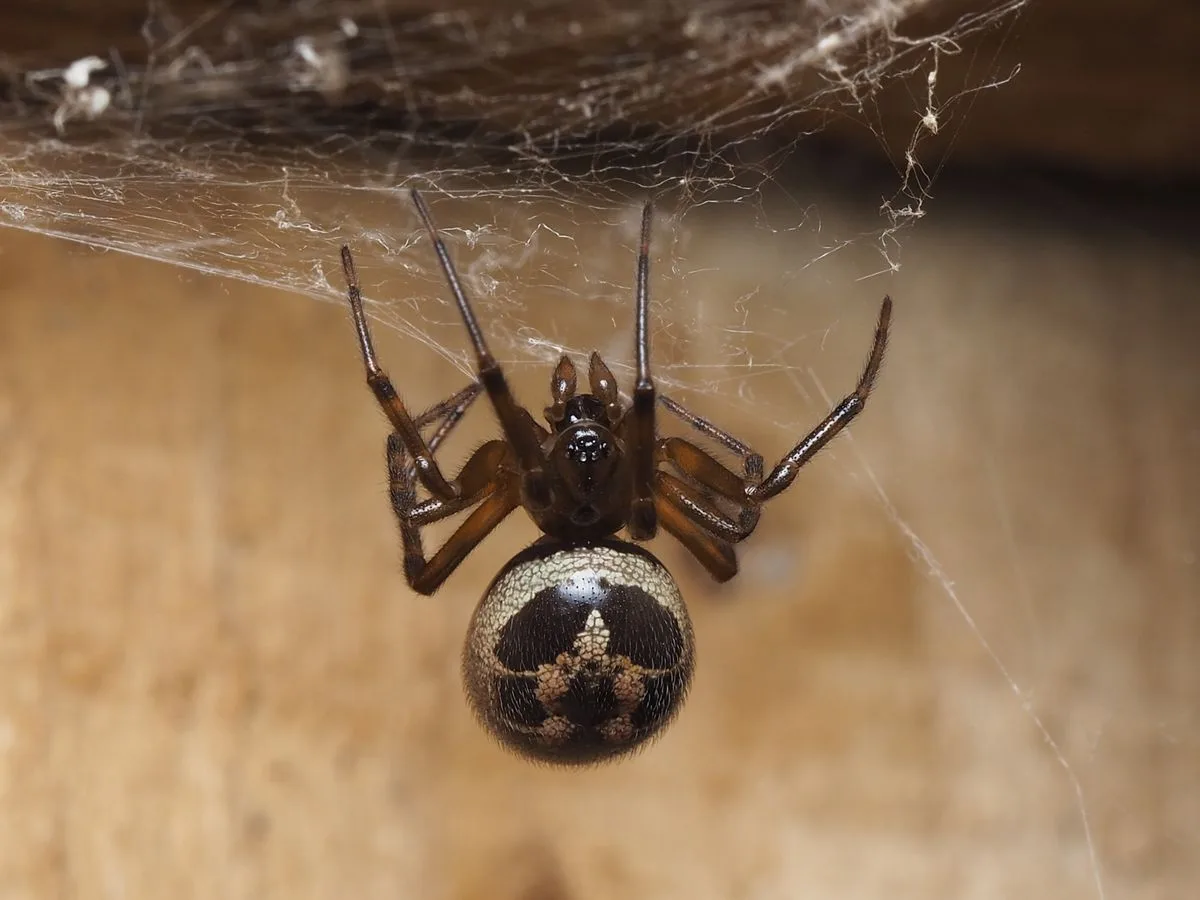
These are the two PNW spiders worth being able to name, and they look almost identical to the naked eye. Both are brown, long-legged, fast, and build funnel-shaped webs in low, dark spots like garages, woodpiles, and crawl spaces.
The giant house spider is the larger of the two and is actually one of the fastest spiders in the world over short distances. The hobo spider is smaller and a little less common indoors. Here’s the part most people don’t expect: giant house spiders prey on hobo spiders, so a healthy population of the big ones tends to keep the hobos down.
Telling them apart for certain takes a hand lens and some patience with their markings, which is more than most homeowners want to do with a spider in the room. The good news is you mostly don’t need to, because neither one is the threat they’re rumored to be.
Are they actually dangerous?
The hobo spider has a scary reputation that the science has mostly walked back. For years it was blamed for serious skin wounds, but that link was never well supported, and the CDC removed the hobo spider from its list of venomous spiders of concern back in 2017. Current consensus is that a hobo bite is not medically significant for most people. Giant house spiders are harmless too. Both would much rather run from you than bite.
People ask us about black widows constantly, and the honest answer is that they’re genuinely rare on the wet west side of the Cascades. They need dry, undisturbed spots, which is close to the opposite of a Snohomish County fall. We’ve been doing this a while and they almost never come up. If you truly think you’ve found one, give it space and send us a photo, but the odds are strongly against it.
When in doubt, the safest move is the same one we recommend for any pest: take a photo and send it over before you assume the worst.
The big one in your porch web is an orb-weaver
Every September we get calls about a large, boldly patterned spider sitting dead center in a wheel-shaped web strung across a walkway or a porch light. That’s an orb-weaver, most often the cross orbweaver, and it is the spider people around here actually run into rather than the one they’re afraid of.
They’re harmless. They also eat an impressive volume of flies, mosquitoes, and moths, which is why we’re not in a hurry to talk anyone into treating them. What people usually want is the webs gone, because the spiders rebuild them overnight in exactly the spot you walk through at 6 a.m. Web abatement plus treating the eaves, rails, and light fixtures they anchor to is most of the work.
How to keep spiders out
Spiders come indoors for two reasons: shelter and food. Cut down on both and you’ll see far fewer of them.
- Seal the gaps. The same cracks around doors, vents, and the foundation that let in heat loss let in spiders.
- Knock down webs as you find them, inside and out. A spider that has to keep rebuilding tends to relocate.
- Manage the bugs they eat. Spiders follow their food, so a home with fewer flies, ants, and other insects is a less appealing place to set up.
- Clean up the harborage. Woodpiles against the house, cardboard boxes in the garage, and clutter in the crawl space are prime spider real estate.
- Watch the exterior lights. Porch and garage lights pull in the insects that spiders feed on, so swapping to warmer, less attractive bulbs helps indirectly.
When to call us
A spider here and there is just part of living in the Pacific Northwest, and honestly, the harmless ones are doing you a small favor by eating other pests. But if you’re seeing them constantly, finding webs faster than you can clear them, or you’ve spotted something you can’t identify and don’t want to get close to, that’s worth a call.
Our spider control handles both the spiders and the insects they’re hunting, plus web abatement around the eaves and entry points, so the problem doesn’t just walk back in. Send a photo or call us at (425) 332-6566 and we’ll tell you whether it’s a harmless house spider or something worth a visit.